

Heraklion: Island Adventure City!
Images

Heraklion at sunset


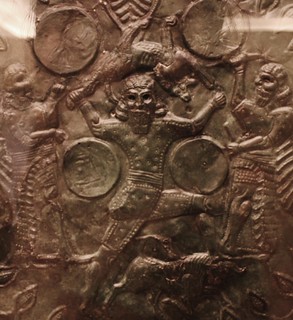
![Ζευς [Sus]. Archaic Indo-Greek God Zeus i.e. Zevs at Heraklion Museum Crete. First known depiction. Første kjente avbildning av Zevs fra 8 - 7 århundre BCE.](https://live.staticflickr.com/8439/7930534026_7d4faaaff0_n.jpg)




Geostrategic Position and Environmental Context
Heraklion occupies a pivotal location on the northern coast of Crete, the largest of the Greek islands, situated in the southeastern Mediterranean. This position has historically made it a crucial maritime and commercial crossroads. The city benefits from a Mediterranean climate characterized by hot, dry summers and mild, wet winters, fostering a rich biodiversity in its surrounding natural landscapes.
As the administrative capital, Heraklion serves as the primary political, economic, and cultural hub for the island, managing the affairs of the Heraklion regional unit and acting as a vital gateway through its international airport and busy port facilities. Its urban sprawl reflects its status as the fourth-largest city in Greece and the most populous on the Greek islands.
A Tapestry of Time
The historical depth of Heraklion is staggering, with evidence of continuous human settlement dating back to at least 7000 BCE, positioning it among Europe's most ancient inhabited regions. This long history is dominated by the legacy of the Minoan civilization, which flourished from approximately 2000 to 1350 BCE. The nearby Palace of Knossos, a monumental architectural achievement, stands as the most significant testament to this era.
It was the political, economic, and religious center of Minoan Crete, renowned for its advanced culture, intricate frescoes, and complex labyrinthine structure, often mythologized as the lair of the Minotaur. Knossos remains one of Greece's most important archaeological sites, attracting global attention and scholarly research, underscoring Heraklion's profound connection to Europe's earliest advanced civilization.
Cultural Identity and Societal Dynamics
Heraklion's cultural landscape is a dynamic fusion of ancient heritage and contemporary Greek life. The primary language is Greek, reflecting the nation's linguistic and cultural unity. The city's identity is deeply intertwined with its Minoan past, evident in its museums, archaeological sites, and local folklore.
Daily life in Heraklion balances the fast pace of an urban center with the characteristic warmth and hospitality of Cretan culture. This blend fosters a unique social fabric where traditional values coexist with modern influences. The city's cultural institutions, including the Heraklion Archaeological Museum, play a crucial role in preserving and disseminating its rich history, making it a significant center for cultural tourism and education within Greece and Europe.
Economic Engine
Heraklion functions as a critical economic engine for Crete, with tourism emerging as its most dominant sector. Recognized by Euromonitor as Europe's fastest-growing tourism destination in 2017, the city attracts millions of international visitors annually, drawn by its historical significance, natural beauty, and Mediterranean lifestyle. This robust tourism industry fuels a wide range of ancillary businesses, creating substantial employment opportunities in hospitality, retail, and services.
Beyond tourism, Heraklion is also a center for trade, with its port facilitating the import and export of goods, and it plays a role in regional commerce and agricultural product distribution from the fertile Cretan hinterland. Its economic vitality makes it a key contributor to the Greek national economy.
Governance and Educational Landscape
As the administrative capital of Crete, Heraklion operates under the framework of the Hellenic Republic's decentralized administration system. The city is governed by a mayor and municipal council, responsible for local administration, urban planning, and public services. Its role as a regional capital means it houses significant governmental offices and institutions.
Educationally, Heraklion is a vital center, home to the University of Crete, one of Greece's leading universities, with faculties and research centers spread across the city and island. This academic presence contributes significantly to the city's intellectual life and research output, particularly in fields like archaeology, medicine, and environmental science. The presence of numerous schools and educational facilities ensures a strong foundation for learning from primary to tertiary levels.
Go deeper
Frequently Asked Questions
What is Heraklion and why is it special?+
Why do people visit the Palace of Knossos?+
How does the weather in Heraklion feel?+
Where does Heraklion get its food and goods?+
What makes Heraklion a good place for tourists?+
Based on content from Wikipedia · Licensed under CC BY-SA 4.0