

The Amazing British Isles!
Images
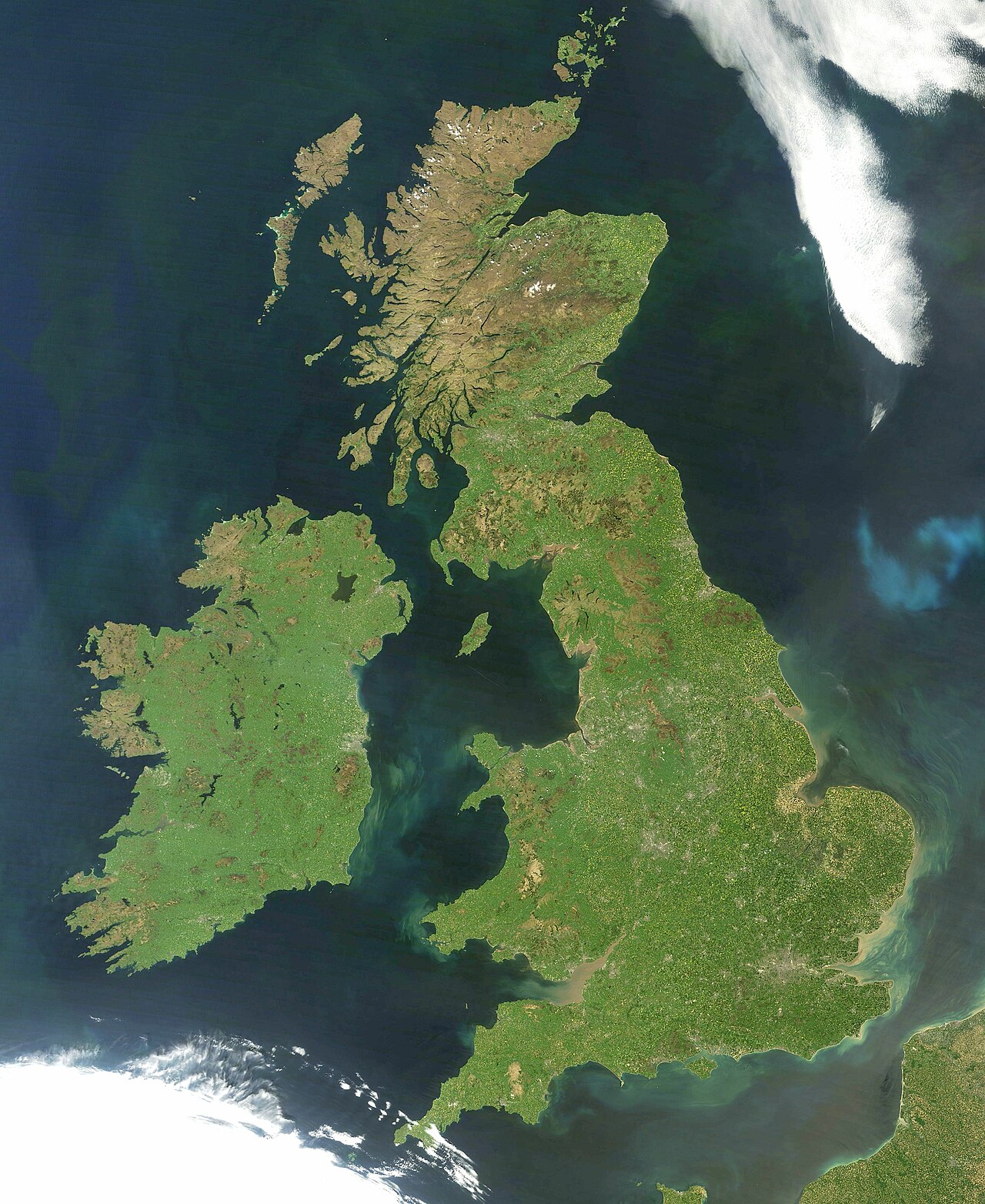
British Isles
Geological Foundations
The British Isles, an archipelago situated in the North Atlantic off the northwest coast of continental Europe, are characterized by a profound geological history. Comprising over six thousand islands, including Great Britain, Ireland, and numerous smaller ones like the Hebrides and Orkney, their landmasses are ancient. The oldest rocks, found in Ireland, Wales, and northwestern Scotland, date back an astonishing 2.7 billion years.
During the Silurian period, approximately 443 to 419 million years ago, the northwestern parts of the landmass collided with southeastern regions that had been part of a separate continental plate. This tectonic activity sculpted the islands' topography, which, by global standards, is modest. Ben Nevis, the highest peak, reaches only 1,345 meters (4,413 ft), and Lough Neagh, the largest lake, covers 390 square kilometers (151 sq mi). The islands were re-inhabited after the last glacial period around 12,000 BC, with Great Britain initially being a peninsula.
Ireland was connected to Great Britain by the British-Irish Ice Sheet before 14,000 BC, becoming inhabited only after 8000 BC. Great Britain became an island by 7000 BC with the submergence of Doggerland, a land bridge connecting it to continental Europe.
A Tapestry of Peoples
The human history of the British Isles is a narrative of successive migrations and cultural interactions. At the dawn of the 1st millennium BC, the islands were inhabited by peoples speaking Insular Celtic languages: the Gaels in Ireland, the Picts in northern Great Britain, and the Britons in southern Great Britain. Roman expansion brought much of Brittonic-occupied Britain under imperial control from AD 43.
As Roman power waned in the 5th century, Anglo-Saxon migrations began, eventually dominating most of what is now England. The 9th century saw Viking invasions, leading to settlements and significant political shifts. The Norman Conquest of England in 1066 and the subsequent Angevin conquest of parts of Ireland from 1169 imposed new ruling elites.
By the Late Middle Ages, Great Britain was divided into the Kingdom of England and the Kingdom of Scotland, while Ireland experienced fluctuating control between Gaelic kingdoms, Hiberno-Norman lords, and the English-dominated Lordship of Ireland. The 17th and 18th centuries witnessed attempts at political consolidation through the Union of the Crowns (1603), the Acts of Union (1707) creating the Kingdom of Great Britain, and the Acts of Union (1800) forming the United Kingdom of Great Britain and Ireland.
The expansion of the British Empire and subsequent migrations, including those following the Irish Famine and Highland Clearances, dispersed populations and cultures globally.
Climate and Landscape
The climate of the British Isles is classified as temperate marine, characterized by cool winters and warm summers, with relatively mild temperatures year-round. This oceanic climate is significantly shaped by the North Atlantic Drift, a powerful warm ocean current originating in the Gulf of Mexico. This current transports vast amounts of heat and moisture across the Atlantic, raising the average temperature of the islands by approximately 11 °C (20 °F) compared to other regions at similar latitudes.
Historically, this climate fostered extensive temperate rainforests. However, centuries of human activity, including agriculture and deforestation, have dramatically altered the landscape, clearing the majority of the original forest cover. The prevailing climate continues to support a rich biodiversity and the iconic green, pastoral landscapes for which the islands are renowned, with significant rainfall contributing to the lush vegetation.
Political Identity and Terminology
The term 'British Isles' serves as a geographical descriptor for the archipelago but is not a political entity. Its usage is a subject of sensitivity and debate, particularly in Ireland. The Government of Ireland does not officially recognize the term, and its embassy in London discourages its use, preferring alternatives such as 'Britain and Ireland' or, in academic contexts, 'Atlantic Archipelago'.
In official joint documents, like the Good Friday Agreement, the neutral phrase 'these islands' is employed. The political landscape today comprises two sovereign states: the Republic of Ireland, encompassing roughly five-sixths of the island of Ireland, and the United Kingdom of Great Britain and Northern Ireland. The Channel Islands, while geographically distinct and located off the coast of France, are often included in discussions of the British Isles, though legally they form part of the 'British Islands' under the UK Interpretation Act 1978, not the broader geographical grouping.
This distinction highlights the complex interplay between geography, history, and political identity in the region.
Enduring Global Impact
The influence of the British Isles extends far beyond their geographical boundaries. Their historical role in global exploration and empire building disseminated languages, legal systems, and forms of governance worldwide. The development of parliamentary democracy, originating in England, has served as a model for many nations.
The English language, a product of centuries of linguistic evolution on the islands, has become a global lingua franca. Culturally, the British Isles have produced a vast and influential body of literature, music, and art, from Shakespearean drama to the global phenomenon of rock and roll. The diaspora resulting from historical migrations has created significant communities of people of British and Irish descent across the globe, particularly in North America, Australia, and New Zealand, who maintain cultural connections to their ancestral homelands.
Furthermore, innovations in science, technology, and industry originating from the islands have profoundly shaped the modern world.
Go deeper
Frequently Asked Questions
What are the British Isles and how many islands are there?+
Why is the climate in the British Isles mild?+
How old are the rocks in Ireland?+
When did Great Britain become an island?+
Who lived on the islands before the Romans?+
Based on content from Wikipedia · Licensed under CC BY-SA 4.0