

Timur: The Mighty Conqueror!
Images
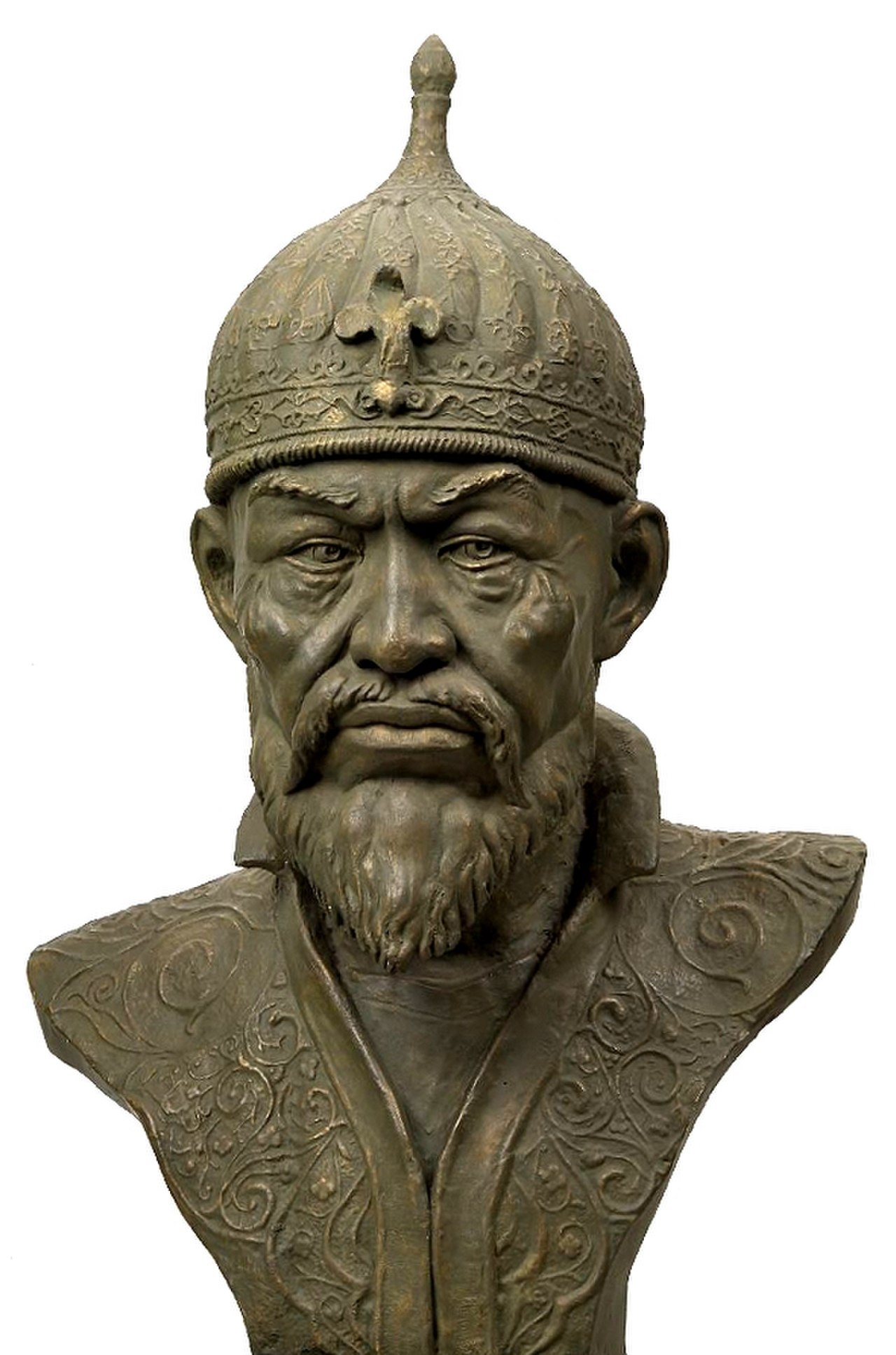
Timur
The Genesis of a World Conqueror
Timur, often referred to as Tamerlane in Western sources, was born circa 1336 near Kesh (modern Shahrisabz) in Transoxiana, a region then under the Chagatai Khanate. While not a direct descendant of Genghis Khan, Timur strategically leveraged his claimed lineage and his own formidable military acumen to rise to supreme power. His early career was characterized by a series of complex alliances and conflicts within the fragmented Mongol successor states.
Timur's genius lay not merely in battlefield tactics, which were often brutal and innovative, but in his ability to consolidate power, inspire loyalty, and project an image of divinely sanctioned authority. He meticulously planned his campaigns, often employing psychological warfare and devastating sieges to break enemy morale before engaging in direct combat. His conquests were not random acts of violence but calculated moves to establish a vast, unified empire that would dominate the Eurasian landmass.
Forging an Empire and Patronizing a Renaissance
Timur's military expeditions were breathtaking in their scope and impact. He systematically dismantled the power of the Golden Horde, subjugated the Mamluk Sultanate of Egypt and Syria, and decisively defeated the Ottoman Sultan Bayezid I at the Battle of Ankara in 1402, temporarily halting Ottoman expansion. However, Timur's legacy extends far beyond his military achievements.
He was a profound patron of arts, sciences, and architecture, transforming his capital, Samarkand, into one of the most magnificent cities of the medieval world. He actively recruited scholars, artists, architects, and craftsmen from across his conquered territories, fostering an environment of intense cultural exchange and innovation. This patronage led to the flourishing of the Timurid Renaissance, a period marked by remarkable advancements in astronomy, mathematics, literature, calligraphy, miniature painting, and, most visibly, architecture.
The monumental structures he commissioned, such as the Bibi-Khanym Mosque, the Gur-e Amir mausoleum, and the Shah-i-Zinda necropolis, exemplify the grandeur and sophistication of Timurid art and design.
The Enduring Significance of Timur's Empire
The significance of Timur and his empire resonates through history in multiple ways. Politically, he reconfigured the geopolitical landscape of Asia and the Middle East, creating a powerful empire that served as a bulwark against further Mongol incursions and influenced the development of subsequent states, including the Mughal Empire in India, founded by his descendants. Culturally, the Timurid Renaissance had a lasting impact on the artistic and intellectual traditions of Persia, Central Asia, and South Asia.
The architectural styles pioneered during his reign became highly influential, and the intellectual currents he fostered contributed to the broader Islamic Golden Age. Furthermore, Timur's conquests facilitated the Silk Road trade and the transmission of knowledge and technology across Eurasia, playing a crucial role in intercontinental exchange. His complex legacy continues to be debated, with perspectives ranging from that of a ruthless conqueror to a visionary statesman and cultural patron.
Timur's Administrative Vision and Cultural Synthesis
Beyond his military campaigns and architectural projects, Timur possessed a keen administrative mind. He understood that a vast empire required more than just military might; it needed effective governance, a stable economy, and a unifying cultural framework. He implemented legal reforms, promoted trade routes, and established a sophisticated bureaucracy to manage his diverse territories.
His court was a cosmopolitan center where different languages, religions, and customs coexisted, albeit under his overarching authority. This synthesis of cultures was a hallmark of his reign, enriching the intellectual and artistic output of his empire. His descendants, such as Ulugh Beg, continued this tradition, with Ulugh Beg himself becoming a renowned astronomer and mathematician, establishing an observatory in Samarkand that produced some of the most accurate astronomical tables of its time.
The enduring fascination with Timur lies in this duality: the fearsome warrior who could also foster an era of unprecedented cultural and intellectual achievement.
Go deeper
Based on content from Wikipedia · Licensed under CC BY-SA 4.0