

Thar Desert
Images

digital memories, thar desert


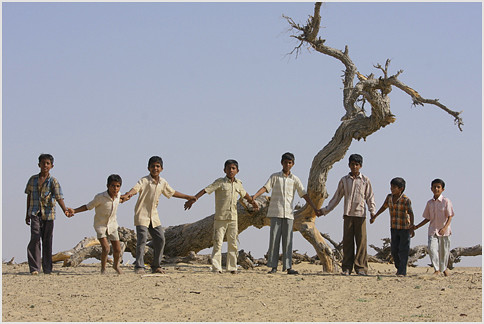


Geomorphology and Climatic Extremes of the Thar
The Thar Desert, also recognized as the Great Indian Desert, is a significant arid zone spanning approximately 200,000 square kilometers across northwestern India and southeastern Pakistan. It ranks as the world's 18th-largest desert and the 9th-largest hot subtropical desert. Geographically, it is situated to the north and west of the Indo-Gangetic Plain, south of the Rann of Kutch, and east of the Aravali Range.
This positioning influences its climate, characterized by extreme temperatures and minimal precipitation, with most rainfall occurring during the monsoon season. The landscape is dominated by sand dunes, rocky plains, and salt flats, creating a challenging yet ecologically distinct environment. The desert's formation is linked to complex geological and climatic shifts over millennia, resulting in its current arid state.
Understanding its geography is key to appreciating the adaptations of its flora, fauna, and human inhabitants.
Paleontological Marvels
The Thar Desert has recently yielded a groundbreaking paleontological discovery that rewrites Indian and global prehistory. In 2023, researchers unearthed fossilized remains dating back an astonishing 167 million years, belonging to a group of herbivorous dinosaurs known as dicraeosaurids. This find is monumental for several reasons: it marks the first discovery of dicraeosaurid fossils in India, placing the subcontinent within the known geographical range of this dinosaur lineage during the Jurassic period.
Furthermore, the specimen represents the oldest known record of dicraeosaurids globally, pushing back the timeline for this group and offering invaluable insights into their evolutionary history and distribution. This discovery underscores the Thar Desert's potential as a rich repository of ancient life, offering a unique window into Earth's deep past and the evolution of its inhabitants.
Human Habitation and Cultural Tapestry
Despite its arid conditions, the Thar Desert supports a substantial human population, with millions of people calling it home. The inhabitants, predominantly of Indo-Aryan descent, have developed sophisticated strategies for survival and prosperity in this challenging environment. Their culture is a vibrant blend of ancient traditions and adaptations to desert life.
This includes unique architectural styles for homes, resilient agricultural practices focusing on drought-resistant crops like millet and pulses, and traditional water conservation techniques. The region is known for its rich folk music, dance, and colorful textiles, reflecting a deep connection to the land and its history. Languages spoken include Hindi, along with various regional dialects and languages like Sindhi and Punjabi in the Pakistani portion, showcasing the diverse linguistic heritage of the subcontinent.
Economic Dynamics and Resource Management
The economy of the Thar Desert is multifaceted, relying heavily on natural resources and human ingenuity. Agriculture remains a cornerstone, with communities cultivating crops suited to arid conditions and engaging in pastoralism, raising sheep, goats, and camels. The desert is also a source of valuable mineral deposits, contributing to mining and quarrying activities. Tourism is an increasingly important sector, drawing visitors interested in the desert's unique landscapes, wildlife, and cultural heritage.
Traditional crafts, such as pottery, weaving, and embroidery, are vital for local livelihoods and the preservation of cultural identity. Effective resource management, particularly concerning water, is crucial for the region's sustainability and economic development, with ongoing efforts to implement modern conservation techniques alongside traditional knowledge.
Governance and Educational Landscape
The Thar Desert falls under the administrative jurisdictions of India and Pakistan, with governance structures reflecting their respective national systems. In India, the desert region primarily lies within the state of Rajasthan, governed by its state government, with administrative divisions extending into Gujarat, Punjab, and Haryana. In Pakistan, it encompasses parts of Sindh and Punjab provinces.
Educational access in the Thar Desert presents unique challenges due to its vastness and dispersed population. Efforts are underway to improve literacy rates and provide quality education, often through mobile schools, community learning centers, and government initiatives aimed at reaching remote areas. The focus is on equipping the local population with the skills needed to thrive in both traditional and modern economic contexts, while also preserving their unique cultural heritage.
Go deeper
Frequently Asked Questions
What is the Thar Desert?+
Where is the Thar Desert located?+
Why is the Thar Desert special for dinosaurs?+
How do people live in the Thar Desert?+
What kinds of animals and plants can be found in the Thar Desert?+
Based on content from Wikipedia · Licensed under CC BY-SA 4.0