

Sundarbans
Images

Sundarbans




Genesis of a Giant
The Sundarbans represents the largest contiguous mangrove forest on Earth, a testament to the dynamic interplay of fluvial and marine processes. Its formation is intrinsically linked to the Ganges Delta, a vast alluvial plain created by the confluence of the Ganges, Brahmaputra, and Meghna rivers as they discharge into the Bay of Bengal. Spanning approximately 10,000 km², this ecosystem is a mosaic of closed and open mangrove forests, interspersed with agricultural lands, expansive mudflats, and barren areas.
The landscape is intricately dissected by a complex network of tidal streams, creeks, and estuarine channels, reflecting the constant influence of tidal surges and riverine flows. Approximately 55% of the area is forest land, while the remaining 45% comprises these vital water bodies. The forest's geographical distribution is split between Bangladesh (about 66%) and India (about 34%), with four distinct protected areas recognized as UNESCO World Heritage Sites, underscoring its global ecological importance.
A Crucible of Life
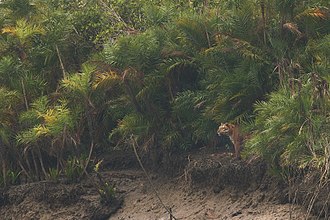
The Sundarbans is a globally significant biodiversity hotspot, providing critical habitat for an estimated 453 species of fauna. This includes a remarkable diversity of avian life, with 290 bird species recorded, alongside 120 fish species, 42 mammal species, 35 reptile species, and 8 amphibian species. The apex predator, the Bengal tiger (Panthera tigris tigris), is particularly noteworthy, being one of the few mangrove-dwelling tiger populations and uniquely adapted to its aquatic environment.
Beyond its role as a sanctuary for wildlife, the Sundarbans performs indispensable ecological functions. It acts as a natural buffer, absorbing the energy of storm surges and cyclones, thereby protecting the densely populated coastal regions of India and Bangladesh. The intricate root systems of the mangrove trees stabilize shorelines, prevent coastal erosion, and trap vital nutrients and sediments, contributing to deltaic accretion and maintaining water quality.
It also serves as a crucial source of timber and other natural resources for local communities.
The Sundarbans' Ecological Significance
The Sundarbans is an unparalleled living laboratory, showcasing fundamental ecological processes in action. It provides a prime example of delta formation, where riverine sediments are deposited to create new land. The constant tidal influence shapes the unique saline environment, driving adaptations in plant and animal life.
The process of plant colonization on newly formed mudflats demonstrates ecological succession in a challenging habitat. The forest's existence is a delicate balance, influenced by monsoon rain flooding, which brings freshwater and nutrients, and the ingress of saline seawater. This dynamic interplay creates a specialized ecosystem that is both resilient and vulnerable.
The economic importance of the Sundarbans extends beyond resource provision; its role as a storm barrier and shore stabilizer is invaluable, mitigating natural hazards and supporting livelihoods in a region prone to extreme weather events.
Navigating the Storm
Despite its immense ecological and economic value, the Sundarbans faces unprecedented threats, primarily driven by climate change and anthropogenic pressures. The ecosystem was assessed as endangered in 2020 under the IUCN Red List of Ecosystems framework. Severe cyclones, such as Sidr (2007) and Aila (2009), have inflicted significant damage, devastating approximately 40% of the forest in the case of Sidr and displacing over 100,000 people during Aila.
Rising sea levels, a direct consequence of global warming, are increasing salinity levels in the soil and water, stressing mangrove species and altering habitat suitability. Reduced freshwater flow from upstream due to water diversion further exacerbates salinity issues. The proposed Rampal coal-fired power station has also raised concerns about potential pollution and environmental degradation.
Experts advocate for intensified mangrove restoration, adaptive management strategies, and the implementation of resilient infrastructure and managed retreat policies to safeguard this critical ecosystem and the communities that depend on it.
Go deeper
Frequently Asked Questions
What is the Sundarbans?+
Where can you find the Sundarbans?+
How many kinds of animals live in the Sundarbans?+
Why does the Sundarbans protect people from storms?+
What is special about the Bengal tiger in the Sundarbans?+
Based on content from Wikipedia · Licensed under CC BY-SA 4.0