

Smelting: Turning Rocks into Treasure!
Images
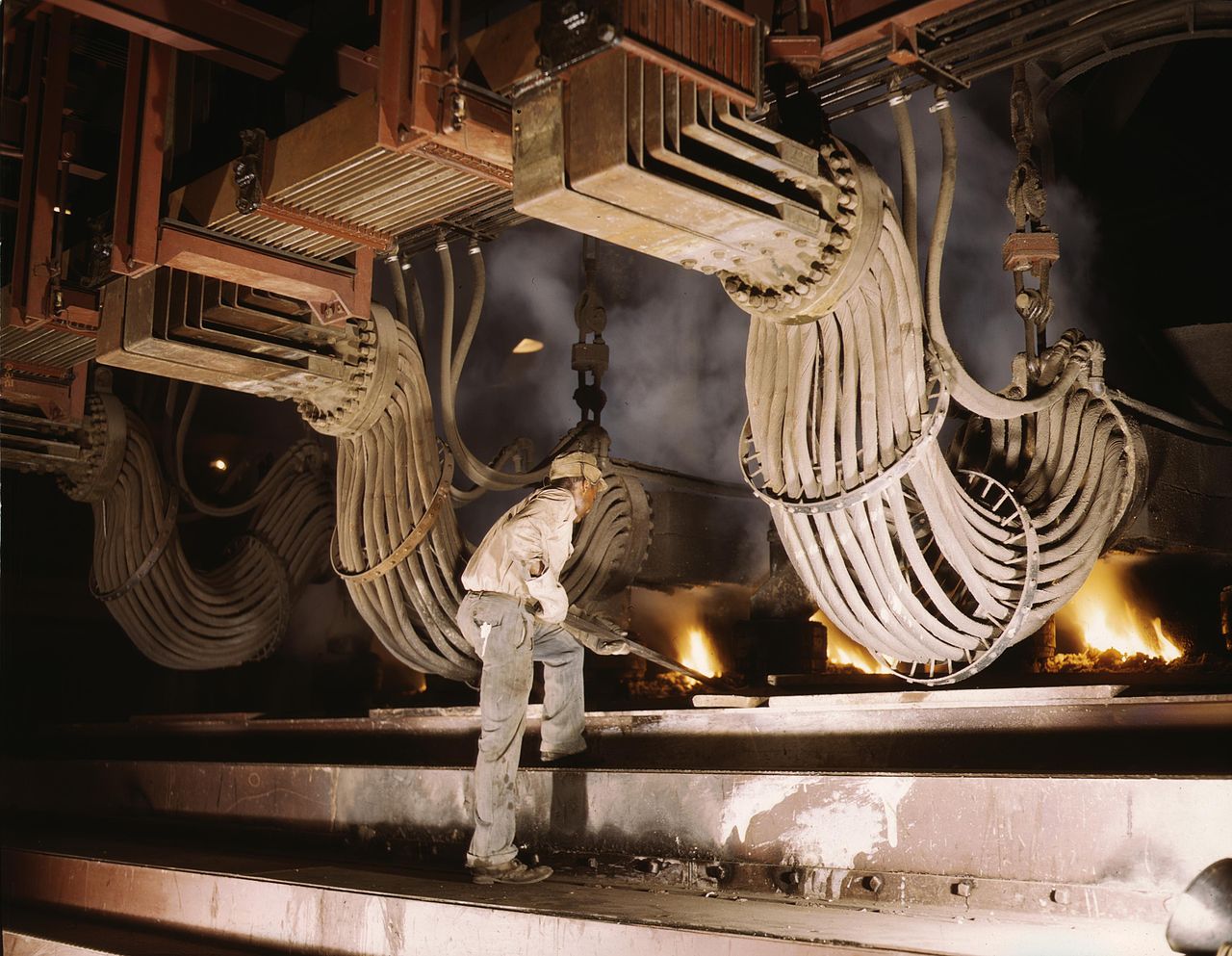
Smelting


The Chemical Alchemy of Smelting
Smelting is a cornerstone of extractive metallurgy, fundamentally a pyrometallurgical process designed to separate a metal from its ore by heating it to a high temperature, often in the presence of a chemical reducing agent. The core principle involves breaking the chemical bonds that hold the metal within its mineral matrix. Ores, such as oxides, sulfides, or carbonates, are typically treated with a reducing agent, most commonly carbon in the form of coke or charcoal.
This agent reacts with the non-metallic components of the ore, such as oxygen, effectively reducing the metal compound to its elemental form. For instance, in the blast furnace production of iron, carbon monoxide acts as the primary reductant, converting iron oxides (like Fe2O3) into molten iron (Fe). The process is thermodynamically driven, relying on the relative stability of the metal-reducing agent compounds at elevated temperatures.
Fluxes, like limestone or silica, are often added to react with gangue (unwanted rocky material) to form a molten slag, which is immiscible with the molten metal and can be easily separated, thereby purifying the extracted metal.
A Timeline Forged in Fire
The history of smelting is intrinsically linked to the advancement of human civilization. Early smelting, dating back to the Chalcolithic period (Copper Age), involved rudimentary techniques to extract copper from its ores, often using charcoal in simple kilns. The subsequent Bronze Age (circa 3300 BCE) was characterized by the deliberate alloying of copper with tin, a process that required more sophisticated smelting and casting knowledge to produce a harder, more versatile material.
The true revolution, however, came with the Iron Age (starting around 1200 BCE), which saw the development of the bloomery furnace capable of producing wrought iron. This was a significant leap, as iron ores are more abundant and iron's melting point is higher than copper's, demanding greater control over heat and reduction processes. The invention of the blast furnace in medieval Europe dramatically increased iron production efficiency, paving the way for industrialization.
Each era's smelting advancements unlocked new material possibilities, driving innovation in tools, weaponry, architecture, and ultimately, societal structures.
The Ubiquitous Impact
Smelting remains an indispensable industrial process, forming the bedrock of numerous global industries. The vast majority of metals used in manufacturing, construction, transportation, and technology are produced via smelting. Steel, an alloy of iron and carbon, is produced in enormous quantities through blast furnaces and basic oxygen furnaces, forming the skeleton of our cities and infrastructure. Aluminum, extracted from bauxite ore through a complex electrolytic process (Hall-Héroult) that follows initial smelting stages, is vital for aerospace, automotive, and packaging industries due to its lightweight and corrosion-resistant properties. Copper smelting is crucial for electrical grids and electronics, while the smelting of precious metals like gold and silver continues to be economically significant.
The efficiency and scale of modern smelting operations are a testament to centuries of scientific and engineering development, directly enabling our interconnected, technologically advanced global society.
The Mechanics of Metal Extraction
The specific smelting process varies depending on the metal and its ore. For iron, the blast furnace is the dominant technology. It's a tall, refractory-lined vessel where iron ore, coke, and flux are fed from the top, and hot air is blown in from the bottom.
This creates a counter-current flow, allowing for efficient reduction and melting. For copper, ores are often first concentrated and then smelted in reverberatory or flash furnaces, followed by converting and refining steps. Aluminum production is unique in that it primarily uses electrolysis (smelting in an electrochemical cell) after the alumina (aluminum oxide) has been purified from bauxite ore.
Other metals like lead, zinc, and tin are smelted using various furnace types, including blast furnaces, reverberatory furnaces, and electric furnaces, often with specific chemical treatments to optimize recovery and purity. The choice of process is dictated by factors such as ore mineralogy, desired product purity, energy costs, and environmental considerations.
Challenges and Future Directions in Smelting Technology
While essential, traditional smelting processes face significant environmental challenges, primarily related to greenhouse gas emissions (especially CO2 from carbon reduction) and the generation of waste products like slag. The high energy consumption also contributes to the carbon footprint. Consequently, research and development are focused on more sustainable and efficient smelting technologies.
This includes exploring alternative reducing agents (e.g., hydrogen), developing direct reduction methods that bypass traditional furnaces, improving energy efficiency through heat recovery, and enhancing slag utilization or recycling. Furthermore, advancements in hydrometallurgy (using aqueous solutions) and electrometallurgy offer complementary or alternative pathways for metal extraction, particularly for certain ores and metals. The future of smelting lies in balancing the imperative need for metals with the growing demand for environmentally responsible industrial practices.
Go deeper
Frequently Asked Questions
What is smelting and how does it turn rocks into metal?+
Why do we need a reducing agent like charcoal in smelting?+
How do blast furnaces help make iron for buildings?+
When did people first start smelting copper and why was it important?+
What happens to the leftover rock material during smelting?+
Based on content from Wikipedia · Licensed under CC BY-SA 4.0