

Carbon: The Amazing Building Block!
Images
Carbon
Carbon's Cosmic Genesis and Ubiquitous Presence
Carbon (symbol C, atomic number 6) stands as a cornerstone element, not only for terrestrial life but also for the structure of the universe. Its name, derived from the Latin 'carbo' for coal, reflects its historical significance. While constituting a mere 0.025% of Earth's crust, carbon is the fourth most abundant element by mass in the universe, surpassed only by hydrogen, helium, and oxygen.
This prevalence is intrinsically linked to its atomic structure and its capacity for forming an unparalleled diversity of chemical compounds. Its tetravalent nature, stemming from four valence electrons, allows it to form stable covalent bonds with itself and a vast array of other elements, creating intricate molecular architectures. This unique bonding capability is the fundamental reason why carbon is the basis of all known life.
In the human body alone, it accounts for approximately 18.5% of mass, second only to oxygen. Carbon's journey began in stellar nucleosynthesis, where it was forged in the cores of stars through the triple-alpha process, and subsequently dispersed throughout the cosmos via supernovae, seeding planets with the potential for life.
The Allotropic Spectrum
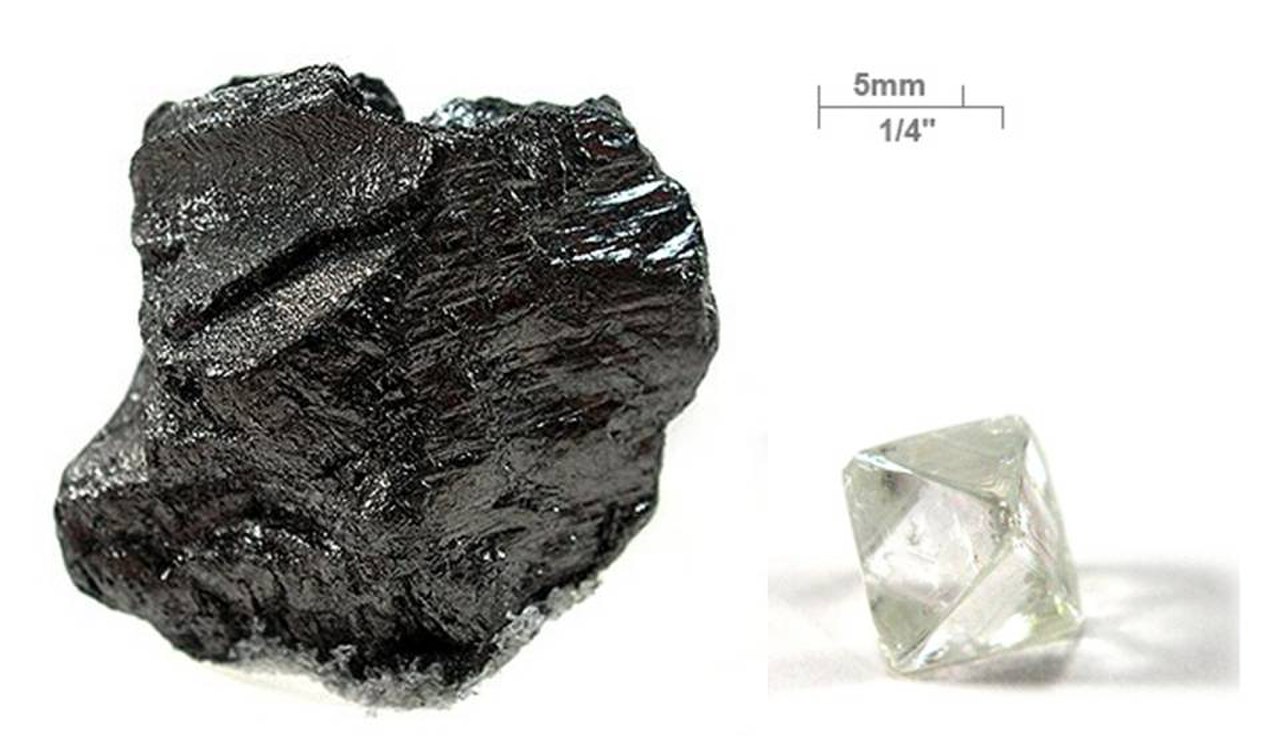
Carbon exhibits a remarkable range of physical properties due to its ability to form different structural arrangements, known as allotropes. These allotropes showcase the element's versatility. Diamond, a crystalline solid, features a tetrahedral lattice where each carbon atom is covalently bonded to four others. This rigid, three-dimensional network results in its extreme hardness, high refractive index, and electrical insulating properties, making it valuable in jewelry and industrial applications. Graphite, conversely, consists of planar layers of hexagonal rings of carbon atoms.
The weak van der Waals forces between these layers allow them to slide easily, rendering graphite soft, opaque, and an excellent lubricant and electrical conductor. Its name originates from the Greek 'graphein,' meaning 'to write,' referencing its use in pencils. Beyond these classic forms, modern science has unveiled other allotropes like fullerenes (spherical or tubular structures) and graphene (a single layer of graphite), which possess extraordinary electronic, thermal, and mechanical properties.
Graphene, for instance, is one of the strongest and most conductive materials known, opening doors for revolutionary technologies.
The Chemical Versatility
Carbon's tetravalent nature is the linchpin of organic chemistry. Its ability to form stable single, double, and triple covalent bonds with itself and other elements like hydrogen, oxygen, nitrogen, and sulfur enables the construction of an immense variety of molecules, from simple hydrocarbons to complex polymers like DNA and proteins. This molecular diversity is essential for the intricate biochemical pathways that sustain life.
Carbon's capacity to form long chains and rings is particularly crucial, allowing for the creation of macromolecules with specific functions. In biological systems, carbon cycles through various inorganic and organic forms, playing vital roles in energy transfer and cellular structure. Inorganic carbon compounds, such as carbon dioxide, are critical for photosynthesis, the process by which plants convert light energy into chemical energy, forming the base of most food webs.
The sheer number of described carbon compounds, estimated at over two hundred million, hints at the vast potential yet to be explored.
Carbon's Enduring Significance
Carbon's influence spans from the geological past to the forefront of technological innovation. Historically, the vast reserves of fossil fuels-coal, petroleum, and natural gas-represent concentrated stores of ancient solar energy captured by carbon-based life forms over millennia. These fuels have powered industrial revolutions but also pose significant environmental challenges due to greenhouse gas emissions.
Inorganic carbon reservoirs, including carbonates in rocks and dissolved CO2 in oceans, play critical roles in Earth's climate regulation and geochemical cycles. Looking forward, carbon's unique properties are being harnessed in advanced materials. Carbon nanotubes, with their exceptional tensile strength and electrical conductivity, are being explored for applications in composites, electronics, and medicine.
Graphene's remarkable characteristics are driving innovation in sensors, energy storage, and flexible displays. The ongoing research into novel carbon allotropes and their applications underscores carbon's enduring importance as a fundamental element shaping both the natural world and future technological landscapes.
Go deeper
Based on content from Wikipedia · Licensed under CC BY-SA 4.0