

Safavid Iran: Land of Red Hats!
Images

Safavid Iran in 1660



The Genesis of a National State
The Safavid Empire, reigning from 1501 to 1736, represents a pivotal epoch in Iranian history, often demarcated as the genesis of modern Iran. Its foundation was laid by the Safaviyya, a Sufi order with roots in Ardabil, likely of Kurdish or Azeri Turkic origin. This dynasty was not merely a political entity but a potent force for cultural and religious consolidation.
Unlike preceding dynasties that often ruled over a Persianate world but were not necessarily of Persian origin, the Safavids, while Turkic in language and culture in their early stages, consciously reasserted the Iranian identity of the region. They became the first native dynasty in centuries to establish a state officially recognized and known as Iran, unifying disparate territories under a singular banner. This reestablishment of a national state after periods of foreign domination, including Mongol and Timurid rule, was a profound psychological and political shift, marking a return to indigenous sovereignty and laying the groundwork for a distinct national consciousness.
The Qizilbash Catalyst and Bureaucratic Synthesis
The ascent of the Safavids to power was critically facilitated by the Qizilbash, a confederation of Turkoman tribes renowned for their martial prowess and distinctive red, conical hats. These warriors formed the vanguard of Shah Ismail I's campaigns, providing the military impetus that conquered vast swathes of territory, including Persia, Mesopotamia, and parts of the Caucasus. Their loyalty, though sometimes volatile, was instrumental in forging the initial empire.
However, the Safavid state was not solely a military construct. A sophisticated bureaucracy, largely staffed by ethnic Iranians, developed alongside the military. This synthesis of Turkic military leadership and Persian administrative expertise was crucial for governing the diverse empire effectively.
While the Qizilbash dominated the military sphere, Iranians increasingly occupied key positions in the civil administration, judiciary, and cultural institutions, creating a complex power dynamic that defined the Safavid state structure and contributed to its longevity.
The Twelver Imposition
The most enduring and transformative legacy of the Safavid dynasty is undoubtedly the establishment of Twelver Shīʿa Islam as the official state religion of Iran. Prior to the Safavids, Iran was religiously diverse, with significant Sunni Muslim and other minority populations. Shah Ismail I, a charismatic leader, mandated Shīʿa Islam, specifically the Twelver branch, as the compulsory faith.
This was a radical departure that fundamentally reshaped Iran's religious landscape and its geopolitical orientation. The Safavids actively persecuted Sunnis and enforced Shīʿa practices, leading to the conversion of many and the establishment of a strong Shīʿa clerical class. This religious policy not only unified the empire under a shared faith but also created a distinct religious identity that set Iran apart from its predominantly Sunni neighbors, particularly the Ottoman Empire.
The Safavids' promotion of Shīʿa Islam extended beyond Iran's borders, influencing religious developments in regions like Azerbaijan, Lebanon, and Iraq.
Economic Revival, Artistic Flourishing, and Enduring Influence
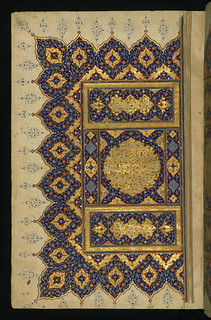
Despite its eventual collapse in 1736, the Safavid era left an indelible mark on Iran's economic, cultural, and political trajectory. At its zenith, the empire controlled vital trade routes connecting Europe and Asia, fostering a period of economic prosperity and cultural exchange. The Safavids were prodigious patrons of the arts, commissioning magnificent architectural marvels like the mosques and palaces of Isfahan, and fostering exquisite miniature painting, calligraphy, and carpet weaving.
Their administrative reforms, emphasizing a centralized bureaucracy with checks and balances, provided a model for subsequent Iranian governments. The Safavid legacy is most palpably felt in the enduring status of Twelver Shīʿīsm as Iran's state religion, a direct consequence of their policies. Furthermore, their role in reviving a strong sense of Iranian identity and statehood continues to resonate, solidifying their position as architects of the modern Iranian nation-state and a significant force in Islamic history.
See also
Frequently Asked Questions
What were the red hats that the Safavid soldiers wore?+
Why did the Safavid Empire make Twelver Shīʿa Islam the official religion?+
How did the Safavid Empire help create a modern Iranian identity?+
Who were the Qizilbash and what role did they play?+
What was the Safavid Empire’s lasting impact on culture and religion?+
Based on content from Wikipedia · Licensed under CC BY-SA 4.0