

The Philistines: Ancient Seafaring Warriors!
Images

Philistines pentapolis




Origins and Early Settlement
The Philistines represent a fascinating chapter in the history of the ancient Near East, particularly their settlement along the southern coast of Canaan during the Iron Age. Their origins are a subject of scholarly debate, with strong evidence pointing towards them being part of the enigmatic 'Sea Peoples' who migrated from the Aegean region. These migrations occurred around the late 13th and early 12th centuries BC, a period marked by widespread destruction and societal collapse across the Eastern Mediterranean, often referred to as the Late Bronze Age collapse.
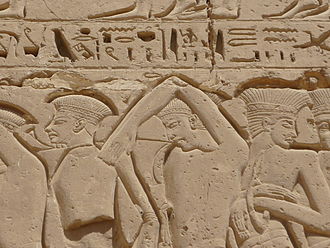
The Philistines, identified as the Peleset in Egyptian inscriptions like those at Medinet Habu, appear to have arrived as a distinct immigrant group. Their settlement was not a swift conquest but a gradual process of integration. Over time, they intermixed with the indigenous Canaanite populations, adopting local languages and customs while retaining elements of their own unique material culture.
This process of acculturation and assimilation created a hybrid society that would play a significant role in regional politics and conflicts for centuries.
Material Culture and Identity Markers
Archaeological evidence provides crucial insights into the distinct identity of the Philistines, differentiating them from their Canaanite neighbors. Their material culture, particularly their pottery, exhibits clear Aegean influences. Philistine pottery is often characterized by its distinctive bichrome decoration, geometric patterns, and specific forms that are traceable to Mycenaean traditions.
Beyond pottery, their metallurgy and architectural styles also suggest foreign origins. The Philistines are also famously depicted in Egyptian reliefs, notably at the Temple of Ramesses III, wearing distinctive feathered headdresses. While the exact meaning of these headdresses is debated, they served as a clear visual marker of Philistine identity to their contemporaries.
These artifacts and depictions are vital for understanding how the Philistines maintained a sense of self, even as they integrated into the local population and engaged in complex relationships with neighboring kingdoms.
Interactions and Conflicts
The Philistines are perhaps most widely known through their portrayal in the Hebrew Bible, where they are frequently depicted as adversaries of the Israelites. These narratives detail numerous conflicts, including the famous stories of Samson, Samuel, Saul, and David, with figures like Goliath becoming iconic symbols of Philistine might. While the Bible offers a rich, albeit biased, source of information, it is essential to consider other historical and archaeological evidence to gain a more balanced perspective.
The Philistines were not solely defined by their rivalry with Israel; they were part of a complex geopolitical landscape involving Egypt, Assyria, and Babylonia. Their confederation of city-states, including major centers like Ashdod, Ashkelon, Ekron, Gath, and Gaza, engaged in diplomacy, trade, and warfare with various powers. Understanding these interactions reveals the Philistines as a significant regional force whose presence shaped the political and cultural dynamics of the Levant during the Iron Age.
Decline and Assimilation
The independent trajectory of the Philistine city-states eventually succumbed to the rising power of the Neo-Assyrian and Neo-Babylonian Empires. By the 8th and 7th centuries BC, the Philistines were increasingly subjugated, becoming vassals to these vast empires. Their autonomy was definitively shattered around 604 BC when Nebuchadnezzar II of the Neo-Babylonian Empire conquered and destroyed key Philistine cities, such as Ashkelon and Ekron, in response to their participation in rebellions.
This military defeat led to the exile of many Philistines, a common practice of ancient empires aimed at disrupting local power structures and preventing future uprisings. Dispersed and resettled in Babylonia, the Philistine population gradually lost its distinct cultural and ethnic identity. Over generations, they assimilated into the diverse tapestry of Babylonian society.
By the late 5th century BC, the Philistines cease to appear as a recognizable, separate group in historical and archaeological records, marking the end of their unique chapter in ancient history, though the precise extent and nature of their final assimilation remain subjects of ongoing scholarly discussion.
Go deeper
Frequently Asked Questions
Who were the Philistines and where did they settle?+
How did the Philistines show their Aegean heritage?+
What did the Philistines wear that made them stand out?+
Who were the Philistines' main enemies and friends?+
What were the main Philistine city-states?+
Based on content from Wikipedia · Licensed under CC BY-SA 4.0