

Muhammad Ahmad: The Sudanese Leader
Images
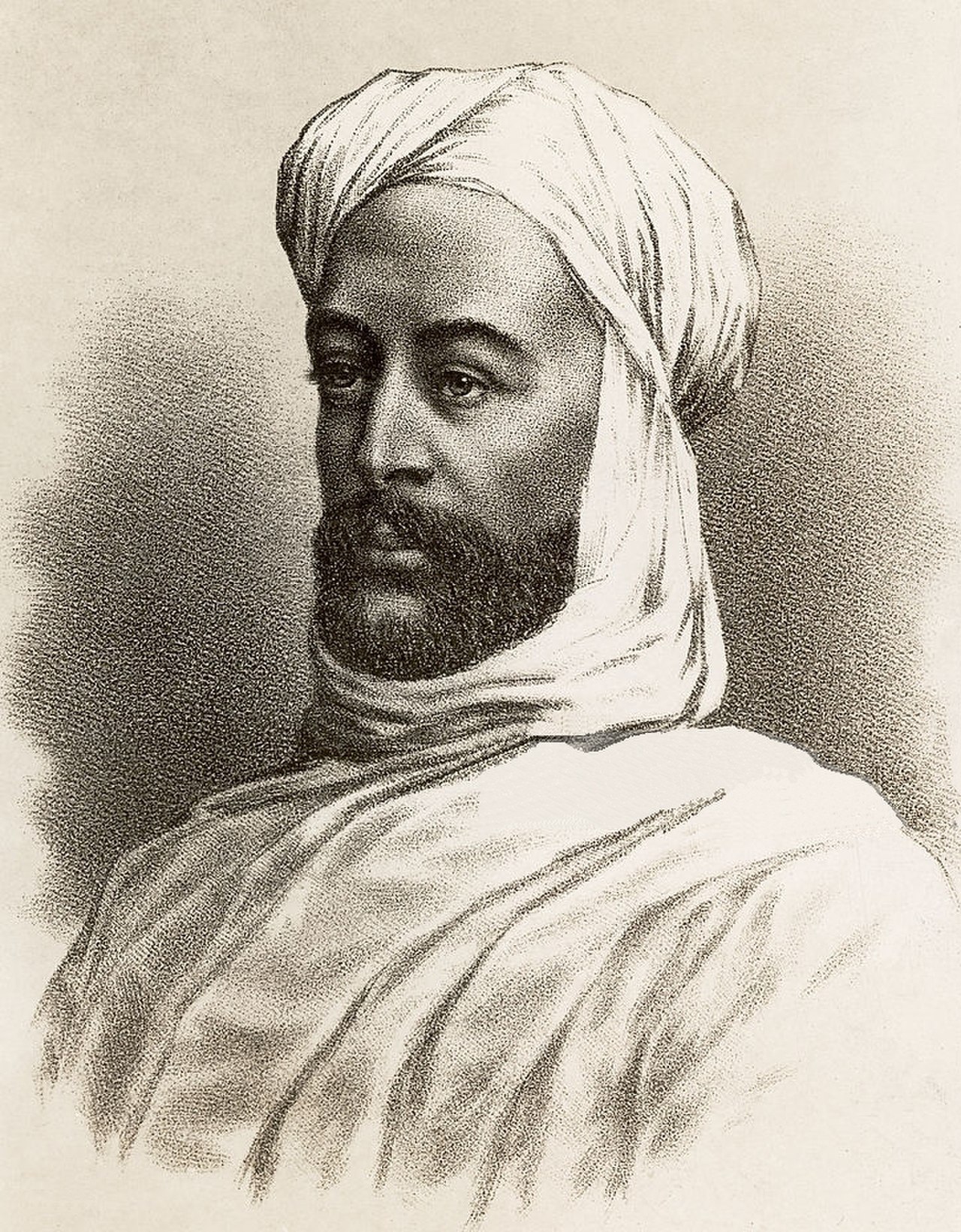
Muhammad Ahmad
The Genesis of the Mahdist Movement
Muhammad Ahmad bin Abdullah, born on August 12, 1843, emerged as a pivotal figure in 19th-century Sudanese history. Rooted in a deep spiritual conviction, he established himself as a prominent religious scholar and ascetic. His life took a transformative turn in 1881 when he proclaimed himself the Mahdi, the divinely guided redeemer awaited by Muslims.
This declaration was not merely a theological assertion but a potent political manifesto aimed at liberating Sudan from what he perceived as unjust Egyptian and Ottoman rule, which had been consolidated under the Khedivate. His message of religious revival and national self-determination resonated powerfully with diverse Sudanese populations, particularly the disenfranchised and those weary of foreign domination. He meticulously cultivated a loyal following, the Ansār, who became the backbone of his revolutionary movement, providing both spiritual devotion and military might.
Revolutionary Warfare and State Formation
The Mahdi's proclamation ignited the Mahdist War, a fierce struggle for Sudanese sovereignty. His military strategy, characterized by effective guerrilla tactics and unwavering morale, proved devastatingly successful against the better-equipped but often demoralized Egyptian forces. The zenith of his military campaign was the capture of Khartoum in 1885, a pivotal victory that symbolized the collapse of foreign authority and cemented his control over vast swathes of Sudan.
Under his leadership, the Mahdist State was established, encompassing a territory that stretched from the Red Sea coast to the fringes of Central Africa. This state was envisioned as a puritanical Islamic entity, governed by Sharia law and dedicated to religious and social reform. The establishment of this expansive state represented a profound challenge to the existing colonial and imperial order in Africa.
Leadership Transition and the State's Vulnerabilities
Muhammad Ahmad's reign as the Mahdi was tragically brief. He succumbed to typhus on June 21, 1885, leaving his burgeoning state in a precarious position. His death, occurring just months after the fall of Khartoum, created a significant leadership vacuum.
While his chief deputy, Abdallahi ibn Muhammad, assumed control and continued the administration, the Mahdist State began to face internal strains. Abdallahi's rule, though aimed at consolidating power, became increasingly autocratic, alienating some segments of the population and undermining the unity Muhammad Ahmad had fostered. The state struggled to effectively manage its vast territory, integrate diverse populations, and withstand mounting external pressures, particularly from the encroaching British Empire.
Enduring Legacy and Historical Significance
Despite the eventual collapse of the Mahdist State in 1899 following the Anglo-Egyptian reconquest, Muhammad Ahmad's impact on Sudanese history is undeniable and enduring. He is remembered not just as a military leader but as a transformative religious and political figure who inspired a national consciousness. The Mahdist movement continued to be a significant force in Sudanese politics and society for over a century, influencing religious practices and political discourse.
The lineage of leadership even extended into modern times, with his direct descendant, Sadiq al-Mahdi, serving as Prime Minister of Sudan twice in the late 20th century, championing democratic reforms. Muhammad Ahmad's life and revolution remain a critical case study in anti-colonial resistance, the formation of national identity, and the complex interplay of religion and politics in post-colonial Africa.
Go deeper
Frequently Asked Questions
What was Muhammad Ahmad known for in Sudan?+
Why did Muhammad Ahmad call himself the Mahdi?+
How did the Mahdist State start?+
When did Muhammad Ahmad die and what happened after?+
Where can we see Muhammad Ahmad's influence today?+
Based on content from Wikipedia · Licensed under CC BY-SA 4.0