

Mauritania: Land of Sand and Sea!
Images
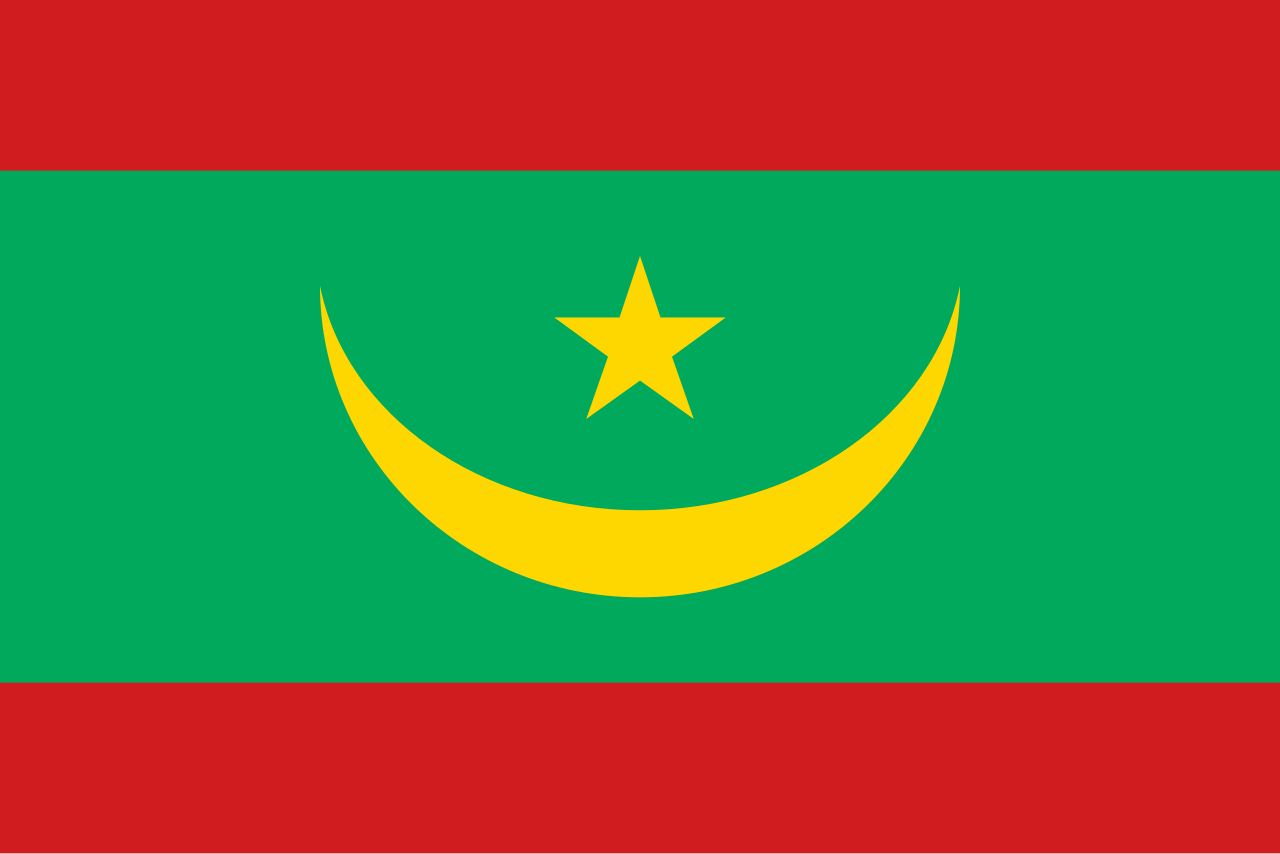
Mauritania
Geographic Extremes
Mauritania, officially the Islamic Republic of Mauritania, occupies a significant portion of Northwest Africa, bordered by the Atlantic Ocean to the west, Western Sahara and Algeria to the north, Mali to the east, and Senegal to the southwest. Its sheer territorial expanse ranks it as the 11th largest country in Africa and the 28th globally. The defining characteristic of Mauritania's geography is the overwhelming dominance of the Sahara Desert, which covers an astonishing 90% of its landmass.
This arid environment dictates much of the country's climate, resource distribution, and population settlement patterns. Consequently, the majority of Mauritania's approximately 4.3 million inhabitants are concentrated in the more temperate southern regions or along the Atlantic coast. The capital city, Nouakchott, situated on the Atlantic coast, serves as the nation's primary urban center and a crucial economic gateway, representing a stark geographical and demographic contrast to the vast, sparsely populated desert interior.
Historical Layers
The historical narrative of Mauritania is deeply intertwined with ancient North African civilizations and subsequent migratory waves. The region's name derives from Mauretania, a Latin term for an ancient Berber kingdom that extended across parts of modern-day Algeria and Mauritania. By the early 3rd century AD, Berber populations were established in what is now Mauritania.
A pivotal moment occurred in the late 7th century with the migration of Arab tribes, who introduced Islam, the Arabic language, and Arab culture, profoundly influencing the region's identity. This period of Arabization and Islamization laid the groundwork for the cultural and religious landscape that persists today. In the early 20th century, Mauritania became a French colony, integrated into French West Africa.
Following a period of colonial rule, the country achieved independence in 1960, marking the beginning of its journey as a sovereign nation. However, its post-independence history has been marked by political instability, including recurrent coups and periods of military dictatorship, though recent years have seen efforts towards democratic transitions.
Socio-Cultural Mosaic
Mauritania presents a complex socio-cultural tapestry, reflecting its historical interactions and diverse population groups. While culturally and politically aligned with the Arab world, with Arabic as the official language and Islam as the predominant religion (almost all inhabitants are Sunni Muslims), Mauritanian society is notably multiethnic. The Bidhan, often referred to as 'white Moors,' constitute about 30% of the population, while the Haratin, or 'black Moors,' make up approximately 40%.
Both these groups represent a significant fusion of Arab-Berber ethnicity, language, and cultural practices, embodying a unique historical synthesis. The remaining 30% of the population comprises various sub-Saharan ethnic groups, contributing to the nation's rich diversity. This intricate blend of identities and traditions shapes Mauritania's social dynamics and cultural expressions, creating a distinct national character.
Economic Realities
Mauritania possesses considerable natural resources, including iron ore, copper, and fish stocks, yet it remains a developing nation facing significant economic challenges. The economy is primarily based on agriculture, concentrated in the more fertile southern regions, and fishing along its extensive Atlantic coastline. These sectors are vital for employment and export earnings.
Despite its resource wealth, the country has struggled with poverty and economic development. Its economic policies and international trade are influenced by its position within the Arab League and its geographical location, which facilitates trade with both African and global partners. Harnessing its natural resources sustainably and diversifying its economy are key priorities for future growth and stability.
Governance and Human Rights
The political landscape of Mauritania since independence in 1960 has been characterized by a series of coups and periods of military rule, interspersed with attempts at democratic governance. The country officially operates as an Islamic Republic. A notable event was the 2008 coup led by General Mohamed Ould Abdel Aziz, who subsequently won presidential elections.
His successor, General Mohamed Ould Ghazouani, took office after the 2019 elections, which were considered the first peaceful transfer of power since independence. Despite these political developments, Mauritania faces significant human rights challenges. Its record on human rights, particularly concerning the perpetuation of slavery, has drawn international criticism.
The 2018 Global Slavery Index estimated a substantial number of slaves, highlighting a deeply entrenched issue that requires ongoing attention and reform efforts for the nation to progress towards full human rights realization.
Go deeper
Frequently Asked Questions
What is Mauritania like?+
Why is most of Mauritania desert?+
Where is the capital city of Mauritania?+
Who are the main people living in Mauritania?+
What natural resources does Mauritania have?+
Based on content from Wikipedia · Licensed under CC BY-SA 4.0