

Mark Twain
Images
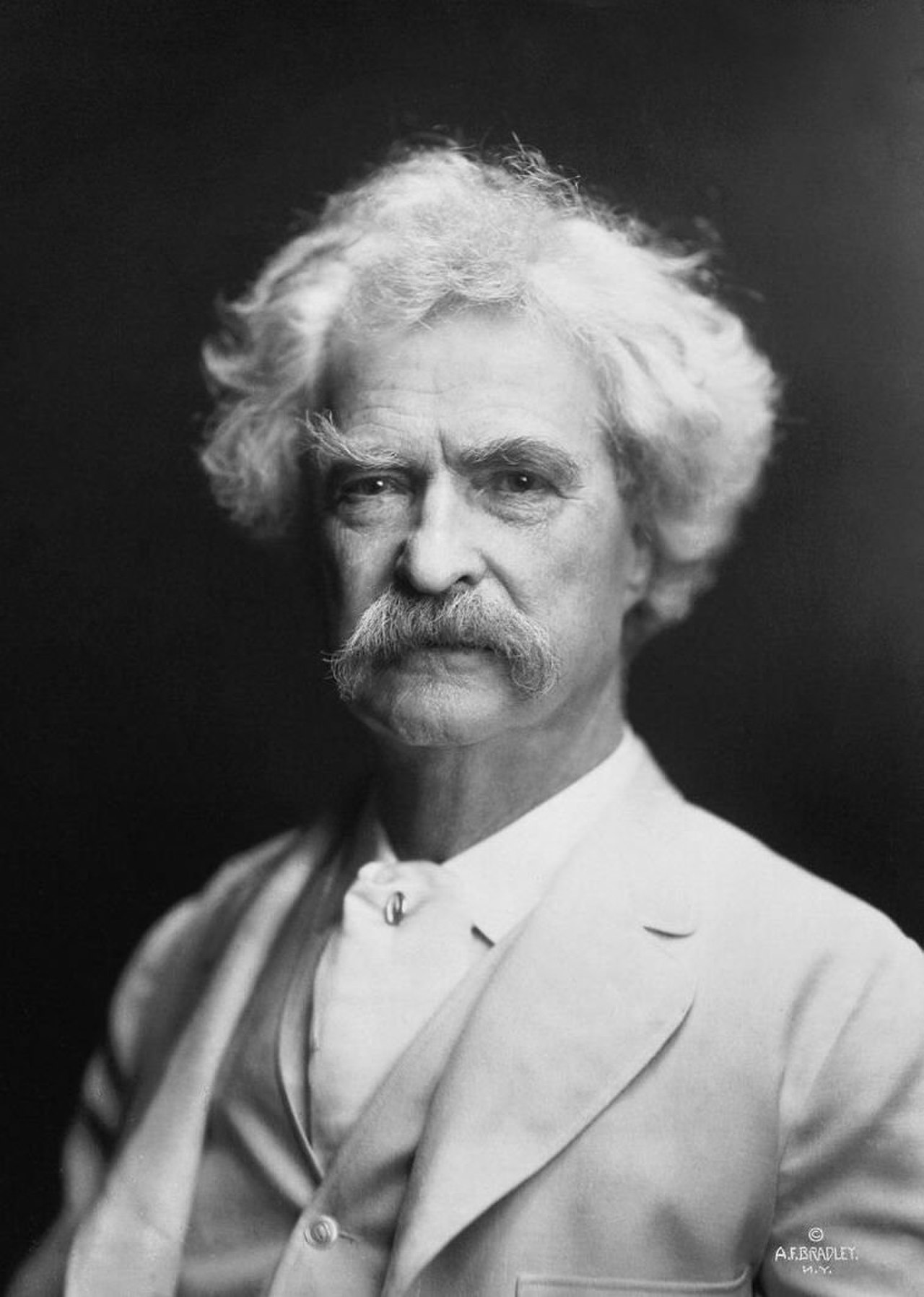
Mark Twain
The Genesis of a Literary Icon
Samuel Langhorne Clemens, universally known by his pen name Mark Twain, emerged as a towering figure in American letters, celebrated for his unparalleled humor and incisive social critique. Born in Florida, Missouri, on November 30, 1835, his formative years were steeped in the culture and commerce of the Mississippi River valley. His apprenticeship as a printer and subsequent career as a steamboat pilot on the Mississippi provided him with an intimate understanding of American vernacular, regional dialects, and the diverse tapestry of human experience.
This period was crucial, imbuing his writing with an authenticity and vividness that distinguished it from the more formal European literary traditions. After a brief, unsuccessful stint in mining in Nevada, Clemens turned to journalism, where his distinctive voice began to take shape. His early success with the humorous short story 'The Celebrated Jumping Frog of Calaveras County' in 1865 marked a pivotal moment, bringing him national recognition and establishing his reputation as a master humorist, a title William Faulkner would later echo by calling him 'the father of American literature'.
Navigating the Currents of American Identity
Mark Twain's literary canon is anchored by his seminal novels, which not only entertained but also profoundly shaped the trajectory of American fiction. 'The Adventures of Tom Sawyer' (1876) and its groundbreaking sequel, 'Adventures of Huckleberry Finn' (1884), are more than just adventure stories; they are complex explorations of childhood, societal norms, and moral development. 'Huckleberry Finn,' in particular, is widely regarded as the 'Great American Novel,' a designation earned through its unflinching portrayal of antebellum American society, its innovative use of dialect, and its courageous engagement with themes of racism, freedom, and individual conscience. Ernest Hemingway's assertion that 'All modern American literature comes from one book by Mark Twain called Huckleberry Finn' underscores its monumental influence. Twain's ability to weave profound social commentary into accessible narratives, often through the eyes of young protagonists, allowed him to critique societal hypocrisy and champion individual integrity in ways that resonated deeply with a nation grappling with its identity.
Beyond the Page
Mark Twain's influence extended far beyond his literary output; he was a formidable public intellectual and a vocal advocate for social justice. While his early writings often focused on regional color and humor, his later career saw him increasingly engage with pressing political and social issues. He evolved from a supporter of American expansionism to a staunch opponent of imperialism, serving as vice president of the American Anti-Imperialist League.
His sharp critiques of colonialism and the Spanish-American War, as well as his exposé of the brutal exploitation in the Congo Free State through his pamphlet 'King Leopold's Soliloquy' (1905), demonstrated his commitment to human rights and his willingness to challenge powerful global forces. Twain's lectures and writings became platforms for his evolving views, solidifying his role as a conscience for the nation, using his wit not just for laughter but as a potent weapon against injustice and hypocrisy.
The Cosmic Connection
One of the most enduring and poetic aspects of Mark Twain's biography is his profound connection to Halley's Comet. Born in November 1835, just weeks after the comet's perihelion, Clemens developed a lifelong fascination with this celestial visitor. He often remarked on this coincidence, weaving it into his personal narrative.
In 1909, with characteristic prescience and flair, he articulated his belief: 'I came in with Halley's Comet in 1835; it's coming again next year, and I expect to go out with it.' This remarkable prediction came to pass with uncanny accuracy. Mark Twain died of a heart attack on April 21, 1910, the day after Halley's Comet made its closest approach to Earth. This extraordinary alignment between his birth and death, tied to a cosmic event, has cemented his place in popular culture as a figure whose life seemed guided by a grand, almost mythical, destiny, adding a layer of profound mystique to his already legendary status.
Go deeper
Based on content from Wikipedia · Licensed under CC BY-SA 4.0