

Ernest Hemingway: The Writer Who Lived Big!
Images
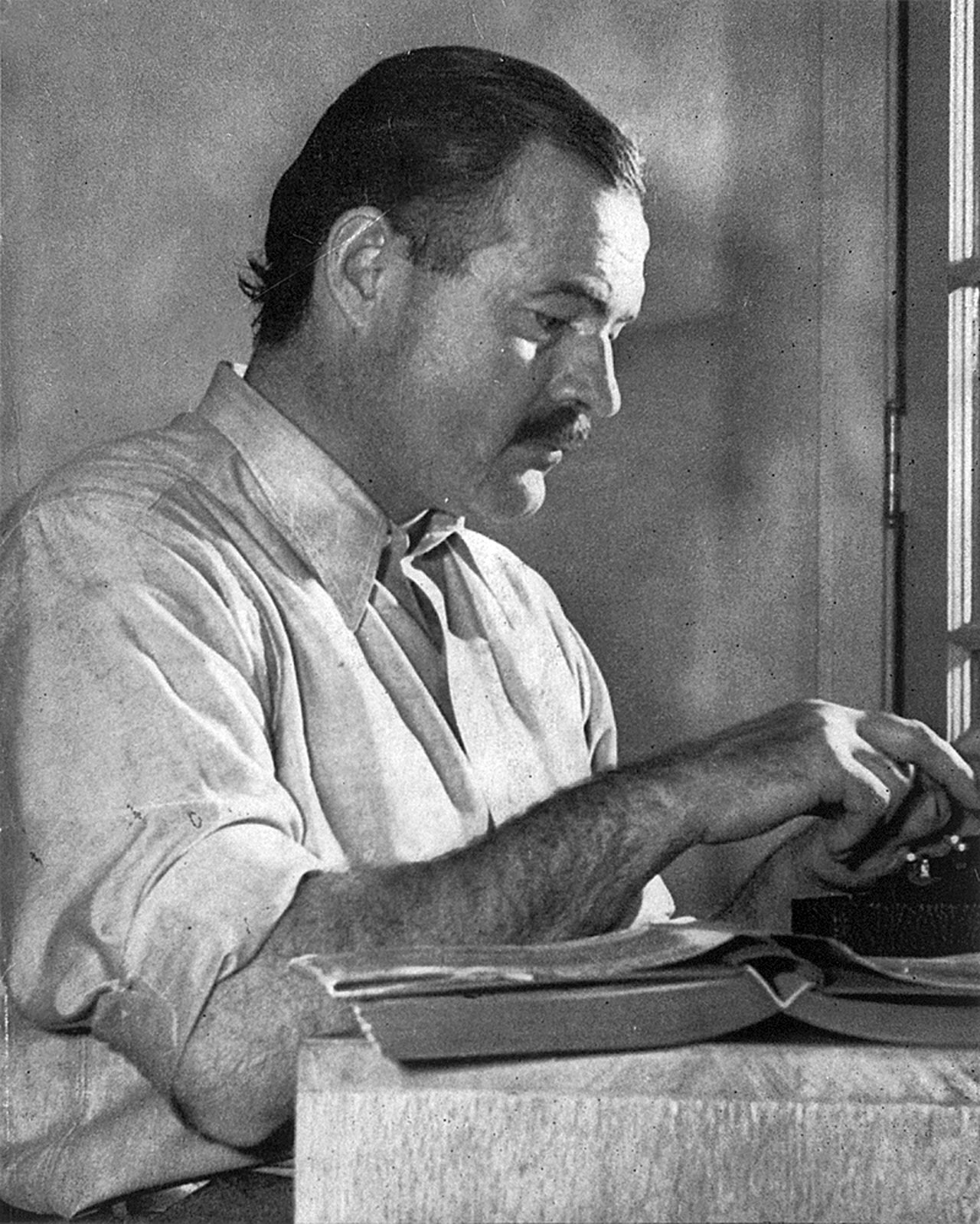
Ernest Hemingway
Forging a Literary Identity Amidst Conflict and Culture
Ernest Hemingway's journey from Oak Park, Illinois, to global literary icon is a testament to a life lived intensely. His early career as a journalist for The Kansas City Star instilled a discipline for concise reporting, a skill that would become the bedrock of his literary style. His service as an ambulance driver on the Italian Front during World War I was a crucible, exposing him to the brutal realities of war and leaving him physically and psychologically scarred.
This formative experience directly informed his later masterpieces. Upon moving to Paris in 1921, he was immersed in the expatriate modernist scene, absorbing influences from writers like Gertrude Stein and Ezra Pound, which helped him refine his signature 'iceberg theory' of writing – where much of the meaning lies beneath the surface.
The 'Iceberg Theory' and Its Literary Manifestation
Hemingway's prose is celebrated for its deliberate simplicity, eschewing elaborate adjectives and adverbs for direct, declarative sentences and powerful verbs. This 'iceberg theory' suggests that the true weight and meaning of a story are in what is omitted, leaving the reader to infer deeper emotions and themes. His debut novel, 'The Sun Also Rises' (1926), masterfully depicted the disillusionment of the 'Lost Generation' through spare dialogue and understated emotional currents.
Subsequent works like 'A Farewell to Arms' (1929) and 'For Whom the Bell Tolls' (1940) further cemented his reputation, drawing directly from his experiences as a war correspondent, demonstrating his commitment to portraying the human condition under extreme duress with unflinching honesty.
A Life Intertwined with Historical Turmoil
Hemingway's life was as dramatic as his fiction. He actively sought out significant historical events, serving as a journalist during the Spanish Civil War and later accompanying Allied troops during World War II, notably witnessing the Normandy landings and the liberation of Paris. This proximity to conflict provided rich material but also exposed him to immense danger.
His adventurous spirit extended beyond war reporting; he was an avid big-game hunter, fisherman, and bullfight enthusiast. A harrowing experience in 1954, involving two successive plane crashes in Africa, left him severely injured and grappling with chronic pain and declining health for the remainder of his life, a struggle that profoundly impacted his later years and work.
Enduring Legacy and Critical Acclaim
The profound impact of Ernest Hemingway on 20th-century literature is undeniable. His minimalist style set a new standard for American prose, influencing generations of writers across genres. His ability to capture the essence of human experience – courage, loss, resilience, and the search for meaning in a chaotic world – continues to resonate deeply with readers.
The critical success of 'The Old Man and the Sea' (1952), which earned him the Pulitzer Prize for Fiction, was a precursor to the ultimate recognition: the Nobel Prize in Literature in 1954, awarded 'for his mastery of the art of narrative, most recently demonstrated in The Old Man and the Sea, and for the influence that he has exerted on contemporary style.' Despite his personal battles, Hemingway's literary contributions remain a cornerstone of modern literary studies.
Key Contributions and Personal Struggles
Hemingway's primary contribution lies in his revolutionary prose style, characterized by its clarity, conciseness, and emotional depth achieved through implication rather than explicit statement. This approach not only redefined literary realism but also made complex psychological states accessible through subtle narrative techniques. His works often grapple with themes of stoicism, grace under pressure, disillusionment, and the search for authenticity in a world often perceived as corrupt or meaningless.
However, his life was also marked by significant personal challenges, including struggles with mental health and alcoholism, which ultimately contributed to his tragic death by suicide in 1961. His complex legacy serves as both an inspiration for literary innovation and a somber reminder of the human cost of intense experience and internal conflict.
Go deeper
Frequently Asked Questions
What made Ernest Hemingway's writing style special?+
Why did Hemingway travel to places like Paris and war zones?+
How did Hemingway's war experiences influence his books?+
What adventures did Hemingway enjoy besides writing?+
Did Ernest Hemingway win any big awards for his books?+
Based on content from Wikipedia · Licensed under CC BY-SA 4.0