

Mahatma Gandhi
Images
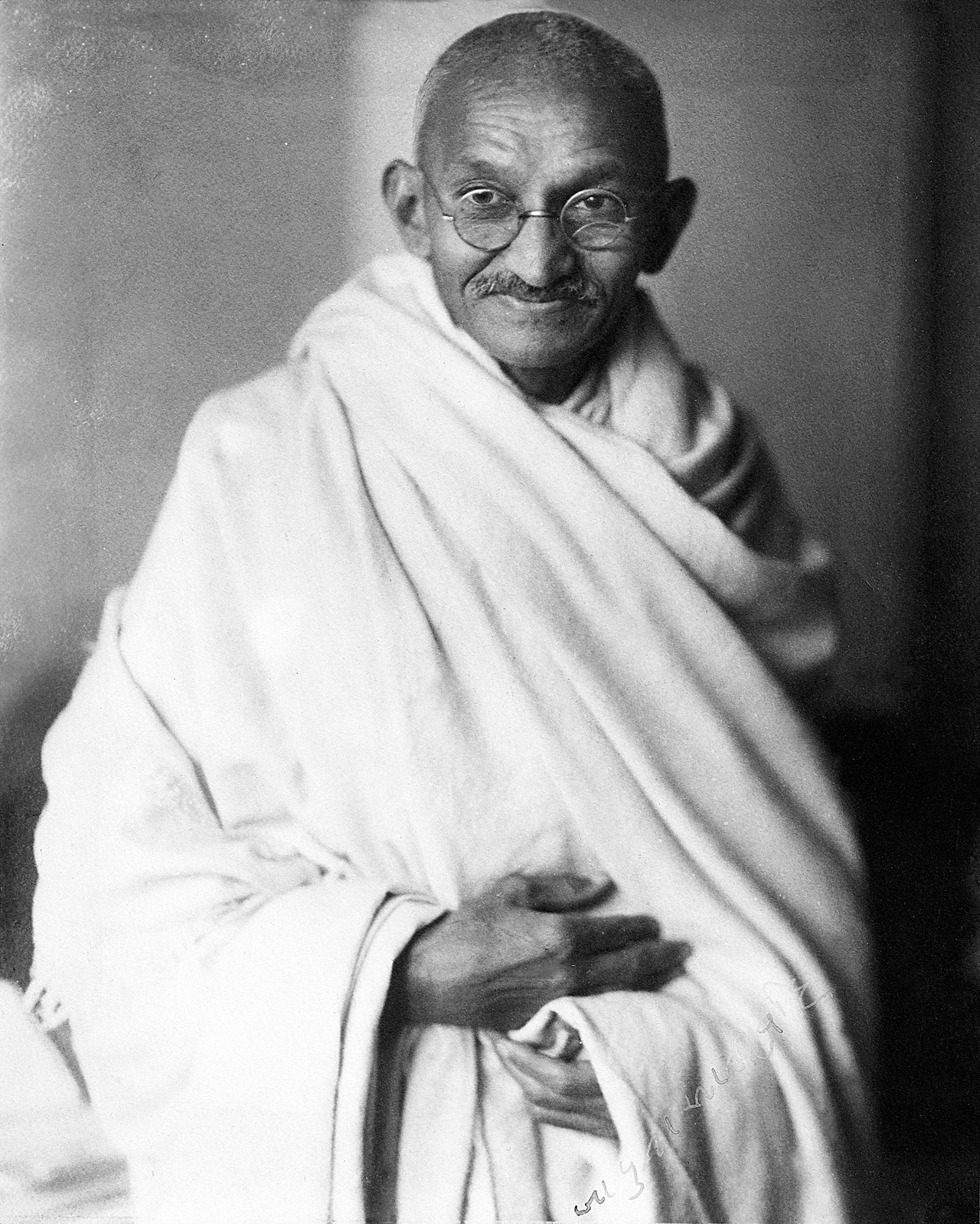
Mahatma Gandhi
The Genesis of a Movement
Mohandas Karamchand Gandhi (1869-1948) emerged not just as a political leader but as a profound ethical thinker whose life's work revolutionized the concept of resistance. His legal training in London and subsequent struggles in South Africa from 1893 to 1914 were instrumental in forging his philosophy of Satyagraha, or 'truth force.' Witnessing and experiencing racial discrimination firsthand, Gandhi developed a method of political action rooted in truth, nonviolence (Ahimsa), and self-suffering.
He organized the Indian community in South Africa, employing tactics like mass civil disobedience and non-cooperation against discriminatory laws. This period was crucial, demonstrating the efficacy of nonviolent protest on a large scale and laying the groundwork for his future leadership in India. His return to India in 1915 marked the beginning of a national movement that would challenge the might of the British Empire.
Mobilizing a Nation
Upon assuming leadership of the Indian National Congress in 1921, Gandhi transformed the party into a mass movement, mobilizing peasants, farmers, and urban laborers. His vision extended beyond mere political independence (Swaraj) to encompass social and economic reform, including poverty alleviation, women's rights, religious harmony, and the eradication of untouchability. Iconic campaigns defined his leadership: the 1930 Salt March, a 250-mile trek to protest the British salt monopoly, galvanized millions and became a potent symbol of defiance.
The promotion of the hand-spun 'dhoti' and the 'charkha' (spinning wheel) were not just sartorial choices but powerful statements of economic self-reliance and a rejection of British industrial dominance. Gandhi's simple lifestyle, fasting, and self-sufficiency resonated deeply with the Indian populace, making him a relatable and inspiring figurehead.
The Ethical Framework
Gandhi's activism was deeply intertwined with his personal philosophy and spiritual beliefs. Ahimsa, the principle of nonviolence, was the cornerstone of his approach, extending beyond the absence of physical harm to encompass a commitment to truth, compassion, and respect for all life. He viewed violence as a sign of weakness and believed that true strength lay in moral courage and self-control. Gandhi masterfully employed fasting as a political and spiritual tool, using hunger strikes to protest injustice, promote reconciliation, and induce introspection among both followers and opponents.
These fasts were not mere stunts but profound acts of self-purification and moral persuasion, often bringing adversaries to the negotiating table. His emphasis on personal transformation and simple living served as a moral compass for the nation.
Independence, Partition, and the Enduring Legacy
Gandhi's lifelong struggle culminated in India's independence in August 1947. However, the joy was overshadowed by the violent partition of the subcontinent into India and Pakistan, a division Gandhi vehemently opposed. He dedicated his final months to quelling the ensuing communal riots, undertaking fasts to restore peace, particularly in Punjab and Bengal.
His unwavering stance on religious pluralism and his defense of minority rights led to his assassination on January 30, 1948, by Nathuram Godse, a Hindu nationalist. Despite this tragic end, Gandhi's legacy transcends national borders. He is revered as the 'Father of the Nation' in India and is globally recognized as a seminal figure in the history of nonviolent resistance, profoundly influencing subsequent civil rights leaders and movements for justice and freedom across the world.
Go deeper
Frequently Asked Questions
What is Mahatma Gandhi known for?+
Why did Gandhi go to South Africa?+
How did Gandhi protest the British salt monopoly?+
What was the purpose of Gandhi's fasts?+
What happened to Gandhi after India became independent?+
Based on content from Wikipedia · Licensed under CC BY-SA 4.0