

The Amazing Land of Israel!
Images

Peasant Druses, (i.e., Druzes) of Mount Carmel taking a meal, Holy Land, (i.e., Israel)-LCCN2002725090




Defining Eretz Yisrael
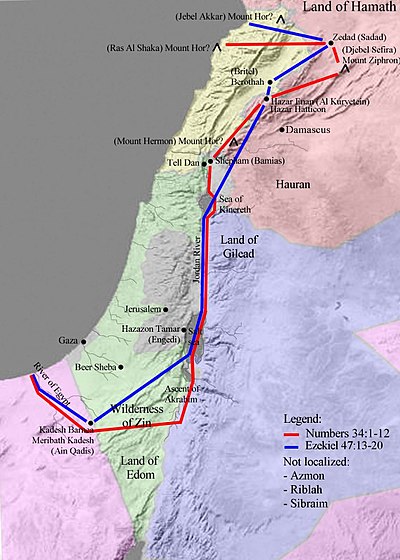
The term 'Land of Israel' (Eretz Yisrael) transcends simple cartography, representing a complex interplay of geography, religious doctrine, and historical narrative. Situated in the Southern Levant, this territory has been the focus of profound theological claims and historical events. Its definition within the Hebrew Bible is not monolithic; passages in Genesis, Exodus, Numbers, and Ezekiel delineate its borders with varying specificity.
Common biblical references like 'from Dan to Beersheba' and 'from the entrance of Hamath unto the brook of Egypt' provide evocative, albeit imprecise, geographical markers of its ancient extent. These descriptions are foundational to the concept of the land as a divinely ordained inheritance for the Jewish people, a covenantal promise central to their religious identity and historical consciousness. Understanding Eretz Yisrael requires acknowledging its dual nature: a tangible landmass and an enduring spiritual and national ideal that has shaped Jewish existence for millennia.
Biblical Foundations and Theological Interpretations
The biblical narrative establishes the Land of Israel as a divinely granted patrimony, a cornerstone of Jewish theology. The Book of Genesis recounts God's initial promise to Abram (later Abraham), a covenantal agreement explicitly intended for his descendants. This promise was later reaffirmed and passed through Isaac to Jacob and his lineage, who became known as the Israelites.
The Torah, particularly the books of Exodus, Numbers, and Deuteronomy, along with the historical accounts in Joshua, further elaborate on this divine mandate and the laws governing the people within this land. This theological framework posits the land as a God-given inheritance, intrinsically linked to Jewish religious law and practice. However, interpretations diverge significantly.
While Jewish religious belief holds this land as a perpetual inheritance, some theological perspectives, such as replacement theology, argue that these promises were superseded by the advent of Jesus. Conversely, Christian Zionists often affirm the enduring divine right of the Jewish people to the land, grounding their claims in a unique theological and historical attachment.
Historical Manifestations and Shifting Boundaries
The historical realization of Eretz Yisrael has been characterized by fluctuating political boundaries and evolving statehood. The biblical descriptions of the land's limits often differ from the actual territories governed by historical Israelite and Jewish kingdoms. These include the United Kingdom of Israel under Saul, David, and Solomon, the subsequent divided kingdoms of Israel (Samaria) and Judah, and later entities like the Hasmonean and Herodian kingdoms.
At their zenith, these realms exercised dominion over lands that bore resemblance to, but were not identical with, the biblical ideal. The concept's fluidity is further evidenced during the League of Nations mandate period (1920–1948), when 'Eretz Yisrael' formed part of the official Hebrew name for Mandatory Palestine, appearing as 'א״י' (Aleph-Yod) on official documents. This historical layering underscores the dynamic relationship between the enduring concept of the land and its concrete political manifestations across different eras.
The Enduring Legacy and Modern Political Discourse
The concept of the Land of Israel remains a potent force in contemporary discourse, particularly within the political landscape of the modern State of Israel. The founders of the state drew heavily upon this historical and religious ideal in their aspirations for national sovereignty. Today, the notion of Eretz Yisrael frequently informs political debates, most notably concerning the status of the West Bank.
In official Israeli discourse, this territory is referred to as Judea and Samaria, a designation that directly invokes historical and biblical connections to the land. While religious claims to the land based on ancient texts have been challenged and, in some instances, rejected by Israeli courts, the idea of Eretz Yisrael continues to be a significant element in national identity, political ideology, and ongoing discussions about territory and sovereignty in the region.
Key Facts and Terminology
The Land of Israel is defined by its geographical location in the Southern Levant and its deep historical and religious significance. Its biblical boundaries are described in various ways, such as 'from Dan to Beersheba.' Historically, numerous kingdoms have existed within or claimed parts of this territory, including the ancient kingdoms of Israel and Judah, and later the Hasmonean and Herodian realms. During the British Mandate, its Hebrew name, Eretz Yisrael, was officially recognized.
The concept continues to influence modern political discussions, particularly regarding areas like Judea and Samaria. Key terms include the Hebrew Bible, which outlines the foundational narratives and promises related to the land, and the concept of a covenant, representing a solemn agreement, often between God and the Jewish people, concerning their inheritance of this territory.
See also
Frequently Asked Questions
What is the Land of Israel?+
Why did God promise the land to Abraham?+
How do people know where the Land of Israel is?+
Why do some people think the promise is still true today?+
When did the name "Eretz Yisrael" appear on official papers?+
Based on content from Wikipedia · Licensed under CC BY-SA 4.0