

Concept: The Building Blocks of Your Brain!
Images
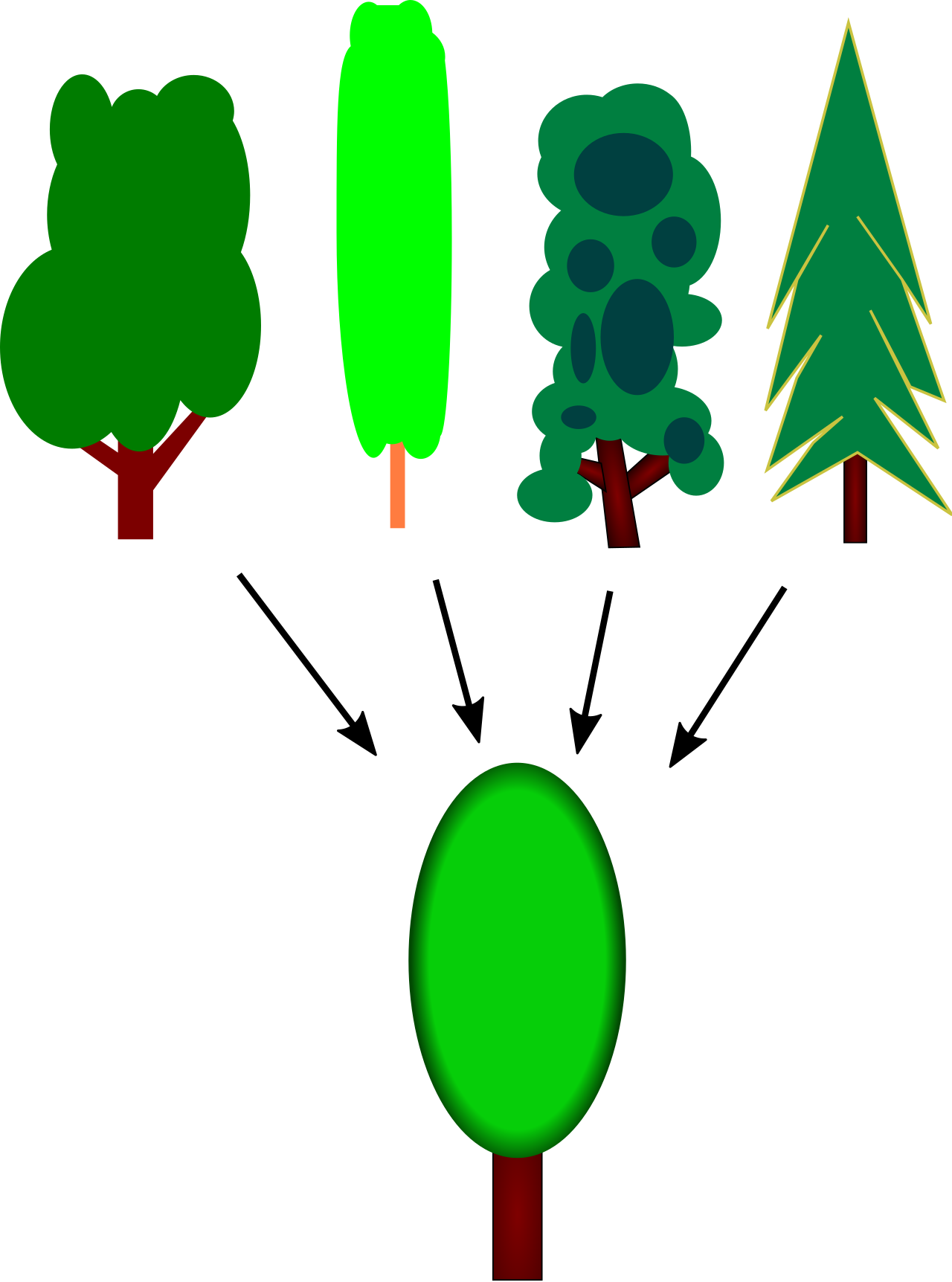
Concept
The Foundational Nature of Concepts in Cognition
Concepts are the fundamental units of knowledge that allow humans to organize, interpret, and make sense of the world. They are abstract mental representations that capture the essential features of a class of objects, events, or ideas, enabling us to go beyond specific instances and form generalizations. Without concepts, our experience would be a chaotic influx of raw sensory data, devoid of meaning or structure.
They are the cognitive tools that allow us to categorize, classify, and understand the relationships between different pieces of information. This ability to form and manipulate concepts is central to higher-order thinking, including reasoning, problem-solving, and creativity. They provide the framework upon which more complex cognitive processes are built, allowing us to navigate and interact effectively with our environment.
Evolution of Conceptualization
The study of concepts has a long and rich history, stretching back to ancient Greek philosophy. Thinkers like Plato proposed innate ideas, while Aristotle emphasized empirical observation and abstraction as the basis for concept formation. This philosophical debate continued through the Enlightenment, with empiricists like Locke and Hume arguing that all knowledge, including concepts, derives from sensory experience.
In the 20th century, psychology took center stage. Behaviorists initially focused on observable learning, but cognitive psychology later revived interest in internal mental processes. Researchers developed various theories, including prototype theory (concepts are based on typical examples) and exemplar theory (concepts are based on all encountered examples), as well as rule-based and theory-based approaches, each offering a different lens through which to understand how we acquire and utilize concepts.
The Indispensable Role of Concepts in Human Society and Knowledge
Concepts are not merely abstract mental constructs; they are the bedrock of human society and knowledge systems. They facilitate efficient communication by providing shared mental frameworks, allowing individuals to convey complex ideas with minimal ambiguity. The development of language itself is intrinsically tied to the formation and refinement of concepts.
Furthermore, scientific progress relies heavily on the precise definition and manipulation of concepts, such as 'mass,' 'energy,' or 'gene.' In law, concepts like 'justice' and 'rights' shape societal structures. In art and culture, concepts like 'beauty' or 'tradition' influence creative expression and social norms. Ultimately, concepts empower us to learn from the past, understand the present, and plan for the future, making them essential for both individual development and collective advancement.
Mechanisms of Concept Formation and Application
Concept formation is a dynamic interplay of perception, memory, and reasoning. It often begins with perceptual learning, where repeated exposure to instances of a category allows the brain to identify common features and discard irrelevant details. This process can involve both bottom-up (data-driven) and top-down (knowledge-driven) mechanisms.
For example, learning the concept of 'chair' might involve recognizing common features like legs and a seat (bottom-up), but also understanding its function based on prior knowledge (top-down). Once formed, concepts are applied through processes like categorization, where new stimuli are assigned to existing concepts, and inference, where we draw conclusions based on the properties of a concept. This continuous cycle of formation and application allows our conceptual understanding to evolve and become more sophisticated over time.
Conceptual Understanding in Contemporary Contexts
In the digital age, concepts are more critical than ever. Artificial intelligence and machine learning heavily rely on algorithms designed to identify, classify, and generate concepts from vast datasets. Understanding how humans form concepts informs the development of more sophisticated AI systems capable of nuanced reasoning and learning.
Furthermore, the rapid dissemination of information online necessitates a strong conceptual understanding to critically evaluate sources and distinguish fact from misinformation. Concepts also play a vital role in interdisciplinary fields, bridging the gap between different areas of study and fostering innovation. From understanding complex global issues like climate change to navigating the intricacies of personal finance, a robust conceptual toolkit is essential for informed decision-making and effective engagement with the modern world.
Go deeper
Frequently Asked Questions
What is a concept and why is it important?+
How do we learn new concepts?+
Who first talked about concepts?+
What are prototype and exemplar theories?+
How do concepts help us in everyday life?+
Based on content from Wikipedia · Licensed under CC BY-SA 4.0