

Lake Texcoco
Images

'Lake Texcoco and Valley of Mexico' (1960s) by Luis Covarrubias - Aztecs - National Museum of Anthropology - Mexico 2024




The Anahuac Basin's Hydrological Heart
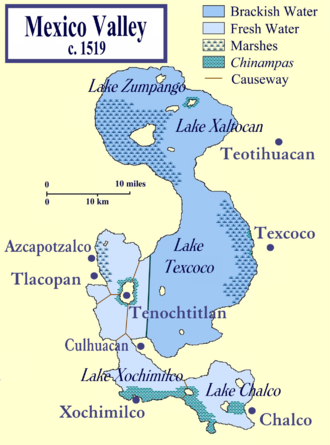
Lake Texcoco was the central and largest of five interconnected lakes that once dominated the Anahuac Valley, a high-altitude basin in central Mexico. This natural saline lake system was characterized by its unique hydrological dynamics, influenced by volcanic activity and seasonal rainfall. The lake's salinity varied, with Texcoco being the most saline.
Its strategic location and abundant resources made it an ideal setting for complex societies to flourish. The Mexica, migrating into the valley, famously established their capital, Tenochtitlan, on an island in Lake Texcoco around 1325. This ingenious settlement, a marvel of urban planning and engineering, utilized chinampas (floating gardens) for agriculture and causeways for connectivity, demonstrating a profound symbiotic relationship with the lake environment.
The lake was not merely a water source but the very foundation of their civilization, providing sustenance, defense, and a unique urban landscape that would become the heart of the Aztec Empire.
Colonial Engineering and the Genesis of Mexico City
Following the Spanish conquest in 1521, the colonial administration inherited the challenge of managing the lake system, primarily to mitigate devastating floods that plagued the burgeoning city. This led to centuries of ambitious, and often controversial, hydraulic engineering projects aimed at draining the lakes, particularly Lake Texcoco. The construction of canals, dikes, and tunnels, such as the Tula and Nochistongo canals, gradually reduced the lake's expanse.
This process was driven by a desire to expand the urban footprint of Mexico City and to assert control over the natural environment. The draining of Lake Texcoco was a monumental undertaking that fundamentally reshaped the Valley of Mexico's geography, transforming a vast aquatic ecosystem into a terrestrial foundation for one of the world's largest metropolises. This transformation, however, set the stage for significant environmental and geological challenges.
Ecological Devastation and the Subsidence Crisis
The extensive drainage of Lake Texcoco has resulted in severe ecological consequences. The unique lacustrine ecosystem, which supported a rich biodiversity, was irrevocably altered. Many endemic species, including the iconic axolotl (Ambystoma mexicanum), have become critically endangered or extinct due to habitat loss and ecosystem degradation.
The removal of the lake's water also led to a dramatic decrease in the water table. As groundwater is heavily extracted to meet the demands of the massive urban population, the underlying clay soils compact, causing widespread land subsidence. Mexico City is sinking at an alarming rate, with some areas subsiding by as much as 10-15 meters since the colonial era.
This geological phenomenon poses significant risks to infrastructure, exacerbates flooding during heavy rains, and complicates urban planning and development.
Modern Challenges and Future Prospects
Today, Lake Texcoco exists primarily as a memory and a series of fragmented remnants, though significant efforts are underway for its ecological restoration and reintegration into the urban landscape. The challenges facing the former lakebed are multifaceted, encompassing water scarcity, continued land subsidence, and the need to preserve remaining biodiversity. The population of the Mexico City metropolitan area exceeds 22 million, placing immense pressure on resources.
The primary language spoken is Spanish, reflecting the colonial legacy. Ongoing projects aim to create ecological parks and wetlands in the remaining areas, seeking to revive some of the lost ecological functions and provide recreational spaces. These initiatives highlight a growing awareness of the importance of ecological restoration and sustainable urban development, acknowledging the profound and lasting impact of Lake Texcoco's transformation on the region's environment and its inhabitants.
Go deeper
Frequently Asked Questions
What was Lake Texcoco and why was it important to the Aztecs?+
How did the Aztecs grow food on the lake?+
Why did the Spanish and later Mexico City drain Lake Texcoco?+
What happened to the animals that lived in Lake Texcoco after it was drained?+
Is there any chance of bringing back Lake Texcoco today?+
Based on content from Wikipedia · Licensed under CC BY-SA 4.0