

Axolotl: The Walking Fish That Never Grows Up!
Images

Axolotl




The Enduring Larva
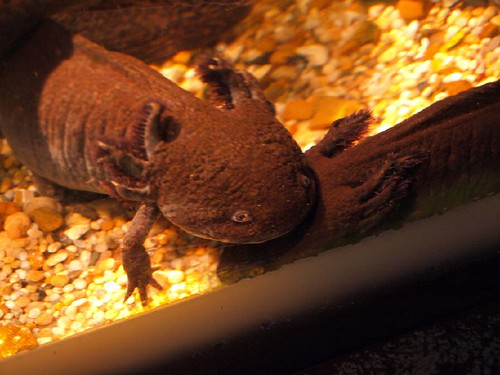
The axolotl, scientifically known as Ambystoma mexicanum, is a striking example of neoteny, a developmental phenomenon where an organism retains larval traits into adulthood. Unlike most amphibians, which undergo a dramatic metamorphosis to transition from an aquatic larval stage to a terrestrial or semi-aquatic adult form, axolotls remain fully aquatic. They retain their external gills, prominent frilly appendages that facilitate underwater respiration, and their gilled, larval morphology throughout their lifespan.
This state of arrested development is not unique to axolotls within the Ambystoma genus, as some tiger salamanders (Ambystoma tigrinum) can also exhibit neoteny under specific environmental conditions. However, for the axolotl, it is the default and defining characteristic. This perpetual larval state has made them invaluable subjects for scientific inquiry into developmental biology and the genetic control of metamorphosis, offering a unique perspective on evolutionary pathways and the plasticity of life cycles.
From Ancient Lakes to Urban Sprawl
Historically, axolotls were endemic to a complex network of interconnected lakes and wetlands in the Valley of Mexico, notably Lake Xochimilco and Lake Chalco, with presumed populations also in Lakes Texcoco and Zumpango. This ancient aquatic ecosystem was the cradle of their evolution. However, the arrival of Spanish settlers after the Aztec Empire's fall initiated a relentless process of drainage and land reclamation.
These vital waterways were systematically altered to support agriculture and the burgeoning urban expansion of Mexico City. The result has been a catastrophic reduction and fragmentation of their natural habitat. Today, the wild axolotl population is critically endangered, confined to a few remaining, highly degraded canals in Xochimilco, which are heavily impacted by urbanization, water pollution, and the introduction of invasive predatory fish species such as tilapia and carp.
This dramatic decline underscores the vulnerability of specialized species to rapid environmental change.
Regenerative Prowess
The axolotl's most celebrated attribute is its extraordinary capacity for regeneration. They possess an unparalleled ability to regrow not only limbs but also complex organs, including parts of their heart, brain, and eyes, without any scarring. This regenerative capability far surpasses that of most vertebrates.
Scientists are meticulously investigating the molecular and cellular mechanisms underlying this phenomenon. They aim to understand how axolotls can perfectly replicate tissues and structures, a process that involves dedifferentiation (cells reverting to a more primitive state), proliferation, and redifferentiation. The potential applications for human medicine are immense, offering hope for new treatments for spinal cord injuries, limb loss, and degenerative diseases.
The axolotl serves as a living blueprint for understanding and potentially harnessing the power of biological repair.
Ecological Significance, Cultural Heritage, and Conservation Imperatives
The axolotl's importance extends beyond its scientific intrigue. Culturally, it holds deep roots in Aztec mythology, where it was associated with the god Xolotl, representing transformation and duality. In contemporary times, its role as a model organism in research has led to significant advancements in developmental biology, genetics, and regenerative medicine.
Furthermore, the axolotl is a key indicator species for the health of its native aquatic environment. Its critically endangered status is a stark warning about the ecological degradation of the Xochimilco canals. Conservation efforts are multifaceted, focusing on habitat restoration, pollution control, managing invasive species, and captive breeding programs. The survival of the axolotl is not just about preserving a unique species; it is about safeguarding a vital piece of Mexico's natural heritage and a potential key to future medical breakthroughs.
See also
Frequently Asked Questions
What is an axolotl?+
Why does an axolotl never grow up?+
How can axolotls regrow their limbs and organs?+
Where do axolotls live in the wild?+
Why are scientists interested in axolotls?+
Based on content from Wikipedia · Licensed under CC BY-SA 4.0