

House of Braganza
Images

007456 - Braganza




Ascension to Power
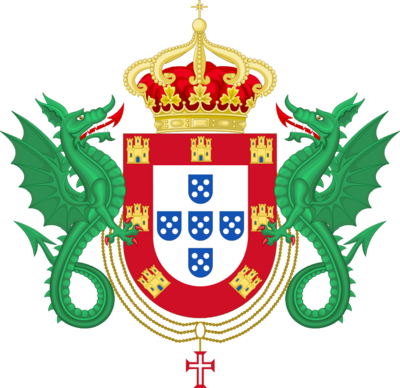
The House of Braganza, officially the Most Serene House of Braganza, emerged from the Portuguese nobility, its origins tracing back to Afonso I, the illegitimate son of King John I of Portugal from the House of Aviz. During the 15th and 16th centuries, the Braganzas consolidated immense wealth and influence, becoming one of Iberia's most powerful noble houses. Their trajectory dramatically shifted in 1640 with the successful Portuguese Restoration War, which ended the Iberian Union and the rule of the Spanish-based Philippine Dynasty.
The Duke of Braganza, Ferdinand II, was proclaimed King John IV of Portugal, establishing the Braganza dynasty on the Portuguese throne. This transition was not merely a change in rulers but a reassertion of Portuguese sovereignty and national identity, fueled by a desire to break free from Spanish dominance. The Braganzas' rise exemplifies how strategic alliances, economic power, and opportune political moments can elevate a noble house to the pinnacle of royal authority.
Imperial Reach
The Braganza dynasty's reign extended far beyond the borders of Portugal, encompassing a vast global empire. Their rule over Portugal from 1640 to 1910 saw the nation navigate complex international relations and colonial administration. A significant transformation occurred in 1815 when the Kingdom of Portugal, Brazil, and the Algarves was elevated to a United Kingdom, effectively making Brazil a co-equal partner rather than just a colony.
This move was partly a response to Napoleon's invasion of Portugal, which forced the royal court to relocate to Rio de Janeiro. The subsequent independence of Brazil in 1822, under Pedro I (son of John VI of Portugal), established the Empire of Brazil, with the Braganzas continuing to rule as its emperors. This dual monarchy, with branches of the same family ruling separate nations on different continents, highlights the unique geopolitical challenges and opportunities faced by the Braganzas, demonstrating their ability to adapt and maintain power across vast distances and diverse populations.
A Legacy of Consorts and Cultural Exchange
The House of Braganza's impact resonates through its numerous royal connections and contributions to European and American culture. The dynasty produced 15 Portuguese monarchs and all four Brazilian emperors, but its influence was also exerted through strategic marriages. Catherine of Braganza, wife of King Charles II of England, played a crucial role in introducing the custom of tea drinking to Britain, transforming social habits and trade.
Maria Isabel of Braganza, consort to Ferdinand VII of Spain, was a patron of the arts and is credited with founding the Museo del Prado in Madrid, one of the world's premier art galleries. Beyond these prominent figures, Braganzas were also considered for thrones in other European nations, such as Poland and Greece, underscoring their broad dynastic ambitions and their entanglement in the complex web of European royal politics.
These connections facilitated significant cultural exchange, political alliances, and the dissemination of Portuguese and Brazilian influence across the globe.
The Winds of Change
The late 19th and early 20th centuries marked a period of profound political upheaval, leading to the eventual downfall of the Braganza monarchies. In Brazil, the monarchy, already weakened by debates over slavery and republican sentiment, was overthrown in a military coup in 1889, deposing Emperor Pedro II. This event ushered in the First Brazilian Republic.
Portugal followed suit just over two decades later. Growing republicanism, fueled by social unrest and dissatisfaction with the monarchy, culminated in the revolution of October 5, 1910. King Manuel II was exiled, and Portugal was declared a republic.
These revolutions were not isolated incidents but part of a broader trend across Europe and the Americas, where established monarchies were increasingly challenged by democratic and republican ideals. The end of the Braganza rule in both nations signified a major historical transition, moving towards modern nation-states and different forms of governance.
Enduring Influence and Modern Relevance
Although the House of Braganza no longer sits on the thrones of Portugal or Brazil, its legacy continues to shape these nations and their cultural identities. The historical impact of their rule is evident in the political structures, social customs, and artistic heritage of both countries. The vast colonial empire they managed left an indelible mark on global history, influencing languages, religions, and economies across continents.
In modern times, descendants of the Braganza family remain prominent figures, often involved in cultural preservation, historical societies, and philanthropic endeavors. Their story serves as a compelling case study in dynastic power, imperial expansion, and the eventual triumph of republicanism, offering valuable insights into the evolution of governance and national identity in the modern world. The Braganzas' journey from a powerful noble house to ruling empires and ultimately yielding to republican movements provides a rich narrative for understanding historical change.
See also
Based on content from Wikipedia · Licensed under CC BY-SA 4.0