

Iberian Union
Images

Flag of Iberian Union




Genesis of a Composite Monarchy
The Iberian Union, a pivotal moment in early modern European history, emerged from the Portuguese succession crisis of 1580. Following the death of King Sebastian and his successor Cardinal Henry without heirs, a power vacuum emerged. Philip II of Spain, leveraging his maternal lineage and significant military and diplomatic pressure, asserted his claim, ultimately being recognized as Philip I of Portugal.
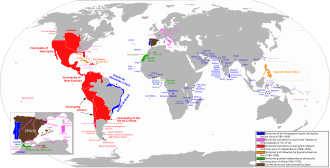
This union was not an annexation but a personal union, a complex arrangement where the crowns of Castile and Aragon were already united under Philip II, and now Portugal was added. This created a composite monarchy of unprecedented scale, encompassing the entire Iberian Peninsula (save Andorra) and vast overseas territories in the Americas, Africa, and Asia. The union was driven by dynastic ambitions, the desire for Iberian consolidation, and the strategic advantage of controlling a unified peninsula and its global maritime networks, albeit with inherent tensions regarding autonomy and governance.
Administrative Realities
The Iberian Union operated on the principle of maintaining the distinct institutions and legal frameworks of its constituent kingdoms. Philip II and his successors, Philip III and Philip IV, ruled through a system of councils, with separate bodies governing Castile, Aragon, Portugal, Italy, Flanders-Burgundy, and the Indies. Portugal, while sharing a monarch, retained its own administrative structures, including a viceroyalty, though the rapid turnover of viceroys (13 in 60 years) and regency councils suggests a degree of instability and direct royal oversight.
Crucially, 'alien laws' (Leyes de extranjería) reinforced the separateness of these kingdoms, defining nationals of one as foreigners in another. This decentralized approach, while preserving local identities, also created administrative complexities and potential friction, as the centralizing tendencies of the Spanish Habsburgs sometimes clashed with the desire for regional autonomy, particularly in Portugal.
The Global Stage
The Iberian Union represented the zenith of early modern global empires, possessing territories on every known continent. This vast reach facilitated immense trade and cultural exchange but also exposed the union to significant geopolitical strains. Portugal's inclusion meant its extensive colonial network, particularly in the East Indies, became entangled with Spain's ongoing conflicts.
The Dutch Republic, already at war with Spain, viewed the union as a casus belli against Portuguese possessions. This led to intensified Dutch attacks on Portuguese colonies, weakening the Portuguese overseas empire, especially in Asia, and diverting resources. The union, therefore, was a double-edged sword: it amplified the empire's global presence but also magnified its vulnerabilities and drew Portugal into conflicts that were not necessarily its own, sowing seeds of future discontent.
Dissolution and Legacy
By the mid-17th century, growing resentment within Portugal over Spanish dominance, economic exploitation, and the burdens of Spanish wars culminated in the Portuguese Restoration War. The Portuguese nobility and populace, feeling their interests were subordinated to those of Castile, rallied behind the House of Braganza. In 1640, a coup d'état in Lisbon proclaimed John IV of Braganza as King of Portugal, effectively ending the Iberian Union.
This restoration of Portuguese sovereignty marked a significant shift in Iberian geopolitics and underscored the limits of personal unions in maintaining long-term political cohesion, especially when national identities and economic interests diverged. The legacy of the Iberian Union remains a complex tapestry of shared history, imperial ambition, and the enduring power of national self-determination.
Go deeper
Frequently Asked Questions
What was the Iberian Union?+
How did the Iberian Union start?+
Did Portugal keep its own laws during the union?+
Why did the union cause problems for Portugal?+
How did the Iberian Union end?+
Based on content from Wikipedia · Licensed under CC BY-SA 4.0