

Greeks
Images

The Greek word Orthodoxia means 'correct praise' or 'correct teaching', Russian Orthodox Spires, Orthodox Church of All Russian Saints, Burlingame, California, USA




The Hellenic Ethnos
The Greeks, or Hellenes, constitute a distinct ethnic group and nation whose historical heartland lies in the Aegean and Ionian seas. Their presence, however, has historically extended across a vast geographical expanse, encompassing modern Greece, Cyprus, southern Albania, Anatolia, parts of Italy, Egypt, and regions bordering the Black Sea. This historical distribution often aligned with ancient Greek colonization efforts and the territories of the Byzantine Empire.
The concept of 'omogenia' (diaspora) is crucial to understanding the Greek identity, as significant Greek communities have been established worldwide for centuries, maintaining cultural and linguistic ties to their ancestral homeland. While modern nation-states have reshaped borders, the Hellenic identity remains deeply connected to these historical territories and the shared cultural heritage passed down through generations.
Chronicles of Continuity
The Greek narrative is one of remarkable historical continuity, with the Greek language being spoken and evolving since the Bronze Age, making it arguably the oldest continuously recorded living language. Ancient Greek civilization laid foundational principles in philosophy, politics, and the arts that continue to resonate. Periods of great influence included the Hellenistic era, the Roman Empire, and the Byzantine Empire, where Greek served as a primary language of administration and culture.
The early 20th century marked a period of profound upheaval, with events like the Greek genocide and subsequent population exchange drastically altering the demographic landscape, particularly ending the ancient Greek presence in Asia Minor. Despite these challenges, the core of the Greek people and their culture has persisted, adapting and enduring through millennia of change.
The Hellenic Imprint
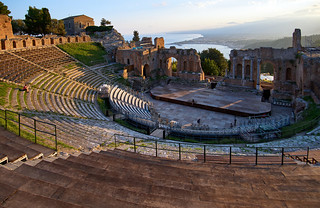
The contributions of the Greeks to human civilization are immeasurable and foundational. They are credited with the invention of theatre, developing dramatic forms that still exist today. Their philosophical inquiries, spearheaded by figures like Socrates, Plato, and Aristotle, established the bedrock of Western philosophical thought, influencing ethics, logic, and metaphysics.
The concept of democracy, originating in Athens, remains a cornerstone of modern political systems. Furthermore, Greek advancements in mathematics (Euclid, Pythagoras), science, medicine (Hippocrates), architecture, literature, and the Olympic Games have left an indelible mark. The Greek language itself has been a powerful vehicle for knowledge, serving as a lingua franca in the Mediterranean and providing the etymological roots for countless scientific and international terms.
The Greek Language
The Greek language stands as a unique linguistic monument, boasting the oldest recorded history of any living language. Its unbroken lineage from Mycenaean Greek of the Bronze Age to modern Greek provides an unparalleled window into linguistic evolution. For centuries, particularly from the 4th century BC onwards, it served as the dominant lingua franca across the Mediterranean world, facilitating trade, diplomacy, and the dissemination of ideas.
Its significance is further underscored by its role in religious texts, most notably the original writing of the New Testament of the Christian Bible. The vocabulary of Greek has profoundly enriched numerous languages, including English, and forms the basis of international scientific and technical terminology, demonstrating its enduring global relevance.
Modern Hellenism
Today, the majority of ethnic Greeks reside within the sovereign borders of Greece and the Republic of Cyprus. However, the concept of the Greek diaspora ('omogenia') remains a vital component of modern Hellenic identity. These global communities, established through centuries of trade, migration, and historical events, continue to preserve and promote Greek culture abroad.
A significant unifying element for many Greeks today is their affiliation with the Greek Orthodox Church, a spiritual and cultural anchor. Despite the historical traumas that have reshaped populations, the Greek people continue to be active participants in the global community, contributing to diverse fields while cherishing their rich, millennia-old heritage and adapting it for the contemporary world.
Go deeper
Frequently Asked Questions
What are Greeks known for inventing?+
Where did Greeks live and spread?+
Why is the Greek language special?+
How did Greeks influence modern democracy?+
Who were some famous Greek thinkers?+
Based on content from Wikipedia · Licensed under CC BY-SA 4.0