

Giza pyramid complex
Images

Giza pyramid complex (map) tr

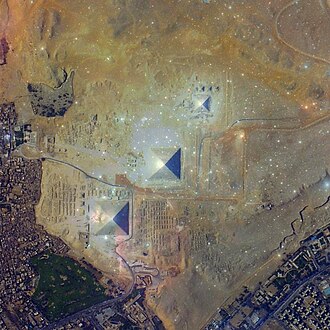


The Apex of Old Kingdom Monumental Architecture
The Giza pyramid complex stands as the zenith of Old Kingdom Egyptian architecture, a testament to the power, organization, and sophisticated knowledge of the Fourth Dynasty (circa 2613–2494 BC). Dominated by the Great Pyramid of Giza (Pharaoh Khufu), the Pyramid of Khafre, and the Pyramid of Menkaure, this necropolis was meticulously planned and executed. The sheer scale of these structures is staggering; the Great Pyramid, originally standing at 146.6 meters (481 feet), remained the world's tallest man-made structure for over three millennia.
Its construction involved quarrying and transporting millions of limestone blocks, some weighing up to 80 tons, and precisely placing them to form a structure of immense geometric accuracy. The complex also includes subsidiary pyramids for queens, mastaba tombs for nobles, mortuary temples, valley temples, and causeways, all integrated into a sacred landscape designed to facilitate the pharaoh's eternal journey. The underlying geological formations, particularly the Mokattam Formation, provided the primary source of limestone, highlighting the Egyptians' understanding of their environment.
Engineering, Astronomy, and Labor
The construction of the Giza pyramids continues to fascinate and challenge modern understanding. While popular myths often depict slave labor, archaeological evidence, including the discovery of workers' villages and cemeteries, suggests a highly organized workforce of skilled laborers, craftsmen, and conscripted agricultural workers who labored during the Nile's inundation period. Theories on construction methods involve sophisticated use of ramps (straight, spiral, or internal), levers, and immense manpower.
The precision with which the pyramids are aligned to cardinal directions is remarkable, suggesting advanced astronomical observation and surveying techniques. The Great Pyramid, for instance, is aligned with astonishing accuracy to true north. This alignment, along with the placement of the pyramids within the broader landscape and their relationship to celestial bodies, indicates a profound integration of religious beliefs, cosmology, and practical engineering.
The sheer logistical undertaking-quarrying, transporting, shaping, and lifting millions of tons of stone-points to a highly centralized and efficient state administration.
The Great Sphinx
Dominating the eastern edge of the complex is the Great Sphinx of Giza, a colossal limestone statue with the body of a lion and the head of a human, widely believed to represent Pharaoh Khafre. Carved from a single bedrock outcrop, it is one of the largest and oldest monolithic statues in the world. Its exact purpose remains a subject of scholarly debate, but it is generally accepted to have served a protective role for the pyramid complex, embodying royal power and divine authority.
The Sphinx has suffered significant erosion over millennia, with various restoration efforts undertaken throughout history. Its weathered appearance and enigmatic gaze have fueled countless theories and legends, making it an enduring symbol of ancient Egypt's mystery and resilience. The Sphinx's presence adds a layer of symbolic depth to the Giza plateau, linking the pharaoh's earthly power with divine guardianship.
Enduring Significance and Global Impact
The Giza pyramid complex holds unparalleled significance as a cultural icon and a primary source for understanding ancient Egyptian civilization. Its inclusion as a UNESCO World Heritage Site underscores its global importance. Historically, the Great Pyramid was recognized as one of the Seven Wonders of the Ancient World by Hellenistic writers, and it is the sole survivor, a tangible link to antiquity that has captivated imaginations for centuries.
Its enduring presence has influenced art, architecture, and popular culture worldwide, often symbolizing mystery, power, and ancient wisdom. The complex continues to be a vital site for archaeological research, offering continuous insights into ancient Egyptian society, religious practices, and technological capabilities. Its iconic status ensures its relevance, prompting ongoing study and inspiring awe, making it a crucial touchstone for comprehending human history and achievement.
The Giza Necropolis in Context
The Giza complex is not an isolated phenomenon but part of a larger network of royal burial grounds and funerary landscapes that characterized the Memphis region during the Old Kingdom. It forms the northernmost part of the broader 'Pyramid Fields of Memphis,' which includes other significant sites like Abusir, Saqqara, and Dahshur. These sites, developed over centuries, showcase the evolution of pyramid construction and funerary practices.
The proximity to the ancient capital of Memphis was strategic, linking the pharaohs' eternal resting places with the seat of their earthly power. The vastness of the Giza plateau, extending to other pyramid fields, highlights the immense resources and centralized authority required to undertake such monumental projects. Understanding Giza within this wider context reveals the scale of Old Kingdom ambition and the deep-seated cultural and religious imperatives that drove the creation of these enduring monuments.
Go deeper
Frequently Asked Questions
What is the Giza pyramid complex?+
Why were the pyramids built so tall?+
How did the ancient Egyptians move the huge stone blocks?+
Where does the Great Sphinx come from?+
How do the pyramids line up with the stars?+
Based on content from Wikipedia · Licensed under CC BY-SA 4.0