

Scotland
Images
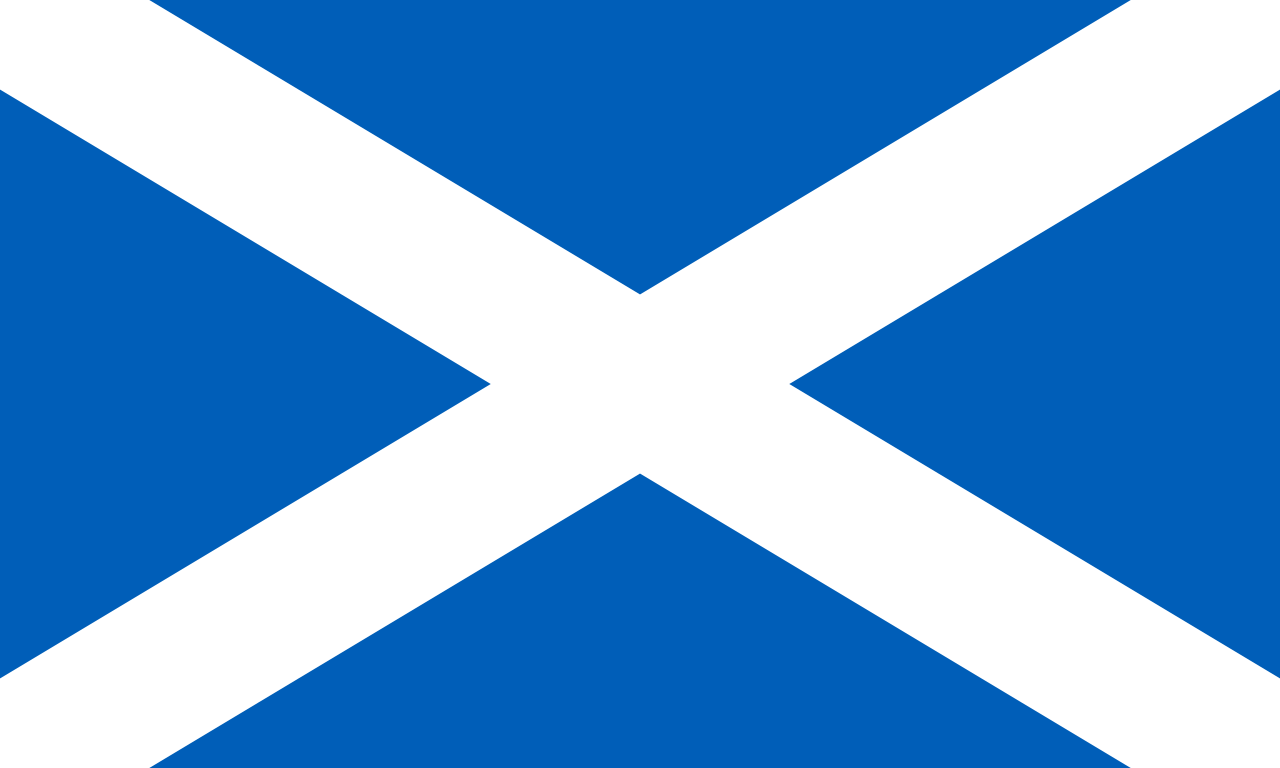
Scotland
Geographical Foundations of Scotland
Scotland's geography is a fundamental element of its national identity and historical development. Occupying the northern third of the island of Great Britain, it is bordered to the south by England and surrounded by the Atlantic Ocean to the north and west, the North Sea to the northeast and east, and the Irish Sea to the south. This maritime position has profoundly influenced its history, trade, and culture.
The country is broadly divided into three distinct regions: the Highlands, a vast, mountainous area in the north and northwest characterized by dramatic glens and lochs; the Lowlands, a more fertile and densely populated plain across the central belt; and the Southern Uplands, a region of rolling hills and moorland. The Highlands are particularly notable, forming the most mountainous terrain in the British Isles, culminating in Ben Nevis, which stands at 4,413 feet (1,345 meters).
Scotland also boasts an extensive archipelago of over 790 islands, including the Hebrides, Orkney, and Shetland, each with its own unique geological and ecological characteristics. The deeply indented western coastline, with its numerous sea lochs, further accentuates its complex geography. This varied landscape supports a diverse range of ecosystems and has historically presented both challenges and opportunities for its inhabitants.
From Sovereign State to Devolved Nation
The emergence of the Kingdom of Scotland as an independent sovereign state in the 9th century marks the beginning of a distinct national narrative. For centuries, Scotland maintained its independence, developing its own institutions and cultural practices. A pivotal moment occurred in 1603 with the Union of the Crowns, when James VI of Scotland inherited the thrones of England and Ireland, forming a personal union.
This was a significant step towards closer integration, though the kingdoms remained legally separate. The formal political union was realized on May 1, 1707, with the Acts of Union, which merged the Kingdom of Scotland with the Kingdom of England to create the Kingdom of Great Britain. The Scottish Parliament was dissolved and subsumed into the new Parliament of Great Britain.
Despite this union, Scotland retained its distinct legal system, educational system, and religious traditions, which were crucial in preserving its national identity. A significant development in modern Scottish history was the re-establishment of the Scottish Parliament in 1999, following a referendum. This granted Scotland devolved powers over a wide range of domestic policy areas, including education, health, justice, and the environment, while retaining its status as part of the United Kingdom.
The Fabric of Scottish Society
Scotland's population, estimated at around 5.4 million people, is concentrated primarily in the central Lowlands, with its largest city, Glasgow, serving as a major economic and cultural hub, while the historic capital is Edinburgh. The country's linguistic landscape is rich and varied. While English is the dominant language, spoken in various forms including Scottish English, the Scots language also holds significant cultural importance.
It exists on a dialect continuum with English and is spoken by a substantial portion of the population. Furthermore, Scottish Gaelic, a Celtic language, is spoken natively by communities, particularly in the Hebrides, though its speakers now constitute less than 2% of the total population. Nevertheless, concerted efforts are underway to revitalize Gaelic, leading to a growing community of second-language speakers.
This linguistic diversity, coupled with distinct legal, educational, and religious histories, has fostered a strong and enduring sense of Scottish culture and national identity, differentiating it within the broader context of the United Kingdom.
Governance and the Scottish Parliament's Role
Scotland's governance structure is a key aspect of its modern identity. As a devolved nation within the United Kingdom, it possesses its own legislature, the Scottish Parliament, which convenes in Edinburgh. This parliament is responsible for legislating on a wide array of domestic matters, including education, health, justice, environment, and culture.
It comprises 129 Members of the Scottish Parliament (MSPs), elected from 73 constituencies and eight additional member regions, ensuring broad representation. The executive arm of the devolved government is the Scottish Government, headed by the First Minister, who chairs the cabinet and is accountable for policy development and implementation, as well as international engagement. While Westminster Parliament retains authority over reserved matters such as defense, foreign policy, and macroeconomic policy, the Scottish Parliament's devolved powers allow for significant autonomy in shaping Scotland's domestic landscape and responding to the specific needs and aspirations of its population.
This dual system of governance reflects Scotland's unique constitutional position.
Scotland's Educational Landscape
Scotland maintains a distinct educational system, separate from that of England, Wales, and Northern Ireland, which is a testament to its enduring national identity. This system has evolved over centuries, with a strong emphasis on accessible, high-quality learning. From primary schools to universities, Scottish education is characterized by its own curriculum frameworks and assessment methods.
For instance, the Scottish Qualifications Authority (SQA) is responsible for developing and awarding qualifications, including the National Qualifications taken by secondary school students. Scotland is also renowned for its ancient universities, such as the University of St Andrews, the University of Glasgow, and the University of Edinburgh, some of the oldest in the world. These institutions have played a crucial role in intellectual and scientific advancement throughout history.
The devolved Scottish Government has direct responsibility for education policy, allowing it to tailor educational strategies to meet the specific needs and cultural context of Scotland, ensuring a continued commitment to its unique educational heritage and future development.
Go deeper
Frequently Asked Questions
What are the three main regions of Scotland and what do they look like?+
Where is Scotland located and what seas surround it?+
What is the tallest mountain in Scotland?+
How many islands does Scotland have and what are some groups?+
When did Scotland get its own parliament again?+
Based on content from Wikipedia · Licensed under CC BY-SA 4.0