

Barbara Walters
Images

Prayer book, St. Barbara, Walters Manuscript W.182, fol. 66r


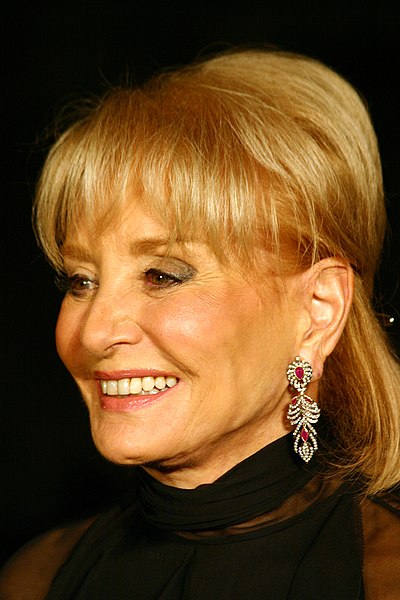


The Genesis of a Media Icon
Barbara Walters' journey into the heart of American media began in the nascent television era of the early 1950s. Her initial forays into the industry were behind the scenes, writing and producing for programs like NBC's 'Ask the Camera.' This foundational experience in crafting narratives and understanding audience engagement proved invaluable as she transitioned to on-air roles. Her tenure on the 'Today' show in the early 1960s, initially as a writer focusing on women's interest stories, marked a pivotal shift.
As her on-screen presence grew, so did her influence. The year 1974 was a watershed moment when she shattered the male-dominated mold by becoming the first woman to co-host the 'Today' show. This was not merely a symbolic victory; it represented a fundamental challenge to the established norms of broadcast news, demonstrating that women possessed the intellect, charisma, and gravitas to lead major news programs.
Her continued ascent led to another historic achievement in 1976 when she became the first female co-anchor of a network evening news program on ABC, partnering with Harry Reasoner. These roles were not just jobs; they were strategic moves that redefined the landscape of television journalism and paved the way for future generations of female broadcasters.
The Master Interviewer
Barbara Walters' legacy is inextricably linked to her unparalleled skill as an interviewer. She possessed a rare gift for cultivating a sense of intimacy with her subjects, regardless of their stature or the gravity of the topics discussed. Her approach was characterized by meticulous research, genuine curiosity, and a disarming blend of empathy and directness.
This allowed her to elicit candid responses from a diverse array of influential figures, including every sitting U.S. president and first lady from Richard and Pat Nixon to Barack and Michelle Obama. Beyond political leaders, she engaged with global figures such as Fidel Castro, Anwar Sadat, and Vladimir Putin, as well as cultural icons like Katharine Hepburn and Sean Connery.
Her interviews were not merely interrogations; they were carefully orchestrated conversations designed to reveal the human element behind the public persona. The annual 'Barbara Walters' 10 Most Fascinating People' specials became a cultural touchstone, highlighting her ability to identify and explore compelling narratives that resonated with millions of viewers. Her willingness to tackle controversial subjects, such as her interviews with Monica Lewinsky and Saddam Hussein, further cemented her reputation as a fearless and impactful journalist.
Innovating the Conversation
Walters' career was marked by a consistent drive to innovate and adapt to evolving media consumption. Her long-standing role as a correspondent, producer, and co-host on the ABC news magazine '20/20' from 1979 to 2004 exemplified her commitment to in-depth investigative journalism. During her tenure, '20/20' became a benchmark for compelling storytelling and insightful reporting, tackling complex social issues and conducting memorable interviews.
However, her most significant contribution to contemporary television might be the creation of 'The View' in 1997. As co-creator, producer, and a regular co-host until her retirement in 2014, Walters envisioned a daytime talk show that offered a platform for diverse female voices to discuss current events, politics, and social issues. This innovative format challenged traditional talk show structures and fostered a dynamic, often spirited, exchange of ideas. 'The View' became a cultural phenomenon, influencing the landscape of daytime television and demonstrating Walters' keen understanding of audience engagement and her ability to anticipate future trends in media.
Enduring Influence and the Evolution of Broadcast Standards
Barbara Walters' impact extends far beyond her individual accolades and television programs. She fundamentally altered the perception of women in broadcast journalism, dismantling stereotypes and establishing new benchmarks for professionalism and influence. Her career, spanning from the early days of television to the digital age, showcased an enduring adaptability and a commitment to journalistic integrity.
She demonstrated that a successful broadcast journalist could be both incisive and empathetic, capable of holding powerful figures accountable while also connecting with viewers on a human level. Her induction into the Television Hall of Fame in 1989 and her Lifetime Achievement Award from NATAS in 2000 are testaments to her profound contributions. Even after her final on-air appearance in 2015, her influence persisted.
The standards she set for interviewing, her pioneering roles for women, and her innovative approach to programming continue to shape the media landscape, inspiring journalists and media professionals to this day. Her legacy is a powerful reminder of the transformative potential of thoughtful, courageous, and persistent storytelling.
See also
Frequently Asked Questions
Who was Barbara Walters?+
When did she become the first woman to co-host the Today show?+
What made her interviews special?+
Which show did she help start in 1997?+
Which famous people did she interview?+
Based on content from Wikipedia · Licensed under CC BY-SA 4.0