

Journalist
Images

Journalist and boy take cover from stones thrown by rooftop militia



The Core Function
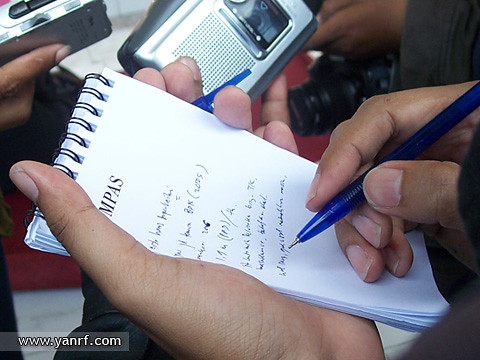
At its heart, journalism is the systematic process of gathering, verifying, and presenting information to the public. Journalists act as intermediaries, translating complex events and issues into accessible narratives. This involves not just collecting facts, but critically evaluating their accuracy, context, and relevance.
The information can take many forms: written articles, broadcast segments, podcasts, or visual media. The ultimate goal is to inform citizens, enabling them to understand their world, make reasoned decisions, and participate effectively in society. This role is fundamental to the functioning of modern democracies and informed global communities.
Evolution of the Craft
The practice of journalism has undergone profound transformations throughout history, driven by technological advancements. Initially, news dissemination relied on oral traditions and handwritten accounts. The invention of the printing press democratized information, leading to the rise of newspapers.
The 20th century saw the advent of radio and television, introducing audio and visual dimensions to news reporting. Today, the digital revolution and the internet have reshaped journalism entirely. Journalists now navigate a landscape of instant global communication, social media, and the challenges of misinformation, requiring new skills in multimedia production, data analysis, and digital ethics.
The Indispensable Role
Journalists serve as crucial pillars in democratic societies, often referred to as the 'fourth estate.' Their primary function is to inform the public, providing the knowledge necessary for citizens to engage in civic life. Beyond mere reporting, journalists act as watchdogs, investigating and exposing corruption, abuse of power, and societal injustices. This investigative function is vital for holding institutions, governments, and corporations accountable.
By shedding light on critical issues, journalism fosters transparency, promotes public debate, and can drive significant social and political change. The integrity of journalism is therefore directly linked to the health of a society.
The Journalistic Process
The creation of a news story is a multi-stage process demanding rigor and adherence to ethical standards. It begins with identifying a story, which can arise from press releases, tips, observation, or proactive investigation. Journalists then gather information through interviews, research, and data analysis, always striving for accuracy and multiple perspectives.
Verification is a critical step, ensuring facts are corroborated and sources are reliable. Once verified, the information is processed and shaped into a narrative suitable for the chosen medium. Dissemination occurs across various platforms, from traditional print and broadcast to digital websites and social media, reaching diverse audiences globally.
Contemporary Challenges and Future Directions in Journalism
Modern journalism faces significant challenges, including declining revenues, the rise of 'fake news,' and the pressure for speed over depth. The digital age has democratized content creation but also blurred the lines between credible journalism and opinion or propaganda. Journalists must constantly adapt, developing skills in data visualization, fact-checking, and understanding algorithmic influence.
There is a growing emphasis on solutions journalism, which focuses not just on problems but also on potential solutions. The future of journalism likely involves innovative business models, greater audience engagement, and a continued commitment to the core principles of truth, accuracy, and public service.
Go deeper
Frequently Asked Questions
What is a journalist?+
How do journalists find a story?+
Why are journalists important for society?+
What tools and skills do journalists use today?+
How can I become a journalist when I grow up?+
Based on content from Wikipedia · Licensed under CC BY-SA 4.0