

The Amazing Balkans!
Images

Balkans




Defining the Undefinable
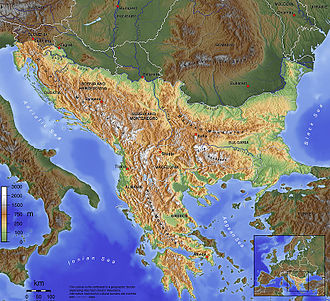
The Balkans, often synonymous with the Balkan Peninsula, present a complex geographical definition. Situated in southeastern Europe, its boundaries are fluid and subject to various interpretations. Natural borders are clearly defined by the Adriatic Sea to the northwest, the Ionian Sea to the southwest, the Aegean Sea to the south, and the Turkish Straits and Black Sea to the east.
However, the northern limit remains a point of contention among geographers. The region is characterized by extensive mountain ranges, most notably the Balkan Mountains (Stara Planina) that traverse Bulgaria and lend the peninsula its name. The highest elevation is Mount Musala in Bulgaria's Rila range, reaching 2,925 meters (9,596 ft).
While the term 'peninsula' implies a landmass surrounded by water on three sides, the northern border's ambiguity leads many modern geographers to prefer the broader term 'Southeastern Europe' for a more precise geographical delineation. Nevertheless, the 'Balkans' persists as a widely recognized regional identifier.
From Ancient Roots to Modern Identity
The concept of the Balkan Peninsula was formalized in 1808 by German geographer August Zeune, who inaccurately perceived the Balkan Mountains as the dominant mountain system spanning from the Adriatic to the Black Sea. Historically, the term gained geopolitical significance in the 19th century, often used as a synonym for Rumelia, the European territories of the vast Ottoman Empire. This usage emphasized political and cultural connections rather than strict geographical boundaries.
The creation of Yugoslavia in the early 20th century further cemented the Balkans as a distinct geopolitical entity. The region's history is a complex narrative of empires, migrations, and cultural exchanges, leading to the diverse national identities present today. The term 'Balkanization' itself, though often carrying negative connotations related to fragmentation, highlights the region's historical role as a crossroads and a site of intense historical forces.
Culture, Languages, and Diversity
The Balkans are renowned for their rich cultural tapestry, woven from centuries of interaction between diverse ethnic, linguistic, and religious groups. The region typically encompasses countries such as Albania, Bosnia and Herzegovina, Bulgaria, Greece, Kosovo, Montenegro, North Macedonia, and parts of Croatia, Romania, Serbia, and Turkey. This heterogeneity is reflected in a multitude of languages, including Slavic languages (like Serbian, Bulgarian, Macedonian), Greek, Albanian, Romanian (a Romance language), and Turkish.
Religious diversity is also a hallmark, with significant populations of Orthodox Christians, Muslims, and Catholics. This cultural mosaic influences everything from cuisine and music to architecture and social customs, creating a vibrant and complex regional identity. Understanding the Balkans requires appreciating this deep-seated diversity and the historical forces that have shaped it.
Economic Landscapes
The economic profile of the Balkans is characterized by a transition from predominantly agrarian economies to more diversified systems. Agriculture remains a significant sector in many areas, with countries producing a range of fruits, vegetables, grains, and wine. However, industrial development and the service sector, particularly tourism, have grown considerably.
The region's stunning natural beauty, rich history, and cultural heritage attract millions of visitors annually, making tourism a vital source of income. Key industries also include manufacturing, mining, and energy production. Inter-regional trade and integration into the broader European economy are crucial for the continued development of Balkan nations.
Challenges such as varying levels of development and infrastructure needs persist, but the region shows increasing economic dynamism.
Governance and Education
The political landscape of the Balkans is diverse, with most countries operating as parliamentary republics or constitutional monarchies. Following periods of significant political upheaval and transition in the late 20th century, many Balkan nations have focused on strengthening democratic institutions and pursuing integration with European structures like the European Union and NATO. Education systems across the Balkans generally follow a tiered structure, from primary and secondary schooling to higher education.
Universities and research institutions play a key role in fostering intellectual development and innovation. Efforts are ongoing to modernize curricula, improve access to quality education, and align educational standards with international best practices, recognizing education as a cornerstone for future prosperity and stability in the region.
Go deeper
Frequently Asked Questions
What seas border the Balkans?+
Why is the northern border of the Balkans unclear?+
Which mountain is the tallest in the Balkans?+
How many different languages are spoken in the Balkans?+
What does the word "Balkanization" mean?+
Based on content from Wikipedia · Licensed under CC BY-SA 4.0