

Africa-Eurasia
Images

Asio otus (Linnaeus, 1758), Botanical Garden, Moscow
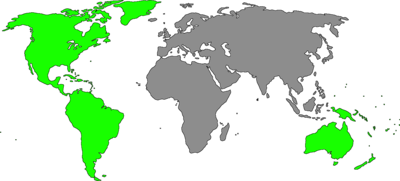


Geological Genesis and Continental Drift
Africa-Eurasia represents the largest contiguous landmass on Earth, a product of billions of years of geological evolution. Its formation is intrinsically linked to the theory of plate tectonics. Initially part of the supercontinent Pangaea, Africa-Eurasia underwent dramatic rifting and subsequent collisions.
The northward drift of Africa and the Arabian Peninsula, culminating in their collision with Eurasia, formed the Alpine-Himalayan mountain belt, one of the planet's most significant orogenic events. This continuous process of continental drift has not only shaped its topography but also influenced ocean currents, global climate patterns, and the distribution of species, making its geological history a cornerstone of Earth science.
A Crucible of Human History and Civilization
As the cradle of humanity and the site of numerous early civilizations, Africa-Eurasia holds unparalleled historical significance. The earliest hominin fossils are found in Africa, marking the continent as the origin point for our species. Subsequently, major centers of civilization emerged across Eurasia, including Mesopotamia, the Indus Valley, ancient China, and the Mediterranean world.
These societies developed agriculture, writing, complex governance, and monumental architecture, laying the foundations for global development. The subsequent movements of peoples, trade networks like the Silk Road, and the rise and fall of empires across this vast landmass have profoundly shaped the modern world's political, cultural, and technological landscape.
Demographic Dominance and Cultural Mosaic
Africa-Eurasia is home to the overwhelming majority of the global population, exceeding 6 billion people. This demographic concentration has led to an extraordinary diversity of human cultures, languages, and traditions. The continent hosts thousands of distinct languages, reflecting millennia of human migration, interaction, and innovation.
From the linguistic families of Indo-European and Sino-Tibetan to the vast array of African languages, the cultural mosaic is immense. This rich heritage is expressed through diverse religious practices, artistic forms, social structures, and culinary traditions, making Africa-Eurasia a living museum of human experience and a critical locus for understanding global cultural dynamics.
Economic Engine and Global Interdependence
Africa-Eurasia functions as the primary engine of the global economy, housing many of the world's largest and most influential economic powers. Europe is a leader in advanced manufacturing, finance, and technology, while Asia dominates global trade, electronics production, and is rapidly advancing in research and development. Africa, rich in natural resources and with a growing young population, is increasingly vital to the global market. The continent's extensive infrastructure, historical trade routes, and modern transportation networks facilitate the movement of goods, capital, and labor, underscoring its central role in international commerce and economic interdependence.
Ecological Diversity and Environmental Challenges
The sheer size and varied geography of Africa-Eurasia result in an astonishing array of ecosystems, from the Arctic tundra and boreal forests to tropical rainforests, vast savannas, and arid deserts. This ecological richness supports an immense biodiversity, including many endemic species. However, this vast continent also faces significant environmental challenges.
Climate change impacts are pronounced, leading to desertification in Africa, glacial melt in Eurasia, and sea-level rise along extensive coastlines. Issues such as deforestation, pollution, and habitat loss due to human activity are critical concerns that require global cooperation and sustainable solutions.
See also
Frequently Asked Questions
What is Africa-Eurasia?+
How did Africa-Eurasia form?+
Why is Africa-Eurasia important for humans?+
How many people live on Africa-Eurasia?+
What kinds of animals and habitats are found in Africa-Eurasia?+
Based on content from Wikipedia · Licensed under CC BY-SA 4.0