

Aeneas
Images
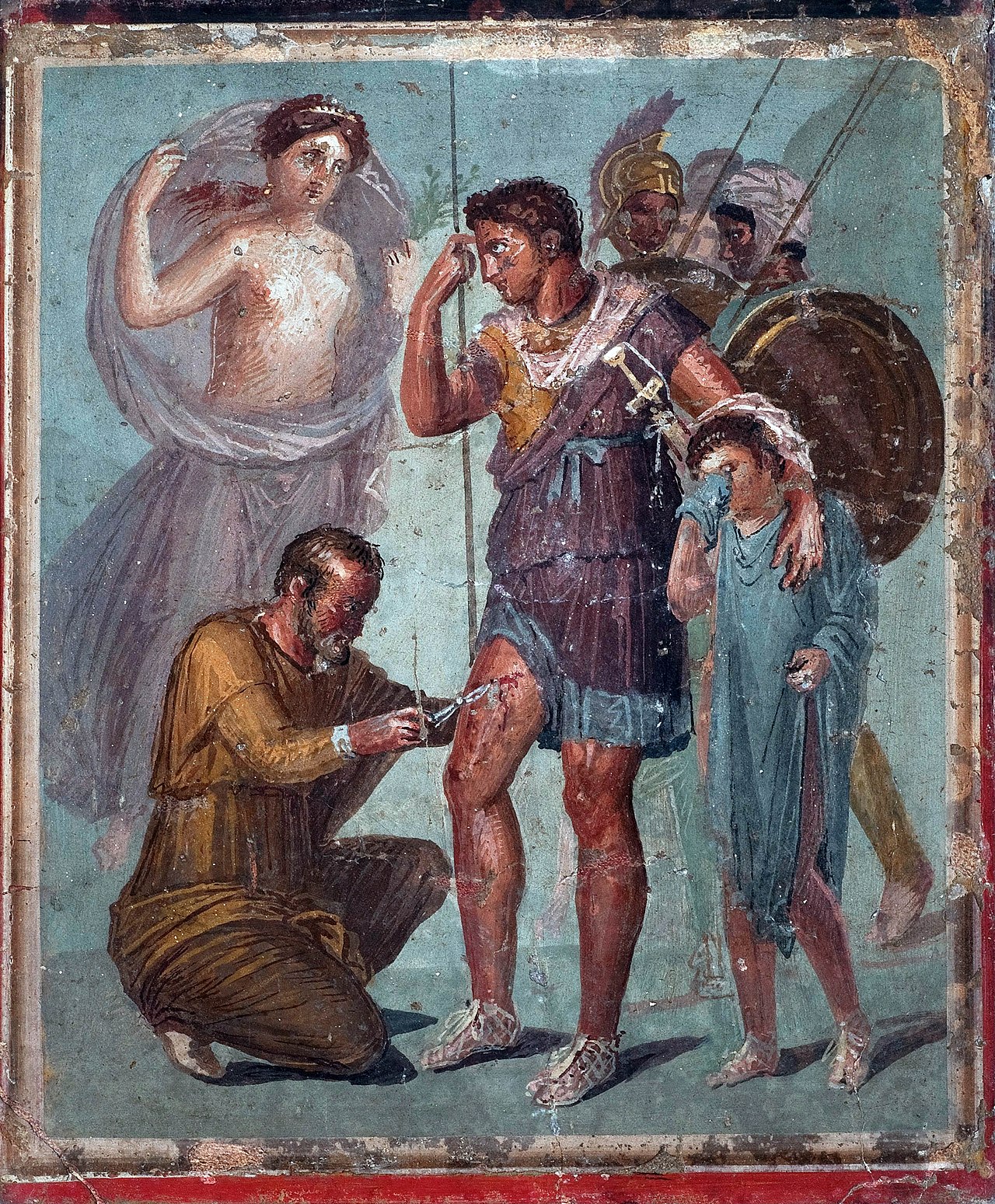
Aeneas
From Trojan Warrior to Fated Founder
Aeneas stands as a complex and compelling figure in classical literature, embodying the transition from the heroic age of Troy to the nascent beginnings of Rome. As a son of Venus and Anchises, his divine parentage imbued him with a unique status and a destiny intertwined with the gods. His role in the Trojan War, though secondary to figures like Hector, was marked by valor and piety, particularly his famous escape from the burning city carrying his aged father and leading his young son, Ascanius.
This act of pietas-a deep sense of duty towards gods, family, and country-became a defining characteristic. The fall of Troy was not an end for Aeneas, but a catalyst for a divinely ordained mission: to establish a new Troy, a successor civilization, in the distant land of Italy. His journey represents a profound theme of continuity and rebirth amidst destruction, a testament to the resilience of culture and lineage.
The Aeneid
Virgil's Aeneid is the primary literary source that elevates Aeneas from a minor character in Greek myth to the central hero of Roman identity. Commissioned by Augustus, the poem serves as a national epic, providing Rome with a heroic origin story that links it to the venerable traditions of the Trojan War and the favor of the gods. The narrative meticulously details Aeneas's arduous journey, a multi-year odyssey fraught with supernatural obstacles and profound personal sacrifices.
His encounters, such as the tragic romance with Dido in Carthage, highlight the internal conflicts between personal desire and fated duty. The descent into the underworld, a pivotal episode, allows Aeneas to gain knowledge of his future lineage and the glory that awaits Rome, reinforcing the concept of manifest destiny. This epic journey is not merely a physical voyage but a spiritual and political one, shaping Aeneas into the ideal Roman leader.
The Progenitor of Rome
Aeneas's significance extends far beyond his personal exploits; he is the foundational ancestor of the Roman people. While the direct founding of Rome is attributed to his descendants, Romulus and Remus, Aeneas's arrival in Latium and his subsequent marriage to Lavinia, daughter of King Latinus, established the crucial link between Trojan heritage and Italian soil. His son, Ascanius (Iulus), founded Alba Longa, a city that became the ancestral seat of the Roman kings.
This lineage provided Rome with a mythologically potent origin, connecting it to the heroic past of Troy and the divine favor of Venus. The Aeneid thus served a crucial ideological purpose, legitimizing Roman power and imperial ambitions by tracing their roots to a divinely sanctioned hero who endured immense suffering for the sake of a greater future. His story became a cornerstone of Roman cultural identity.
Themes and Interpretations
The Aeneid, and by extension Aeneas's story, is rich with complex themes that resonate through Western literature and thought. The concept of pietas is central, portraying Aeneas as a man driven by an unwavering sense of responsibility to his gods, his family, and his people. Fate (fatum) is another dominant theme, suggesting that Aeneas's journey and the eventual rise of Rome are predetermined and inevitable, a grand cosmic plan.
However, the poem also explores the immense personal cost of fulfilling such a destiny. Aeneas is often depicted as a man burdened by sorrow, forced to abandon love and personal happiness for the sake of his mission. This raises questions about the nature of leadership and the sacrifices required to build and maintain an empire.
The Aeneid is not just a tale of triumph but also a profound meditation on loss, duty, and the human condition within the sweep of history.
Aeneas in Later Culture and Modern Relevance
The influence of Aeneas and the Aeneid has been profound and enduring, shaping Western literature, art, and political thought for centuries. During the Renaissance, the epic was rediscovered and reinterpreted, influencing writers like Dante Alighieri, whose journey through the Inferno, Purgatorio, and Paradiso owes a significant debt to Aeneas's descent into the underworld. The themes of leadership, destiny, and the founding of nations continued to be explored in subsequent eras, providing a classical framework for understanding national identity and imperial expansion.
In modern times, Aeneas's story remains a subject of academic study and artistic inspiration, prompting discussions about the construction of national myths, the ethics of empire, and the enduring power of storytelling to shape collective memory and cultural values. His journey serves as a timeless allegory for the human struggle to overcome adversity and forge a future from the ruins of the past.
Go deeper
Frequently Asked Questions
Who is Aeneas?+
Why did Aeneas leave Troy?+
What is pietas and how does it relate to Aeneas?+
How is Aeneas connected to Rome?+
What is the Aeneid and why is it important?+
Based on content from Wikipedia · Licensed under CC BY-SA 4.0