

Aphrodite
Images
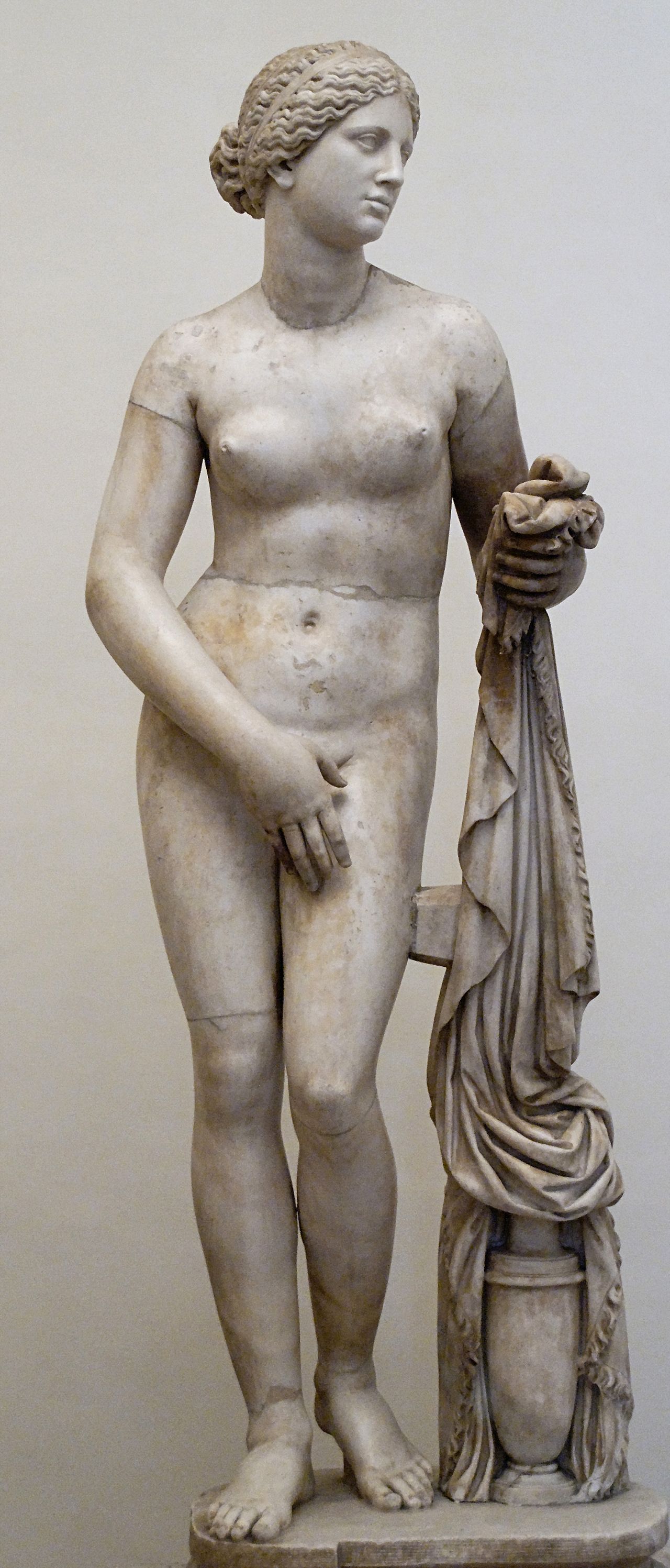
Aphrodite
Theogenesis and Aphrodite's Dual Origins
Aphrodite's mythological origins are notably complex, reflecting her multifaceted nature. Hesiod's Theogony famously recounts her birth from the sea foam (aphros) generated by Uranus's castration, a violent act that nevertheless births the ultimate symbol of beauty and love. This origin story links her directly to primordial cosmic forces and the generative power of the sea, emphasizing her fundamental role in the natural order. Alternatively, Homeric Hymn 5 presents her as the daughter of Zeus and the Titaness Dione, aligning her with the Olympian pantheon and suggesting a more conventional divine lineage.
This duality in her birth narrative highlights her position as both a primal, elemental force and an integrated member of the established divine hierarchy, influencing how she was perceived and worshipped across different regions and eras of ancient Greece. Her arrival was not merely an event but a fundamental shift in the cosmic and emotional landscape.
Aphrodite's Spheres of Influence
While commonly associated with romantic love and sexual desire, Aphrodite's dominion was far broader. She presided over 'philia' (friendship, affection), 'eros' (passionate love), and 'gamos' (marriage), encompassing the spectrum of human connection. Her role extended to procreation, ensuring fertility and the continuation of life, making her vital to the survival and prosperity of both human and divine realms.
She was also the patron of courtesans and prostitutes, reflecting a complex societal acceptance of sexuality outside of marriage. Her influence was so pervasive that she could incite uncontrollable lust, disrupt alliances, and even challenge the authority of other gods, including Zeus himself. Her power lay in her ability to manipulate emotions and desires, making her a formidable and often unpredictable deity.
Iconography, Symbols, and Artistic Representation
Aphrodite's visual representation has profoundly shaped Western ideals of beauty. She is consistently depicted as the epitome of feminine attractiveness, often nude or semi-nude, embodying classical standards of proportion and grace. Her sacred animals-doves, sparrows, swans, and goats-and plants like myrtle, roses, and poppies, all carry symbolic weight related to love, fertility, and gentleness, or sometimes, the intoxicating nature of desire.
The scallop shell, linked to her birth from the sea, is another potent symbol. Her iconic statues, such as the Aphrodite of Knidos and the Venus de Milo, have become archetypes of female beauty, influencing artistic traditions for millennia and continuing to be subjects of study and admiration in art history and classical studies.
Philosophical and Cultural Resonance
Aphrodite's myths have been interpreted through various philosophical lenses. Plato, in his Symposium, distinguishes between two forms of Aphrodite: the 'Pandemian' (common) Aphrodite, associated with physical desire and procreation, and the 'Uranian' (heavenly) Aphrodite, linked to a higher, spiritual love that inspires intellectual and philosophical pursuits. This distinction highlights the ancient Greek grappling with the dual nature of love-its base instincts and its potential for transcendence.
Her enduring presence in literature, art, and even modern psychology underscores the timeless human preoccupation with love, beauty, and desire as fundamental driving forces in individual lives and societal structures. Her stories continue to provoke discussions about relationships, self-image, and the very nature of attraction.
Go deeper
Frequently Asked Questions
What is Aphrodite?+
How was Aphrodite born?+
What does Aphrodite control?+
What animals and plants are linked to Aphrodite?+
Why are statues of Aphrodite famous?+
Based on content from Wikipedia · Licensed under CC BY-SA 4.0