

The Big Race for President in 2024!
Images
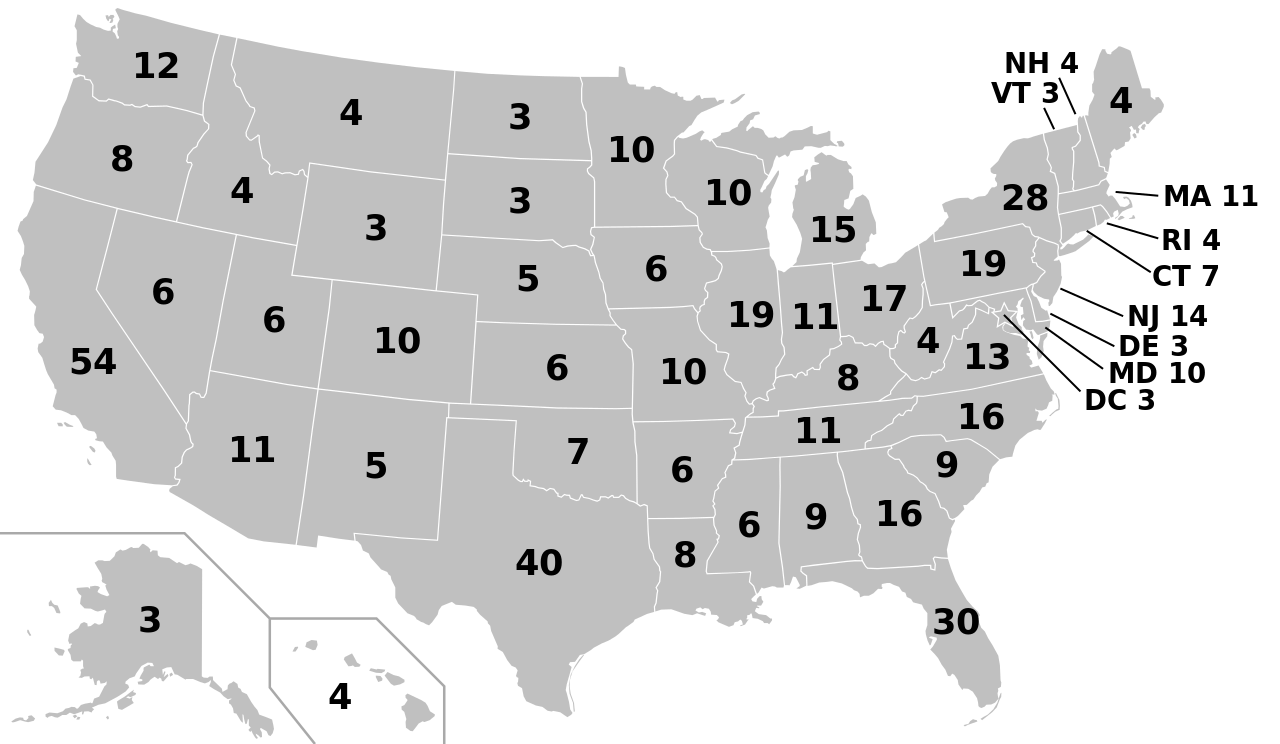
ElectoralCollege2024


The Unfolding of a Presidential Contest
The 2024 United States presidential election, held on November 5, 2024, culminated in a victory for the Republican ticket of Donald Trump and JD Vance over the Democratic ticket of Kamala Harris and Tim Walz. The election cycle was marked by significant and unexpected shifts. Initially, incumbent President Joe Biden was the presumptive Democratic nominee, facing minimal opposition in the primaries.
However, a widely perceived poor performance in a June 2024 debate amplified concerns regarding his age and health, leading to internal party pressure for him to withdraw. On July 21, 2024, Biden announced his withdrawal, becoming the first eligible incumbent president to do so since Lyndon B. Johnson in 1968.
He subsequently endorsed Vice President Kamala Harris, who was officially nominated by the Democratic Party on August 5. This made Harris the first nominee who did not participate in the primary contests since Hubert Humphrey in 1968. She then selected Tim Walz, the Governor of Minnesota, as her running mate.
Campaign Narratives
The Republican campaign, led by former President Donald Trump, who had lost the 2020 election to Biden, focused on a platform advocating for the mass deportation of undocumented immigrants and an isolationist 'America First' foreign policy. This included strong support for Israel in the Gaza conflict and skepticism towards further aid for Ukraine in its war with Russia. The campaign also promoted policies perceived as hostile to transgender Americans.
A notable and alarming event during the campaign was an assassination attempt on Donald Trump on July 13, 2024, where he was shot in the ear. The Trump campaign was also criticized for making false and misleading statements, including unsubstantiated claims of electoral fraud from the 2020 election. Some historians and former Trump administrators characterized his political movement as authoritarian.
Electoral Mechanics and a Historic Victory
The election's outcome was determined by the Electoral College system. Donald Trump secured 312 electoral votes, surpassing Kamala Harris's 226. Trump's victory was comprehensive, as he won every swing state, including Nevada, marking the first time a Republican had won the state since 2004.
Furthermore, Trump won the national popular vote with 49.8% of the ballots cast, making him the first Republican to achieve this since George W. Bush in 2004. This electoral success positioned Donald Trump as the second president in US history to be elected to nonconsecutive terms, following Grover Cleveland's precedent in 1884 and 1892.
He also joined a select group of presidents, including Woodrow Wilson and Bill Clinton, to win multiple presidential elections with less than 50% of the popular vote in each victory.
Post-Election Analysis
Analysts attributed Trump's victory to a confluence of factors. The significant inflation surge experienced between 2021 and 2023 was a major concern for voters. The perceived unpopularity of the Biden administration also played a crucial role.
Additionally, Trump demonstrated success in attracting and retaining support among working-class voters, a demographic that has seen shifting political allegiances in recent election cycles. The 2024 election underscored the enduring impact of economic conditions on voter behavior and highlighted the evolving nature of political coalitions in the United States, setting the stage for continued debate and policy challenges during the incoming administration.
See also
Frequently Asked Questions
What happened in the 2024 US presidential election?+
Why did Joe Biden stop running for president in 2024?+
Who became the first Democratic nominee in a long time who didn't run in the primaries?+
What was a big danger that happened to Donald Trump during the campaign?+
How many electoral votes did Donald Trump get, and why was that special?+
Based on content from Wikipedia · Licensed under CC BY-SA 4.0