

United States presidential election
Images

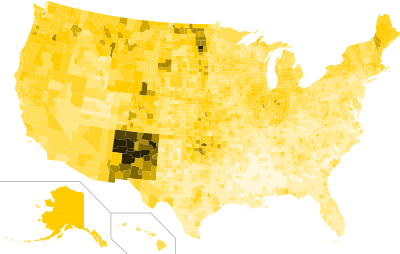
2024 United States presidential election results map by county



The Constitutional Framework
The election of the President and Vice President of the United States is a complex, indirect process established by Article II, Section 1 of the Constitution and later amended. Unlike many republics that employ a direct popular vote, the U.S. system relies on the Electoral College. Citizens cast ballots not for candidates, but for slates of electors pledged to those candidates.
These electors then convene in their respective states to cast the official electoral votes. A candidate must secure an absolute majority of electoral votes, at least 270 out of 538, to win the presidency. If no candidate achieves this majority, the election is decided by Congress, with the House of Representatives choosing the President and the Senate selecting the Vice President.
This decentralized system, where states largely regulate the popular vote administration, reflects the federal nature of the U.S. government and has been a source of debate since the nation's founding.
The Electoral College
The number of electoral votes allocated to each state is equal to its total representation in Congress-the sum of its Senators (always two) and its Representatives (based on population). Washington D.C. is granted electoral votes equivalent to the least populous state, thanks to the Twenty-third Amendment. The vast majority of states, 48 out of 50 plus D.C., operate under a 'winner-takes-all' system. In these states, the candidate who wins the plurality of the statewide popular vote receives all of the state's electoral votes.
Maine and Nebraska, however, employ a district-based allocation method, where electoral votes can be split. This winner-takes-all approach significantly amplifies the importance of swing states, as candidates concentrate resources on winning these pivotal contests rather than maximizing their national popular vote total. The potential for a divergence between the national popular vote winner and the Electoral College victor is a recurring point of contention.
Historical Evolution and Modern Implications
The Electoral College has evolved since its inception. Initially, electors were often chosen by state legislatures, but over time, all states transitioned to having voters select electors through popular vote. The system has seen instances where the Electoral College winner did not win the national popular vote, notably in 1876, 1888, 2000, and 2016.
These outcomes have fueled ongoing discussions about fairness and representation. Furthermore, the concept of 'faithless electors'-those who vote contrary to their state's popular vote-exists, though they have historically not altered election results. The nomination process, including primaries and conventions, is a separate, party-driven development not mandated by the Constitution, adding another layer of complexity to the path to the presidency.
The entire election cycle, from early campaigning to Inauguration Day on January 20th, is a meticulously timed and highly scrutinized democratic ritual.
Debates and Criticisms
The Electoral College remains a subject of intense debate. Proponents argue it protects less populated states from being ignored, promotes national unity by requiring broad geographic support, and provides a clear winner, thus enhancing stability. Critics, however, contend that it violates the principle of 'one person, one vote,' disenfranchises voters in states with predictable outcomes, and can lead to presidents who lack a mandate from the majority of the electorate.
The possibility of faithless electors, though rare, also raises questions about the integrity of the process. The system's design, a compromise by the Founding Fathers, continues to be a focal point for discussions on democratic reform and the balance of power within the American federal system, impacting campaign strategies and voter engagement across the nation.
See also
Frequently Asked Questions
What is the Electoral College and how does it work?+
Why do some states give all their votes to one winner instead of splitting them?+
How can the person who gets the most votes in the whole country still not become president?+
What happens if no candidate gets 270 electoral votes?+
Who chooses the electors that vote in the Electoral College?+
Based on content from Wikipedia · Licensed under CC BY-SA 4.0