

2008 United States presidential election
Images
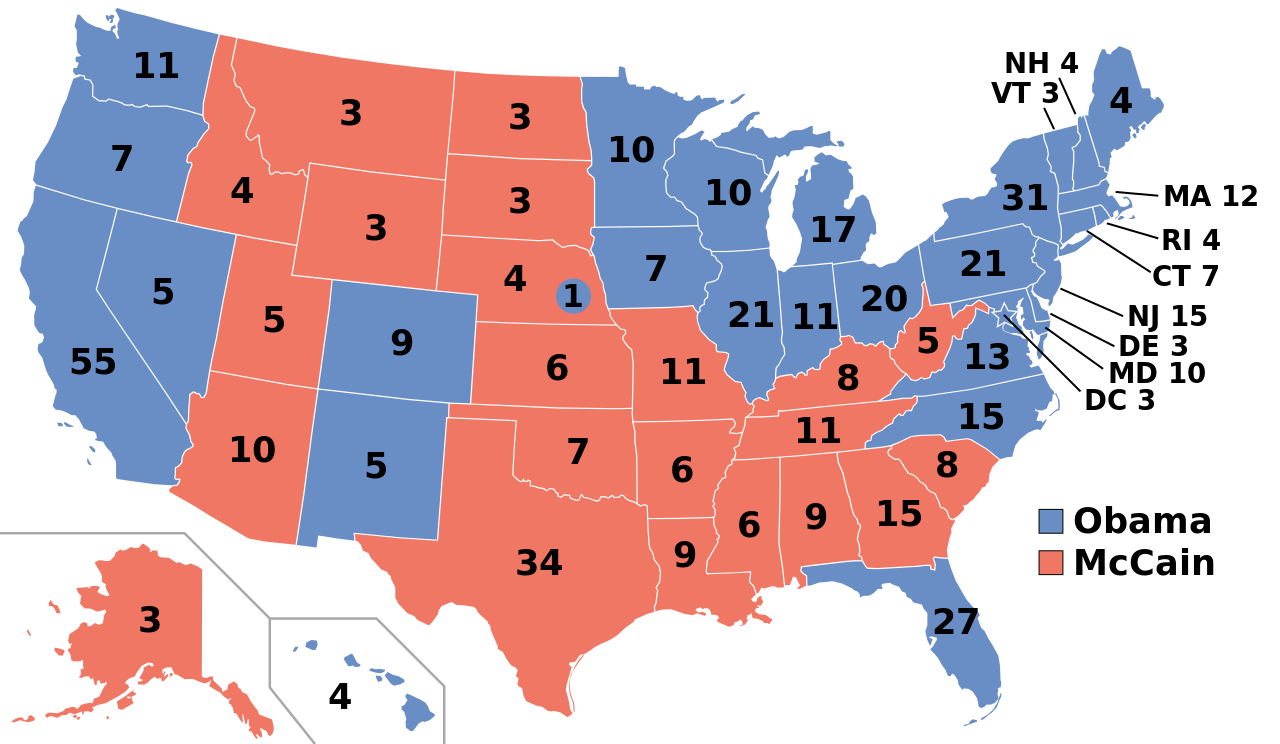
ElectoralCollege2008


Geopolitical Context
The 2008 United States presidential election unfolded within a nation of immense geographical and cultural diversity. Spanning over 3.8 million square miles, the US encompasses a wide array of climates and landscapes, from the arid Southwest to the temperate Northeast, and is home to a population that speaks numerous languages, with English being dominant. This election was not confined to Washington D.C.; it was a nationwide phenomenon, engaging voters across all fifty states and territories.
The outcome had profound implications not only for domestic policy but also for America's role on the international stage, influencing global relations and economic stability. The sheer scale of the country meant that campaign strategies had to be tailored to diverse regional concerns and demographics.
The Contenders and the Primaries
The 2008 election featured a stark contrast in candidates and their political trajectories. The Democratic nomination was fiercely contested, most notably between Barack Obama, a relatively new senator from Illinois, and Hillary Clinton, a former First Lady and established senator. Obama's campaign, built on a message of 'hope and change,' ultimately prevailed after a lengthy primary season.
His running mate, Joe Biden, brought extensive foreign policy experience. On the Republican side, Senator John McCain of Arizona secured the nomination, selecting Sarah Palin, the governor of Alaska, as his vice-presidential choice. McCain's campaign emphasized his experience and national security credentials, positioning himself as a steady hand during uncertain times, particularly in contrast to Obama's relative inexperience in national executive office.
A Paradigm Shift
The election's most enduring legacy is the historic victory of Barack Obama, who became the first African American President of the United States. This achievement shattered a significant racial barrier that had persisted since the nation's founding. Obama's win was a powerful symbol of progress and a testament to the evolving demographics and social attitudes within the US.
It resonated globally, inspiring many and signaling a new era for American leadership. The election demonstrated the electorate's willingness to embrace change and challenge long-standing norms, marking a profound moment in American civil rights history and political evolution.
Electoral Dynamics and Policy Debates
Obama secured a decisive victory, winning both the Electoral College and the popular vote by significant margins. His success was characterized by flipping nine states that had voted Republican in 2004, including crucial battlegrounds like Florida, Ohio, Indiana, Iowa, Nevada, New Mexico, North Carolina, and Virginia.
This electoral map shift indicated a broader realignment of voter preferences. Key issues dominating the campaign included the ongoing Iraq War, with Obama strongly opposing it and McCain supporting it, and the burgeoning 2008 financial crisis. McCain's decision to suspend campaigning to address the crisis was perceived by some as erratic, while Obama's consistent message of change resonated with voters seeking a new direction.
Economic Headwinds and Lasting Political Realignment
The 2008 election took place against the backdrop of a severe global financial crisis, which heavily influenced voter sentiment and policy discussions. President George W. Bush's declining popularity, attributed to the Iraq War, Hurricane Katrina response, and economic woes, created an opening for the Democrats.
McCain's efforts to distance himself from the incumbent administration were notable. Obama's victory not only represented a shift in presidential leadership but also contributed to a broader political realignment, with Democrats gaining significant ground in Congress. The election results, including Obama's substantial popular vote share, indicated a strong mandate for his proposed policies and a desire for fundamental change in American governance.
See also
Frequently Asked Questions
Who won the 2008 U.S. presidential election?+
Who were the main candidates and their running mates in 2008?+
Why was Barack Obama's victory special?+
What were the big issues in the 2008 campaign?+
How did the election change which states voted for each party?+
Based on content from Wikipedia · Licensed under CC BY-SA 4.0