

Yoko Ono
Images

“Spring passes and one remembers one's innocence. Summer passes and one remembers one's exuberance. Autumn passes and one remembers one's reverence. Winter passes and one remembers one's perseverance.”― Yoko Ono



Formative Years and Artistic Genesis
Born in Tokyo on February 18, 1933, Yoko Ono's early life was shaped by the tumultuous backdrop of World War II, an experience that profoundly informed her later pacifist ideals. Her family's relocation to New York City in 1952 marked a pivotal transition, immersing her in the burgeoning post-war artistic milieu. Ono quickly became a central figure in the downtown New York art scene, aligning herself with the Fluxus movement.
Fluxus artists, characterized by their interdisciplinary approach and rejection of traditional artistic hierarchies, embraced conceptual art, performance, and everyday materials. Ono's contributions to Fluxus were marked by her conceptual pieces, often presented as instructions or invitations to the audience, challenging the passive consumption of art and emphasizing the viewer's active role in creation. Her early work explored themes of perception, communication, and the ephemeral nature of experience, laying the groundwork for her influential career.
The Lennon-Ono Collaboration
Yoko Ono's marriage to John Lennon in 1969 catapulted her into global consciousness, transforming her from an avant-garde artist into a cultural icon. Their union was not merely personal but a profound artistic and political partnership. The formation of the Plastic Ono Band provided a platform for their experimental music, which often blended rock with avant-garde elements and raw emotional expression.
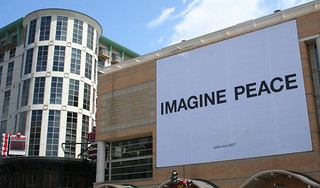
Their most famous collaborative act of activism was the 1969 'bed-in for peace,' staged during their honeymoon. By inviting media into their hotel room for a week of protest against the Vietnam War, they masterfully utilized their celebrity to broadcast a message of peace and non-violence to a worldwide audience. This event exemplified their belief in art as a potent tool for social and political change, demonstrating how public platforms could be leveraged for advocacy.
Musical Evolution and Chart Success
While Yoko Ono's artistic journey began with conceptual art and performance, her musical career gained significant momentum and critical acclaim throughout her life. Her 1980 album 'Double Fantasy,' a deeply personal and collaborative work with John Lennon, achieved immense commercial success, earning a Grammy Award for Album of the Year. Released shortly before Lennon's assassination, the album resonated with audiences for its poignant themes of love, loss, and hope.
Ono continued to explore diverse musical landscapes, achieving remarkable success on the Billboard Dance Club Songs chart, where she has amassed twelve number-one singles. This sustained chart presence highlights her enduring relevance and ability to connect with contemporary audiences through her innovative approach to music, blending her distinctive artistic vision with evolving popular music trends.
A Legacy of Peace, Philanthropy, and Inspiration
Yoko Ono's impact extends far beyond her artistic and musical achievements. She has consistently dedicated herself to promoting peace and social justice through her philanthropic endeavors. The establishment of the LennonOno Grant for Peace underscores her commitment to supporting individuals and organizations striving for global harmony.
Her contributions have also supported disaster relief efforts, particularly in Japan and the Philippines, and have significantly benefited the arts community. In recent years, Ono has lent her voice to environmental causes, notably co-founding Artists Against Fracking. Her multifaceted career serves as a powerful testament to the interconnectedness of art, activism, and humanitarianism, inspiring generations of artists, musicians, and activists to use their platforms for positive change and to envision a more peaceful world.
Go deeper
Frequently Asked Questions
What is Yoko Ono known for?+
Why did Yoko Ono do the "bed-in for peace"?+
How did Yoko Ono help people after disasters?+
When did Yoko Ono move to New York City?+
What is the LennonOno Grant for Peace?+
Based on content from Wikipedia · Licensed under CC BY-SA 4.0