

Wallis and Futuna
Images

Blason circonscription fr Uvea (Wallis-et-Futuna)




Opens Google Maps in new tab
Geographic Isolation and Volcanic Origins
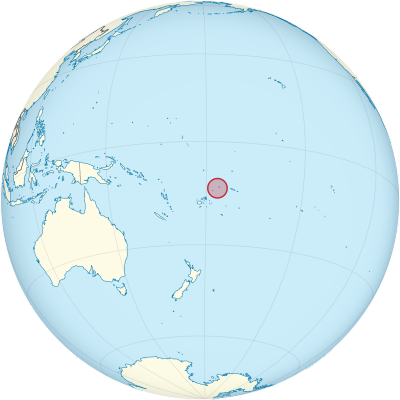
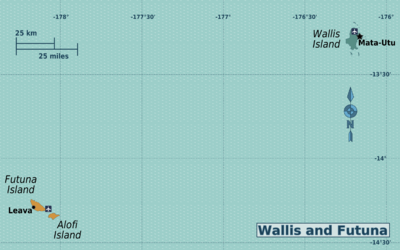
Wallis and Futuna occupies a geographically isolated position in the South Pacific Ocean, situated strategically between Tuvalu, Fiji, Tonga, Samoa, and Tokelau. This remoteness has profoundly shaped its history, culture, and economy. The territory comprises three principal volcanic tropical islands and a scattering of smaller islets, divided into two distinct island groups: the Wallis Islands (Uvea) in the northeast and the Hoorn Islands (Futuna Islands) in the southwest.
The latter includes Futuna Island proper and the largely uninhabited Alofi Island, lying approximately 260 kilometers apart. These islands are remnants of ancient volcanic activity, their rugged terrain and fertile soils dictating the patterns of settlement and resource utilization. The tropical climate is characterized by high temperatures and humidity year-round, with distinct wet and dry seasons, supporting a rich biodiversity and a reliance on agriculture and marine resources.
A Tapestry of Polynesian Heritage and French Administration
The human history of Wallis and Futuna is a complex narrative of indigenous Polynesian settlement followed by European contact and eventual French administration. For centuries, the islands developed distinct cultural traditions, social structures, and languages. The arrival of Europeans marked a turning point, leading to increased interaction and eventual colonization.
Since March 28, 2003, Wallis and Futuna has held the status of a French overseas collectivity (collectivité d'outre-mer, COM), a designation that replaced its prior status as an overseas territory (territoire d'outre-mer, TOM) in 1961. This political framework signifies a unique relationship with France, granting the territory a degree of autonomy while maintaining ties to the French Republic for matters such as defense, foreign policy, and currency. The official name, Territory of the Wallis and Futuna Islands, has remained consistent despite these administrative shifts, underscoring a persistent identity.
Economic Realities in a Remote Archipelago
The economy of Wallis and Futuna is characterized by its small scale, reliance on external support, and the challenges posed by its geographic isolation. Key economic activities include subsistence agriculture, primarily cultivating taro, yams, and bananas, alongside fishing and small-scale livestock farming. A significant portion of the territory's economy is sustained by financial transfers from France, including public sector salaries and social benefits, reflecting its status as an overseas collectivity.
Employment is largely concentrated in public administration, education, and healthcare services, which are predominantly funded by the French state. Limited industrial development and the high cost of importing goods mean that self-sufficiency is a constant aspiration, often balanced against the practicalities of global trade and supply chains. The capital, Mata-Utu, serves as the administrative and commercial hub, concentrating most of the territory's economic activity.
Balancing Local Autonomy and French Sovereignty
The governance structure of Wallis and Futuna is a nuanced blend of traditional leadership and French republican administration. As a French overseas collectivity, it operates under a system that respects local customs and authorities while adhering to French law. The territory is divided into three traditional chiefdoms: Uvea (Wallis) and the two chiefdoms of Futuna.
These traditional leaders play a significant role in local governance and cultural preservation. The legislative body is the Territorial Assembly, composed of elected representatives. The French President is the Head of State, represented locally by a High Administrator appointed by France.
This dual system aims to foster local decision-making on matters pertinent to island life, such as education, health, and local infrastructure, while ensuring alignment with broader French policies and international commitments. The ongoing challenge lies in balancing the preservation of distinct cultural identities with the demands of modern governance and economic development.
Education and Cultural Transmission
Education in Wallis and Futuna is a critical component of both cultural preservation and integration into the wider world. The education system is largely modeled on the French system, with French being the primary language of instruction in schools. However, efforts are made to incorporate local languages, Wallisian and Futunan, into the curriculum, particularly at the primary level, to ensure the transmission of cultural heritage.
The territory boasts a network of public and private schools, from preschools to secondary institutions. Higher education opportunities are limited locally, with many students pursuing further studies in France or other French territories. This educational pathway highlights the dual identity of the islands, preparing young people for potential careers within the French administration or in international contexts, while also emphasizing the importance of maintaining their unique cultural roots and connection to their island home.
See also
Frequently Asked Questions
Where are Wallis and Futuna located?+
What are the main islands that make up Wallis and Futuna?+
What is the capital city of Wallis and Futuna?+
How do people in Wallis and Futuna earn money?+
Why is Wallis and Futuna considered a French overseas collectivity?+
Based on content from Wikipedia · Licensed under CC BY-SA 4.0