

Urartu: The Kingdom of Mighty Builders!
Images
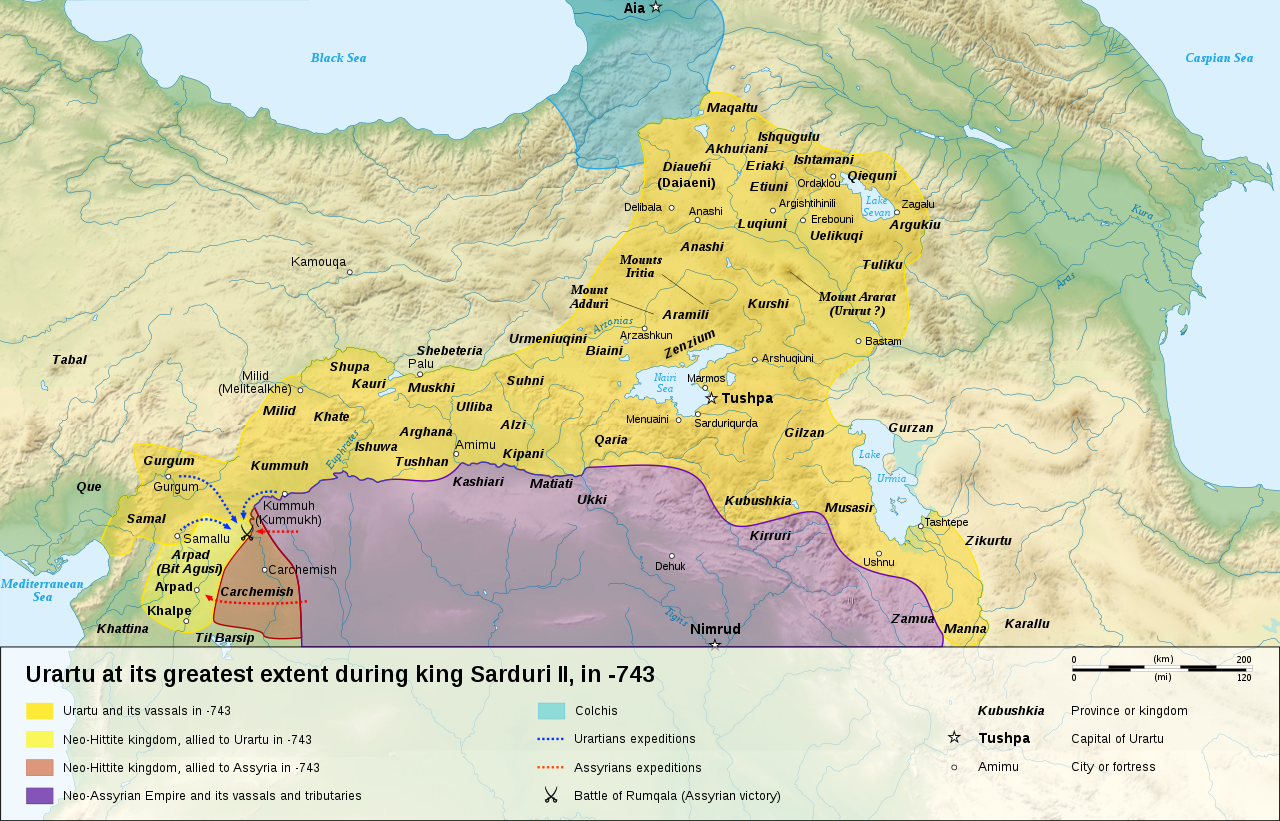
Urartu
The Genesis and Expansion of Urartu
Emerging from the dynamic geopolitical landscape of the Near East, the Kingdom of Urartu (Aratta) established itself as a significant regional power from the 9th to the 6th centuries BCE. Its heartland was the Armenian Highlands, strategically positioned between the Anatolian, Mesopotamian, and Caucasian spheres of influence. Early Urartian history is marked by a consolidation of power, often through military campaigns against neighboring Assyrian and Nairi confederations.
Kings like Arame, Sarduri I, and Menua were instrumental in expanding the kingdom's territory, establishing a centralized administration, and fostering a distinct cultural identity. The kingdom's expansion was facilitated by its formidable military, which utilized advanced weaponry and siege tactics, and its ability to harness the region's rich mineral resources, particularly iron and copper, which were crucial for its economy and military might.
Architectural Grandeur and Engineering Prowess
The Urartians are perhaps most renowned for their monumental architecture, characterized by massive stone fortresses and sophisticated urban planning. Sites like Tushpa (modern Van), Erebuni, and Argishtikhinili were not merely defensive strongholds but also administrative and religious centers. These citadels were typically built on commanding natural elevations, featuring cyclopean masonry with colossal stone blocks, some weighing several tons.
Their engineering acumen extended to complex hydraulic systems, including aqueducts, canals, and reservoirs, which were vital for agriculture and urban water supply in a challenging environment. The construction of these elaborate structures required significant labor organization and advanced knowledge of stonework and surveying, reflecting a highly developed state apparatus capable of mobilizing resources on a grand scale.
Masters of Metallurgy and Artistic Expression
Urartu's economic and military strength was deeply intertwined with its exceptional metallurgical skills. The kingdom was a major producer and exporter of bronze and iron goods. Urartian artisans crafted a wide array of objects, including intricately decorated shields, helmets, greaves, chariot parts, furniture, and vessels.
These items often featured elaborate repoussé work, engraving, and inlay, depicting mythological scenes, processions of animals, and geometric patterns that reveal aspects of their cosmology and social hierarchy. The quality and artistry of Urartian metalwork were highly prized, contributing to their influence and trade networks across the ancient Near East. The discovery of numerous metal artifacts provides critical evidence for understanding their technological capabilities and aesthetic sensibilities.
The Legacy and Decline of Urartu
The decline of Urartu began in the late 7th century BCE, with increasing pressure from migrating groups, particularly the Cimmerians and Scythians, and internal fragmentation. The Neo-Assyrian Empire, a long-standing rival, also played a role in weakening the kingdom. By the early 6th century BCE, Urartu had largely disintegrated, its territories eventually absorbed by successor states and empires, including the Medes.
Despite its eventual collapse, Urartu left an indelible mark on the region. Its architectural innovations, metallurgical techniques, and administrative models influenced subsequent cultures in Anatolia and the Caucasus. Archaeological research continues to uncover new insights into this fascinating civilization, highlighting its role as a crucial bridge between the Bronze Age and the Iron Age, and its significant contributions to the complex tapestry of ancient Near Eastern history.
Urartu's Place in the Ancient World
Urartu occupied a pivotal position in the ancient Near East, acting as a buffer and a rival to major powers like Assyria and Babylon. Its strategic location facilitated trade and cultural exchange, while its formidable military and advanced infrastructure allowed it to maintain a degree of autonomy and exert considerable influence. The kingdom's interactions with its neighbors were complex, involving periods of intense conflict, diplomatic maneuvering, and economic interdependence.
Urartian inscriptions, written in a unique Luwian hieroglyphic script and an Assyrian cuneiform script, provide primary source material for understanding their political structures, religious beliefs, and royal ideology. Studying Urartu is essential for a comprehensive understanding of the political dynamics, technological advancements, and cultural developments that characterized the Iron Age in this critical crossroads of ancient civilizations.
Go deeper
Frequently Asked Questions
What was Urartu known for building?+
How did Urartu make its metal tools?+
Where was Urartu located?+
Why did Urartu fall?+
Who were some kings of Urartu?+
Based on content from Wikipedia · Licensed under CC BY-SA 4.0