

Uranium
Images
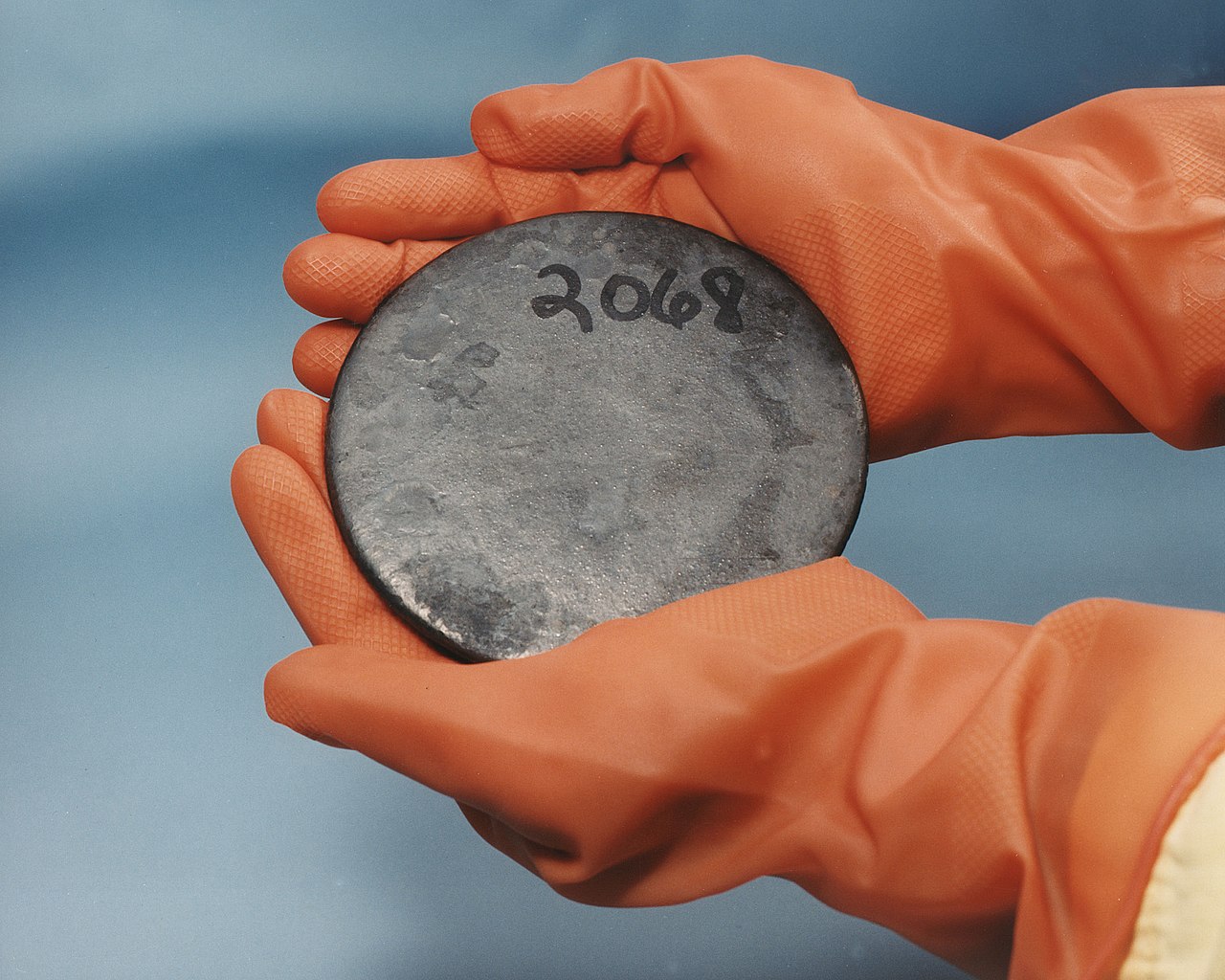
Uranium
The Atomic Architecture of Uranium
Uranium, element 92, stands as the heaviest naturally occurring element on Earth. Its atomic structure, characterized by 92 protons and a variable number of neutrons (isotopes), confers extraordinary density. For instance, uranium-238 (U-238), the most abundant isotope, has a density of approximately 19.1 grams per cubic centimeter, making it nearly twice as dense as lead.
This density is a direct consequence of its large atomic mass and tightly packed nucleus. However, it is uranium's inherent instability, particularly in its fissile isotope uranium-235 (U-235), that defines its significance. U-235 readily undergoes nuclear fission when struck by a slow-moving neutron, splitting into lighter elements and releasing a substantial amount of energy, along with more neutrons.
This chain reaction is the cornerstone of nuclear technology. The spontaneous decay of U-238, though much slower, also contributes to Earth's internal heat and produces other radioactive elements over vast timescales.
Stellar Forge
The existence of uranium on Earth is a testament to the violent and creative processes of the universe. Uranium is not formed through stellar nucleosynthesis within stars like helium or carbon; instead, it is synthesized during extremely energetic astrophysical events, primarily neutron star mergers and certain types of supernovae. These events, known as the r-process (rapid neutron capture), involve a rapid influx of neutrons bombarding atomic nuclei, allowing for the creation of elements heavier than iron, including uranium.
The discovery of uranium in 1789 by Martin Heinrich Klaproth, who named it after the recently discovered planet Uranus, marked a pivotal moment in chemistry. Initially, Klaproth believed he had isolated the pure metal, but it was later identified as uranium dioxide. The discovery of its radioactivity by Henri Becquerel in 1896, and subsequent research by Marie and Pierre Curie, revolutionized physics and chemistry, opening the door to understanding atomic energy.
Harnessing the Atom
The controlled nuclear fission of U-235 is the basis for nuclear power generation. In a nuclear reactor, a critical mass of enriched uranium fuel undergoes a sustained chain reaction, releasing thermal energy. This heat boils water, producing steam that drives turbines to generate electricity.
Nuclear power offers a low-carbon energy source, crucial for mitigating climate change, though it presents challenges related to waste disposal and safety. Conversely, the uncontrolled release of energy from fissionable uranium isotopes, particularly U-235, forms the destructive power of nuclear weapons. The development of nuclear weapons during the Manhattan Project in World War II fundamentally altered global geopolitics, ushering in the nuclear age and the concept of mutually assured destruction (MAD).
The dual nature of uranium's power-its capacity for both immense creation and devastation-continues to shape international relations and security concerns.
Beyond Power
Uranium's influence extends significantly into the medical field. While not directly used, its radioactive decay products and isotopes are vital for medical imaging and therapy. For example, technetium-99m, a widely used medical radioisotope, is produced from molybdenum-99, which itself is often derived from uranium.
These isotopes allow for non-invasive visualization of organs and tissues, aiding in the diagnosis of numerous diseases. Radiation therapy, utilizing gamma rays from isotopes like cobalt-60 (which can be produced in reactors using uranium-derived neutrons), is a cornerstone of cancer treatment. Geopolitically, uranium reserves and enrichment capabilities are strategic assets, influencing international trade, diplomacy, and non-proliferation efforts. The global management of uranium resources, from mining to enrichment and disposal, remains a complex and critical issue.
Go deeper
Frequently Asked Questions
What is uranium?+
Why does uranium glow?+
How does uranium help make electricity?+
Where does uranium come from?+
Who first discovered uranium?+
Based on content from Wikipedia · Licensed under CC BY-SA 4.0