

Nuclear Reactor
Images

Operating Nuclear Reactors



The Genesis of Controlled Nuclear Reactions
A nuclear reactor is fundamentally a device engineered to initiate and sustain a controlled nuclear chain reaction, primarily fission. This process involves bombarding fissile nuclei, most commonly Uranium-235 or Plutonium-239, with neutrons. Upon absorbing a neutron, these heavy nuclei become unstable and split, releasing a significant amount of energy, typically in the form of kinetic energy of the fission fragments and gamma radiation, along with several new neutrons.
These newly released neutrons can then go on to induce fission in other fissile nuclei, thus perpetuating a chain reaction. The critical challenge in reactor design is to manage this chain reaction. This is achieved through the strategic use of neutron absorbers, which reduce the number of available neutrons, and moderators, which slow down fast neutrons to thermal energies, increasing the probability of further fission.
This delicate balance ensures that the reaction proceeds at a steady, manageable rate, preventing uncontrolled excursions.
A Historical Trajectory
The theoretical underpinnings of nuclear reactors emerged from the discovery of nuclear fission in 1938 by Otto Hahn and Fritz Strassmann, building on the work of Lise Meitner and Otto Frisch. This groundbreaking discovery spurred intense research worldwide. The first artificial, self-sustaining nuclear chain reaction was achieved on December 2, 1942, with the activation of Chicago Pile-1, led by Enrico Fermi at the University of Chicago.
This marked a pivotal moment, demonstrating the feasibility of controlled nuclear processes. Early large-scale reactors, operational by 1944 at the Hanford Site, were primarily developed for the production of plutonium for weapons programs. The subsequent development of the Pressurized Water Reactor (PWR) design, initiated for naval propulsion by the U.S.
Navy starting with the S1W reactor in 1953, laid the groundwork for commercial nuclear power. The dawn of civilian nuclear electricity generation occurred in 1954 with the commissioning of the Obninsk Nuclear Power Plant in the Soviet Union.
The Multifaceted Significance of Nuclear Reactors
Nuclear reactors are indispensable tools with profound implications across various sectors. Their primary contribution is the generation of electricity. Commercial reactors currently supply approximately 9% of the global electricity demand, playing a vital role in providing a significant portion of the world's low-carbon energy. This is crucial for mitigating climate change, as nuclear power plants do not emit greenhouse gases during operation.
The energy density of nuclear fuel is exceptionally high; for instance, low-enriched uranium is about 120,000 times more energy-dense than coal, meaning a small amount of fuel can produce a vast quantity of energy. Beyond electricity, reactors are employed for marine propulsion, powering submarines and aircraft carriers, and for the production of isotopes essential for medical diagnostics and treatments, as well as for industrial applications. They also serve as critical facilities for fundamental scientific research, enabling studies in nuclear physics and materials science.
The Mechanism of Energy Conversion
The fundamental principle of energy conversion in most nuclear reactors involves harnessing the thermal energy released from fission. The heat generated within the reactor core, a region containing the nuclear fuel and control elements, is transferred to a working fluid, typically water, which acts as a coolant. This heated coolant is then used to produce steam, either directly or indirectly through a heat exchanger.
The high-pressure steam is channeled to drive a turbine, a device with rotating blades. The mechanical energy of the spinning turbine is then converted into electrical energy by an attached generator. This process is analogous to how conventional thermal power plants operate, but the heat source is nuclear fission rather than the combustion of fossil fuels.
Different reactor designs employ various coolants, such as heavy water, gases, or molten salts, each offering distinct advantages in terms of efficiency and safety characteristics.
Diversity in Design and Future Prospects
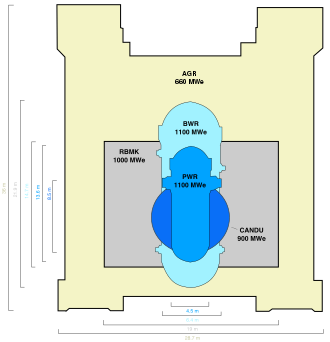
The field of nuclear reactor technology is characterized by a diverse array of designs, each optimized for specific applications and performance criteria. While Pressurized Water Reactors (PWRs) and Boiling Water Reactors (BWRs) dominate the global commercial fleet, accounting for nearly 90% of nuclear electricity generation, numerous other designs exist. These include Gas-Cooled Reactors (GCRs), Fast-Spectrum Reactors, Breeder Reactors (capable of producing more fissile material than they consume), Heavy Water Reactors (like CANDU), and Molten Salt Reactors (MSRs).
Each design represents advancements in safety features, fuel utilization, waste management, or economic viability. Emerging technologies, such as Small Modular Reactors (SMRs), promise enhanced flexibility, scalability, and potentially lower construction costs. Research continues into advanced reactor concepts aimed at improving fuel efficiency, reducing waste, and further enhancing inherent safety, ensuring the continued evolution of nuclear power technology.
Go deeper
Frequently Asked Questions
What is a nuclear reactor?+
How does a nuclear reactor make electricity?+
Why do nuclear reactors use neutron absorbers and moderators?+
When was the first nuclear reactor built?+
What else can nuclear reactors do besides making electricity?+
Based on content from Wikipedia · Licensed under CC BY-SA 4.0