

Henri Becquerel
Images
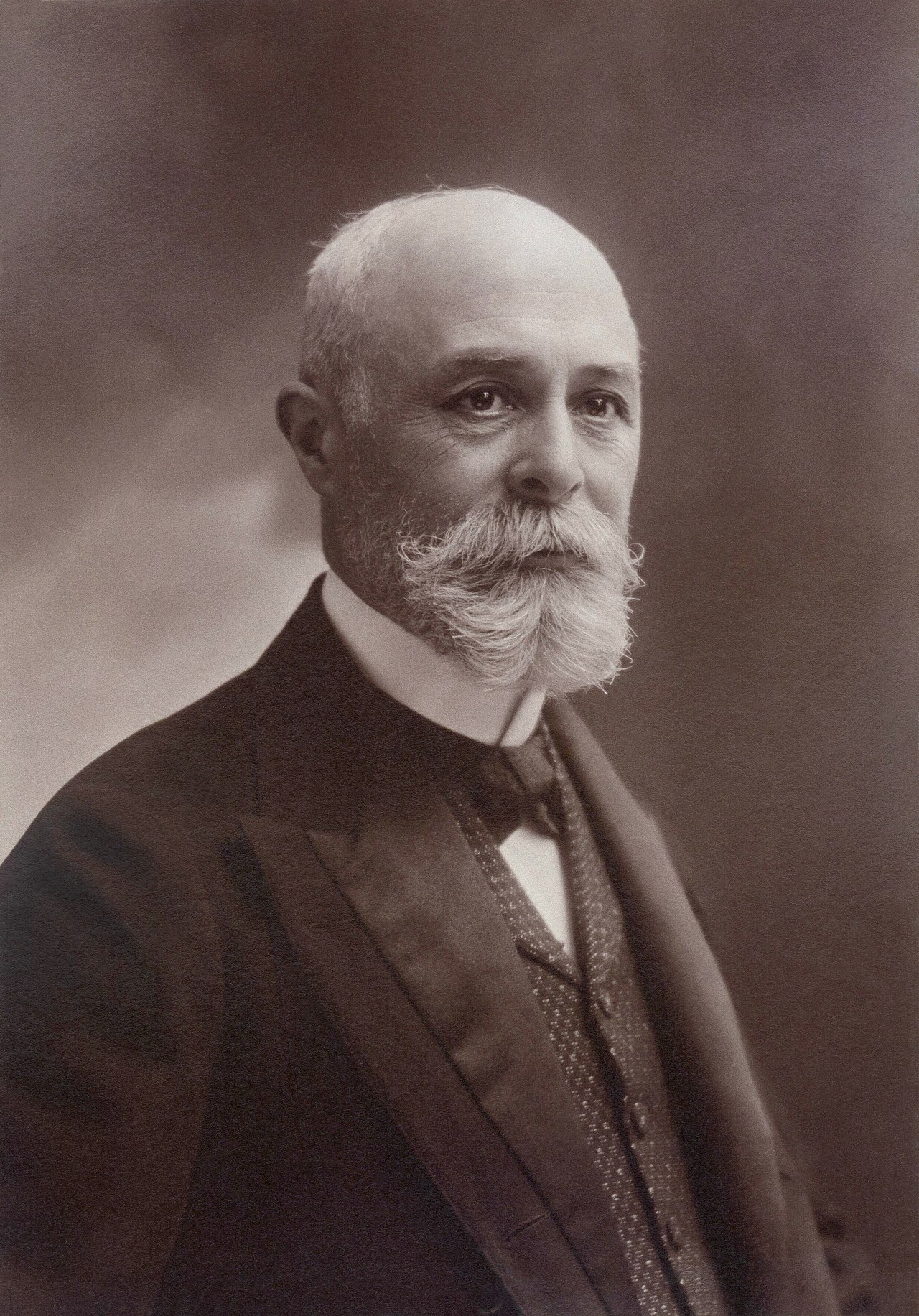
Henri Becquerel
A Scientific Pedigree and Early Explorations
Born in Paris on December 15, 1852, Antoine Henri Becquerel hailed from a distinguished lineage of physicists. His father, Alexandre-Edmond Becquerel, was a renowned scientist, and his grandfather, Antoine César Becquerel, was also a notable physicist. This environment undoubtedly fostered Henri's early interest in scientific inquiry.
He pursued his education at the prestigious École Polytechnique, graduating in 1874, and later took up a professorship at the Muséum national d'histoire naturelle, following in his father's footsteps. His initial research focused on the absorption of light by various substances and phosphorescence, laying a foundational understanding of light-matter interactions that would prove crucial for his later, more famous, discovery.
The Unforeseen Revelation from Uranium Salts
In 1896, inspired by Wilhelm Röntgen's discovery of X-rays, Becquerel began investigating whether uranium salts, which exhibit phosphorescence, could emit similar penetrating rays. He placed samples of uranium salts on a photographic plate, carefully wrapped in black paper to block any external light. He then exposed this setup to sunlight, hypothesizing that the phosphorescence would be enhanced by the sun's energy, leading to a stronger image on the plate.
However, after developing the photographic plate, Becquerel was astonished to find a distinct, dark silhouette of the uranium crystals, even though the plate had been completely shielded from light. This indicated that the uranium salts were emitting rays independently of sunlight.
Defining Radioactivity and Its Atomic Implications
Becquerel meticulously documented his findings, concluding that uranium salts possessed an intrinsic property that caused them to emit invisible, penetrating radiation. He termed this phenomenon 'radioactivity.' Crucially, he demonstrated that this radiation was not a result of a chemical reaction or external energy source like sunlight, but rather an inherent characteristic of the uranium atoms themselves. This was a radical departure from the prevailing scientific understanding that atoms were indivisible and immutable.
Becquerel's discovery implied that atoms could undergo spontaneous transformations, releasing energy in the process, a concept that would fundamentally alter the landscape of physics and chemistry.
Nobel Recognition and the Dawn of Nuclear Physics
Henri Becquerel's discovery of radioactivity was a watershed moment in scientific history. It opened up an entirely new field of study and provided the essential groundwork for subsequent research by pioneers like Marie and Pierre Curie, who further investigated the properties of radioactive elements and discovered new ones like polonium and radium. In recognition of their collective contributions to understanding radioactivity, Becquerel, along with the Curies, was awarded the Nobel Prize in Physics in 1903.
This discovery not only earned him immense scientific acclaim but also initiated the era of nuclear physics, leading to profound advancements in fields ranging from nuclear energy and medical imaging to particle physics and cosmology, forever changing humanity's understanding of matter and energy.
Go deeper
Based on content from Wikipedia · Licensed under CC BY-SA 4.0