

Radiation: Energy on the Move!
Images

Radiation


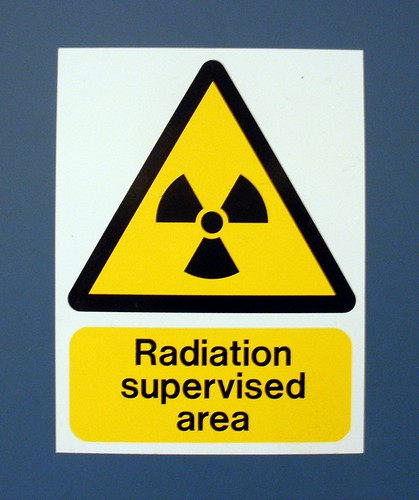
The Fundamental Nature of Energy Transfer
At its core, radiation is the propagation of energy. This energy manifests in two primary forms: electromagnetic waves and particle streams. Electromagnetic radiation, a spectrum of photons, ranges from low-energy radio waves to high-energy gamma rays.
These photons exhibit wave-particle duality, behaving as both waves and discrete packets of energy. Particle radiation involves the emission of subatomic particles with mass, such as alpha particles (helium nuclei), beta particles (electrons or positrons), protons, and neutrons. The medium through which radiation travels, or its absence in a vacuum, dictates its transmission characteristics.
Understanding this dual nature is crucial for comprehending phenomena from stellar fusion to quantum mechanics, highlighting radiation as a fundamental aspect of physical reality.
A Historical Tapestry
Humanity's interaction with radiation began with observable phenomena like sunlight and heat. Ancient civilizations harnessed solar energy, unaware of its underlying radiative nature. The scientific revolution brought a deeper understanding of light and heat as forms of energy.
However, the true unveiling of radiation's complexity accelerated in the late 19th and early 20th centuries. Henri Becquerel's discovery of radioactivity in 1896, followed by Marie and Pierre Curie's isolation of radium and polonium, revealed that atoms could spontaneously emit energetic particles and rays. This led to the development of quantum theory and the understanding of the electromagnetic spectrum, revolutionizing physics and medicine, and paving the way for nuclear physics and its subsequent applications.
The Critical Divide
A pivotal distinction in radiation science lies in its energy level and its capacity to ionize matter. Ionizing radiation, possessing energies exceeding approximately 10 electron volts (eV), carries enough momentum to dislodge electrons from atoms and molecules, thereby creating ions. This process can disrupt chemical bonds and damage biological tissues, leading to potential health risks like cancer.
Examples include gamma rays, X-rays, and high-energy ultraviolet radiation. Non-ionizing radiation, conversely, lacks the energy to ionize atoms. While it can cause molecular vibrations (heat) or break weaker molecular bonds (like UV causing sunburn), it does not directly alter atomic structure.
This category includes visible light, infrared radiation, microwaves, and radio waves, which generally pose lower biological risks at typical exposure levels.
The Multifaceted Impact of Radiation
Radiation is indispensable across numerous scientific and technological domains. In medicine, ionizing radiation is a cornerstone for diagnostic imaging (X-rays, CT scans) and therapeutic interventions (radiotherapy for cancer). Particle accelerators generate beams for research and medical treatments.
Non-ionizing radiation finds widespread use in communication technologies (radio, Wi-Fi, mobile phones), cooking (microwaves), and remote sensing. Nuclear energy harnesses controlled nuclear fission, a process involving radioactive decay, to generate electricity. Furthermore, understanding cosmic radiation is vital for space exploration and astrophysics.
The inverse-square law, which describes how radiation intensity decreases with distance, is a fundamental principle governing its application and safety protocols.
Sources, Interactions, and the Inverse-Square Law
Radiation originates from a vast array of sources, both natural and artificial. Natural sources include the sun (electromagnetic radiation), radioactive isotopes in the Earth's crust (alpha, beta, gamma emitters), and cosmic rays from outer space. Artificial sources encompass medical X-ray machines, nuclear reactors, and particle accelerators.
When radiation interacts with matter, it can be absorbed, scattered, or transmitted. The intensity of radiation from a point source diminishes with the square of the distance from that source, a principle known as the inverse-square law. This law is critical for calculating exposure levels, designing shielding, and understanding the effective range of radioactive materials and other radiating phenomena, ensuring safety and optimizing applications.
Go deeper
Frequently Asked Questions
What is radiation?+
What are the two main types of radiation?+
Why can some radiation be dangerous to living things?+
How do we use radiation in everyday life?+
Who discovered that atoms can emit radiation?+
Based on content from Wikipedia · Licensed under CC BY-SA 4.0