

Unitary
Images

Cheshire unitary number


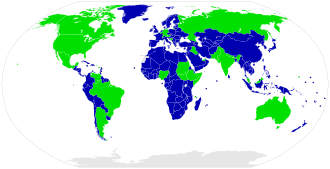

Defining the Unitary Framework
A unitary system is a form of governance characterized by the concentration of all sovereign powers in a single central authority. Unlike federal systems, where constitutional power is divided between a national government and constituent political units (like states or provinces), a unitary state vests ultimate authority in the central government. This central body can choose to delegate powers to sub-national units, but these powers are not constitutionally guaranteed and can be altered or withdrawn at the central government's discretion.
This creates a hierarchical structure where sub-national entities are administrative arms of the central power, rather than co-equal partners. The legal and political landscape is dominated by the principle that the central government is the ultimate source of all governmental authority within its territory.
Historical Trajectories Towards Centralization
The evolution of unitary states is often intertwined with the development of modern nation-states. Historically, many kingdoms and empires operated with a strong central monarch, laying groundwork for centralized administration. The Enlightenment and subsequent revolutions, particularly the French Revolution, provided intellectual and practical impetus for consolidating power.
The French model, with its emphasis on uniform laws, administrative districts (départements), and a powerful central bureaucracy, became a paradigm for many other nations seeking to forge national identity and efficient governance from diverse regions. This process often involved overcoming feudal fragmentation and establishing a unified legal and administrative framework that prioritized national cohesion over regional autonomy.
The Functional Advantages and Disadvantages of Unitary Governance
Unitary systems offer distinct advantages, primarily in their potential for efficiency and decisiveness. With a single locus of power, policy formulation and implementation can be streamlined, leading to quicker responses to national challenges and a more uniform application of laws and services across the country. This can foster a stronger sense of national unity and identity.
However, this concentration of power can also lead to a disconnect between the central government and local populations, potentially ignoring diverse regional needs and fostering resentment. Critics argue that unitary systems can be less responsive to local variations and may stifle innovation that arises from decentralized experimentation. The balance between central control and local responsiveness remains a critical challenge.
Mechanisms of Centralized Power
The operation of a unitary state hinges on the central government's ability to delegate and control. The central legislature is supreme and can grant powers to local authorities through ordinary legislation. These powers are not inherent but are granted and can be revoked.
This delegation can take various forms, such as creating local councils with specific responsibilities for services like education, healthcare, or infrastructure. However, the central government retains the ultimate authority to legislate on any matter, overriding local decisions if deemed necessary. This ensures that national policy objectives are met and that there is a consistent standard of governance throughout the country, preventing fragmentation of authority.
Global Manifestations and Contemporary Relevance
Unitary systems are prevalent globally, with countries like China, Italy, Portugal, and Sweden also adopting this model. The choice between unitary and federal systems often reflects a nation's history, cultural diversity, and political aspirations. In an increasingly interconnected world, the efficiency of unitary states in responding to global economic shifts or security threats is often highlighted.
Conversely, the challenges of managing diverse populations within a centralized framework continue to be debated. The concept of 'unitary' also extends beyond political science, appearing in fields like mathematics (unitary matrices) and physics, underscoring its fundamental meaning of wholeness and single, unified action.
Go deeper
Frequently Asked Questions
What is a unitary system?+
Why do some countries choose a unitary system?+
How does a unitary government give power to local areas?+
Are there any problems with having all power in one place?+
Where did the idea of a unitary state come from?+
Based on content from Wikipedia · Licensed under CC BY-SA 4.0