

The French Revolution: A Time of Big Changes!
Images
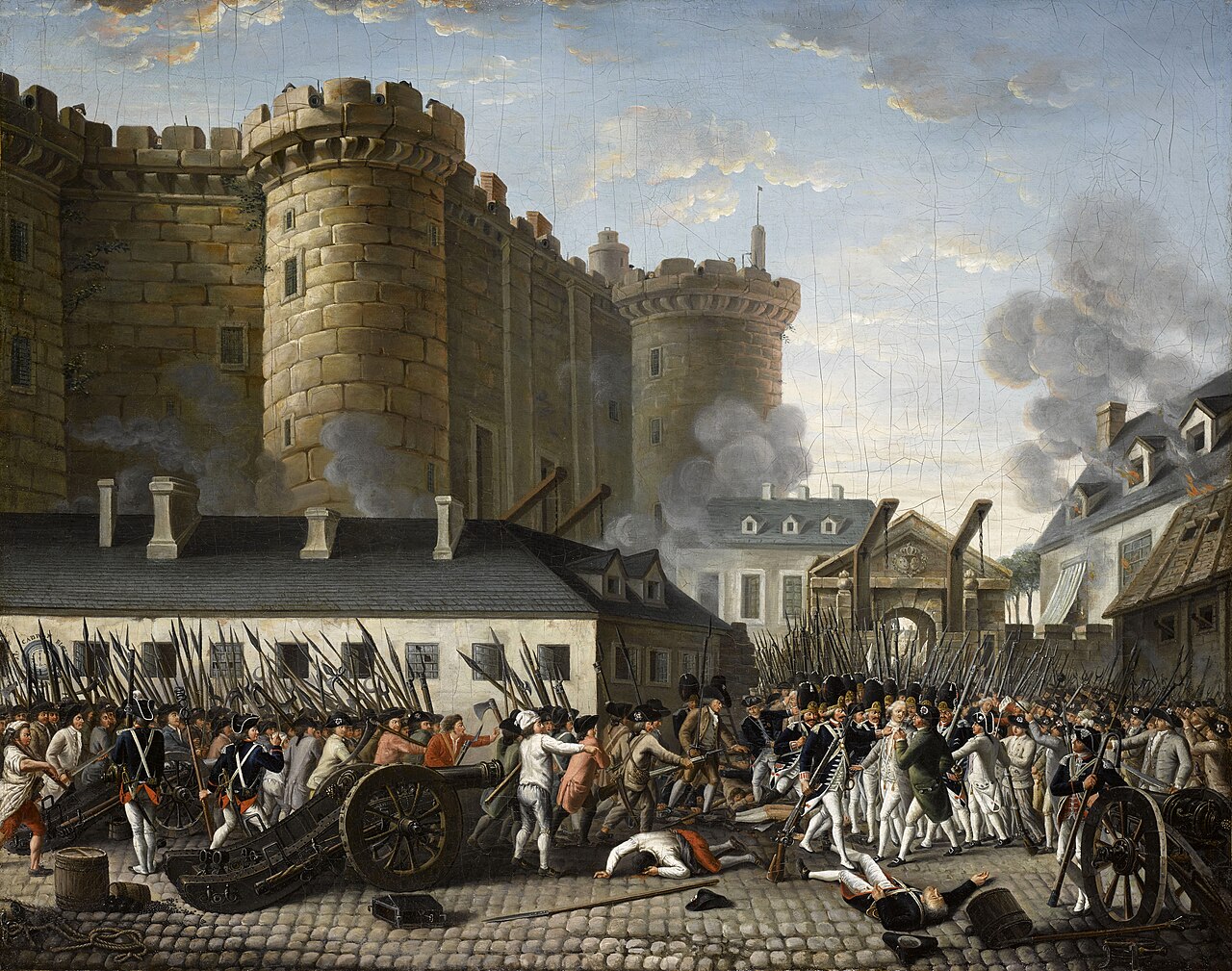
French Revolution
The Ancien Régime
The French Revolution did not erupt in a vacuum. It was the culmination of deep-seated socio-economic and political grievances festering under the Ancien Régime. France's rigid social hierarchy, divided into three Estates, placed immense burdens on the Third Estate (commoners, bourgeoisie) while granting extensive privileges to the First Estate (clergy) and Second Estate (nobility). This system was exacerbated by a crippling national debt, largely incurred from costly wars like the Seven Years' War and support for the American Revolution, coupled with an inefficient and inequitable tax system. Enlightenment ideals, emphasizing reason, individual rights, and popular sovereignty, provided an intellectual framework for challenging the divine right of kings and the established order.
Philosophers like Rousseau and Voltaire questioned traditional authority, fueling a desire for reform and a more just society among the educated bourgeoisie and even some reform-minded nobles.
The Revolution Unfolds
The convocation of the Estates-General in May 1789, intended to address the financial crisis, instead became the catalyst for revolution. The Third Estate, frustrated by the voting structure that favored the privileged orders, declared itself the National Assembly, asserting its right to represent the nation and draft a constitution. The storming of the Bastille on July 14, 1789, a symbolic act of defiance against royal authority, marked the beginning of widespread popular involvement.
The subsequent years saw radical transformations: the abolition of feudalism, the Declaration of the Rights of Man and of the Citizen (August 1789), and the establishment of a constitutional monarchy. However, internal divisions and external threats from monarchist European powers led to increasing radicalization. The monarchy was abolished in 1792, and Louis XVI and Marie Antoinette were executed in 1793.
This ushered in the Reign of Terror (1793-1794), a period of extreme violence and political purges led by figures like Robespierre and the Committee of Public Safety, aimed at consolidating revolutionary gains and eliminating perceived enemies.
The Directory and the Rise of Napoleon
Following the Thermidorian Reaction, which ended the Reign of Terror with the execution of Robespierre, France entered a new phase under the Directory (1795-1799). This five-man executive government attempted to stabilize the nation but was plagued by corruption, political instability, and ongoing wars. The Directory's weakness created a power vacuum that was ultimately filled by a brilliant military general, Napoleon Bonaparte.
In 1799, Napoleon staged a coup d'état, effectively ending the revolutionary period and ushering in the Consulate, with himself as First Consul. While Napoleon consolidated power and brought an end to the revolutionary chaos, he also preserved many of its key achievements, such as legal equality and meritocracy, while reintroducing elements of authoritarian rule and eventually crowning himself Emperor.
Enduring Legacies
The French Revolution's impact extends far beyond France's borders and the 18th century. It fundamentally challenged the legitimacy of absolute monarchy and hereditary privilege, popularizing concepts of popular sovereignty, nationalism, and secularism. The Declaration of the Rights of Man and of the Citizen served as a foundational document for human rights declarations worldwide.
The revolution's ideals of liberty, equality, and fraternity became rallying cries for subsequent revolutionary movements and democratic reforms across the globe. It demonstrated the potent force of mass political mobilization and the possibility of radical societal transformation, influencing political discourse and the development of modern nation-states, even as its methods and outcomes remain subjects of ongoing historical debate regarding the balance between revolutionary fervor and stable governance.
Key Concepts and Consequences
The revolution's legacy is complex, marked by both profound advancements in human rights and periods of extreme violence. It introduced concepts like citizenship, national identity, and the separation of church and state into mainstream political thought. The Napoleonic Code, a direct descendant of revolutionary legal reforms, continues to influence legal systems in many countries.
The revolution also highlighted the inherent tensions between liberty and order, and the challenges of establishing and maintaining a stable republic in the face of internal dissent and external threats. Its influence can be seen in subsequent revolutions and struggles for democracy, making it a pivotal event in the transition from the early modern to the modern world.
Go deeper
Frequently Asked Questions
What was the French Revolution?+
Why did the French Revolution start?+
What happened when the Bastille was stormed?+
Who was Napoleon and what did he do after the Revolution?+
What is the Declaration of the Rights of Man and of the Citizen?+
Based on content from Wikipedia · Licensed under CC BY-SA 4.0