

Unitary State: One Big Team!
Images
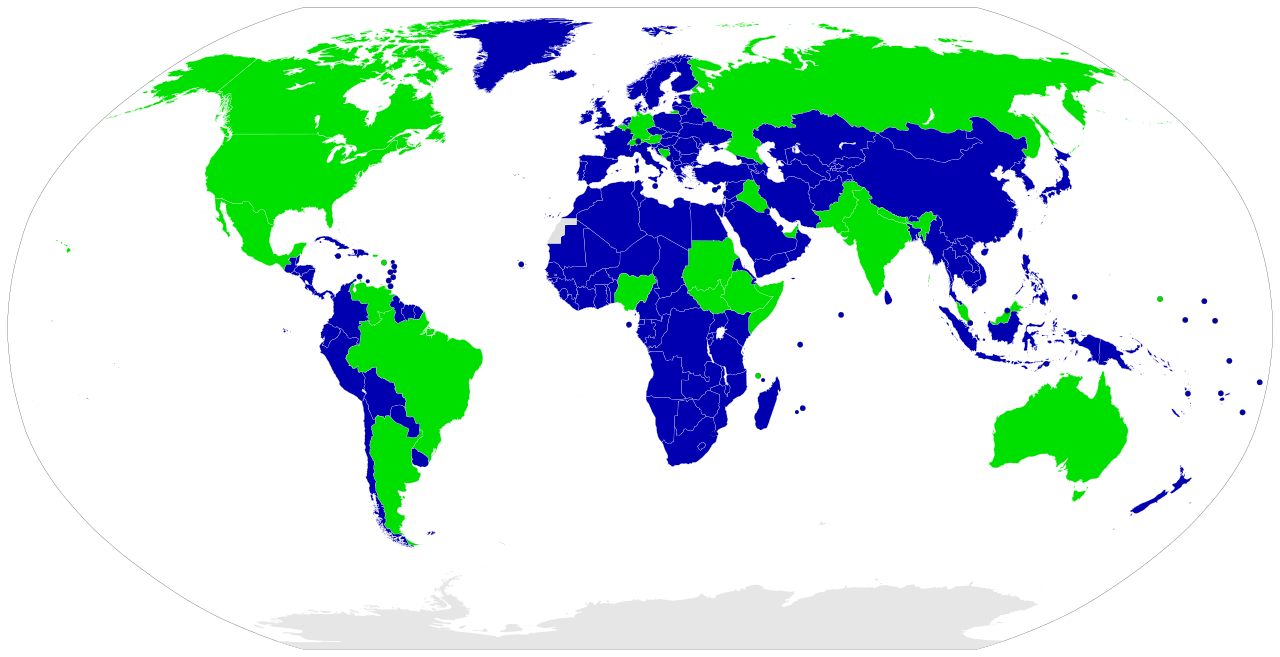
Unitary state
The Architecture of Centralized Power
A unitary state is characterized by a singular, supreme central government that holds all significant political authority. Unlike federal systems, where power is constitutionally divided between national and sub-national entities, in a unitary state, any powers exercised by regional or local governments are delegated by the central authority and can be revoked. This means that the central government can create, alter, or abolish administrative divisions at will.
This concentration of power can foster a strong sense of national unity and identity, as policies and laws are applied uniformly across the territory. Examples like France, with its highly centralized administrative structure emanating from Paris, or the United Kingdom, where Parliament is sovereign, illustrate this model. The efficiency in policy implementation and the ability to respond swiftly to national challenges are often cited as key advantages, as there is no need for complex negotiations or approvals between different levels of government.
Global Prevalence and Diverse Manifestations
Unitary states are prevalent across the globe, spanning continents and diverse political traditions. France, a classic example, has a long history of centralized governance dating back centuries, with its administrative departments and regions functioning under the direct authority of the national government. Japan, an island nation, also operates as a unitary state, with its prefectures carrying out national policies. The United Kingdom, while having devolved powers to Scotland, Wales, and Northern Ireland, remains a unitary state because Parliament in Westminster retains ultimate sovereignty.
Conversely, countries like Italy and Spain, while historically centralized, have moved towards greater regional autonomy, demonstrating that unitary systems can incorporate elements of decentralization without becoming federal. The specific balance between central control and local autonomy can vary significantly, leading to different administrative styles within the unitary framework.
Cohesion, Efficiency, and Uniformity
The primary strengths of a unitary system lie in its potential for administrative efficiency and national cohesion. With a single legislative and executive body, decision-making processes can be streamlined, leading to quicker policy implementation and a more unified national response to crises. This uniformity can also simplify legal frameworks and reduce inter-jurisdictional conflicts that might arise in federal systems.
For instance, a national infrastructure project can be planned and executed without the need for extensive negotiation with multiple state or provincial governments. Furthermore, a strong central government can ensure equitable distribution of resources and services across the country, preventing disparities between wealthier and poorer regions. This unified approach can foster a stronger sense of national identity and shared purpose among citizens.
Potential for Over-Centralization and Local Disconnect
Despite its advantages, the unitary model faces potential challenges. An over-reliance on central authority can lead to a disconnect between national policy-makers and the specific needs of local communities. Decisions made in the capital might not always be suitable for diverse regional contexts, potentially leading to resentment or inefficiency at the local level.
While decentralization can mitigate this, the ultimate power still rests with the center, meaning local authorities may lack genuine autonomy. Furthermore, in large and diverse unitary states, maintaining a consistent application of laws and policies can be challenging, and regional identities might sometimes clash with the overarching national narrative. The risk of bureaucratic inertia or a lack of local responsiveness can be a significant drawback if not carefully managed through effective decentralization mechanisms.
The Nuance of Decentralization within Unitary Frameworks
It is crucial to understand that unitary states are not monolithic in their governance. Many employ significant levels of decentralization, granting substantial administrative and sometimes legislative powers to sub-national units. This is often done to improve governance, cater to regional diversity, and enhance democratic participation.
For example, the UK's devolution has granted significant powers to Scotland, Wales, and Northern Ireland, allowing them to legislate on many domestic matters. However, the key distinction from federalism remains: the sovereignty of the central parliament is constitutionally entrenched and theoretically absolute. This means that, in principle, the central government could reclaim devolved powers.
This nuanced approach allows unitary states to benefit from both centralized direction and localized responsiveness, creating a flexible system that can adapt to varying national circumstances.
Go deeper
Frequently Asked Questions
What is a unitary state?+
How does a unitary state make decisions?+
Why do some countries choose a unitary state?+
Where can we find examples of unitary states?+
What are some challenges of a unitary state?+
Based on content from Wikipedia · Licensed under CC BY-SA 4.0