

Soldering: The Super Glue for Metal!
Images
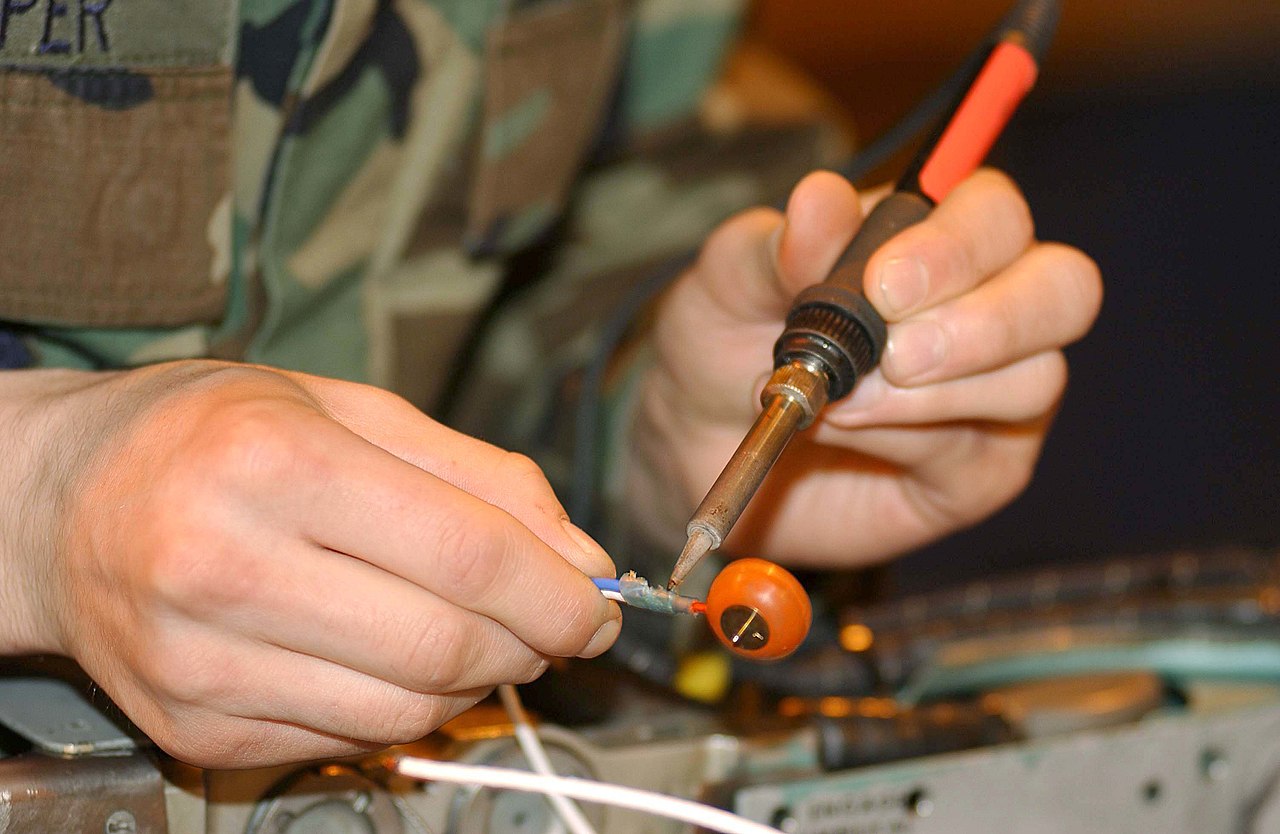
Soldering


The Genesis and Evolution of Solder Joints
Soldering, a thermocompression bonding technique, has a rich history dating back to antiquity, with archaeological findings suggesting its use by the Bronze Age civilizations in the Near East and Egypt, and later by the Romans. Early solders were often alloys of tin, lead, and copper, used for joining precious metals in jewelry and for creating functional metalwork. The development of electric soldering irons in the late 19th and early 20th centuries revolutionized the process, offering greater control over heat and enabling more intricate work, particularly in the burgeoning field of electronics.
The transition from lead-based solders to lead-free alternatives, driven by environmental and health concerns, represents a significant modern evolution, requiring adjustments in soldering temperatures and techniques due to the higher melting points of lead-free alloys. This historical trajectory highlights soldering's adaptability and its enduring importance as a foundational joining method.
Thermodynamics and Metallurgy
At its core, soldering is a metallurgical process that relies on the principle of creating a metallurgical bond between dissimilar or similar metals using a filler metal (solder) with a lower melting point than the base materials. The process involves heating the joint area to a temperature above the solder's melting point but below the melting point of the base metals. A crucial element is flux, a chemical agent that cleans the surfaces of oxides and contaminants, preventing re-oxidation during heating and promoting the wetting of the base metals by the molten solder.
Wetting is essential; it describes the ability of the molten solder to spread evenly over the base metal surfaces, facilitated by surface tension and adhesion. Upon cooling, the solder solidifies, forming a continuous intermetallic phase with the base metals, creating both electrical conductivity and mechanical strength. The strength of the joint depends on factors like the solder alloy composition, the quality of the wetting, and the joint design.
The Indispensable Role of Soldering in Modern Infrastructure
Soldering's significance extends far beyond simple assembly; it is a cornerstone of modern technological infrastructure. In electronics, it is the primary method for interconnecting components on printed circuit boards (PCBs), enabling the complex circuitry that powers everything from microprocessors to telecommunications equipment. The reliability of these solder joints is paramount, as failures can lead to device malfunction or catastrophic system breakdown.
Beyond electronics, soldering is critical in plumbing for creating durable, leak-proof connections in water and gas lines, ensuring public safety and efficient resource delivery. It is also employed in automotive manufacturing for electrical harness assembly and in aerospace for critical component connections where vibration resistance and reliability are essential. The development of specialized solders and advanced soldering techniques, such as reflow soldering and wave soldering, underscores its ongoing importance in high-volume manufacturing and demanding applications.
Applications and Innovations
The applications of soldering are remarkably diverse, spanning numerous industries. In the electronics sector, it is fundamental to the production of PCBs, where components like resistors, capacitors, and integrated circuits are attached. Techniques like wave soldering and reflow soldering are used for mass production, while manual soldering remains vital for prototyping, repair, and specialized applications.
In telecommunications, soldering ensures the integrity of connections in complex network equipment. The medical device industry relies on precise soldering for implantable devices and diagnostic equipment, where biocompatibility and extreme reliability are non-negotiable. Furthermore, advancements in microelectronics have led to the development of micro-soldering techniques for assembling extremely small components, essential for miniaturized devices.
The ongoing research into new solder alloys, fluxes, and automated soldering processes continues to push the boundaries of what can be achieved with this fundamental joining method.
Related Joining Technologies and Future Trends
Soldering exists within a spectrum of joining technologies, each with its own advantages and applications. It is often contrasted with brazing, which uses filler metals with melting points above 840°F (450°C) but below the base metals' melting points, resulting in stronger joints suitable for higher-stress applications. Welding, on the other hand, involves melting the base metals themselves, often with the addition of a filler material, creating a monolithic joint. Adhesive bonding offers an alternative for joining dissimilar materials or when heat is undesirable. Future trends in soldering are focused on sustainability, with a continued push towards lead-free and halogen-free solders, as well as improved flux formulations. Automation, including robotic soldering and advanced inspection techniques like X-ray and automated optical inspection (AOI), is also increasing to meet the demands of high-precision manufacturing and ensure consistent quality.
The development of novel interconnect technologies, such as anisotropic conductive films (ACFs), also represents a potential evolution in how electronic components are joined.
Go deeper
Frequently Asked Questions
What is soldering?+
How does soldering work?+
Why do we use lead‑free solder?+
Where is soldering used?+
What is flux and why is it important?+
Based on content from Wikipedia · Licensed under CC BY-SA 4.0