

Sistine Chapel ceiling
Images

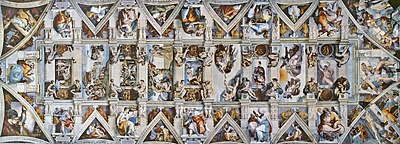
Sistine Chapel ceiling 02 (brightened)




The Genesis of a Masterpiece
The Sistine Chapel ceiling, a defining work of the High Renaissance, is far more than a decorative element; it is a complex theological and artistic statement painted by Michelangelo Buonarroti between 1508 and 1512. Commissioned by Pope Julius II, a patron known for his ambitious projects, the task was initially offered to other artists before Michelangelo, a sculptor by primary training, reluctantly accepted. The sheer scale of the project, covering approximately 5,800 square feet of curved surface, presented immense technical and physical challenges.
Michelangelo worked on a complex scaffolding system, often lying on his back, a posture that led to chronic physical ailments but allowed him unparalleled control over the fresco technique. This demanding process resulted in a body of work that not only showcases his mastery of anatomy and composition but also his profound understanding of biblical narratives and theological concepts.
Narrative Structure and Iconographic Program
The ceiling's decoration is a meticulously planned iconographic program designed to illustrate the history of salvation, beginning with the creation of the world and culminating in the coming of Christ. At its core are nine scenes from the Book of Genesis, arranged in three tiers. These include the iconic 'Creation of Adam,' a powerful depiction of divine animation, and 'The Fall and Expulsion from Garden of Eden.' Surrounding these central narratives are figures of prophets and sibyls, who, according to tradition, foretold the coming of the Messiah.
The lunettes and spandrels above the windows feature the ancestors of Christ, further weaving a lineage that connects the Old Testament to the New. Michelangelo's innovative use of foreshortening, vibrant color, and dramatic chiaroscuro brought these figures to life, demonstrating a profound understanding of human emotion and physical form that set new standards for artistic representation.
The Chapel's Sacred Function and Artistic Context
The Sistine Chapel is not merely an art gallery; it is a functional space of immense religious and political significance within the Vatican. It serves as the Pope's private chapel and, crucially, as the venue for papal conclaves, the solemn process by which new Popes are elected. The ceiling's grandeur and theological depth contribute to the chapel's sacred atmosphere, intended to inspire awe and facilitate contemplation during these pivotal moments.
The chapel's decoration is a layered masterpiece, with Michelangelo's ceiling forming the apex of a comprehensive decorative scheme. Earlier, prominent artists like Sandro Botticelli and Pietro Perugino had adorned the walls with frescoes depicting the lives of Moses and Christ. Later, Raphael would contribute tapestries, further enriching the chapel's visual narrative.
This collective artistic endeavor underscores the chapel's role as a visual catechism, educating and inspiring the faithful.
Michelangelo's Enduring Impact and Restoration
The Sistine Chapel ceiling was met with immediate acclaim and profoundly influenced subsequent generations of artists, solidifying Michelangelo's reputation as one of history's greatest painters. His dynamic compositions and powerful depiction of the human form became a benchmark for artistic achievement. The ceiling has undergone numerous restorations throughout its history, most notably a comprehensive and controversial project from 1980 to 1994.
This restoration revealed the vibrant original colors, previously obscured by centuries of grime and varnish, sparking debate about the aesthetic impact of the cleaning. Despite these debates, the restored ceiling offers a clearer, more luminous vision of Michelangelo's genius. The work continues to be a pilgrimage site for art lovers and scholars, a testament to its enduring power and its central place in the canon of Western art.
See also
Frequently Asked Questions
What is the Sistine Chapel ceiling?+
Why did Michelangelo paint the ceiling?+
How did Michelangelo paint such a big ceiling?+
Where can we see the Sistine Chapel ceiling?+
When was the ceiling painted and has it been restored?+
Based on content from Wikipedia · Licensed under CC BY-SA 4.0