

Raphael
Images
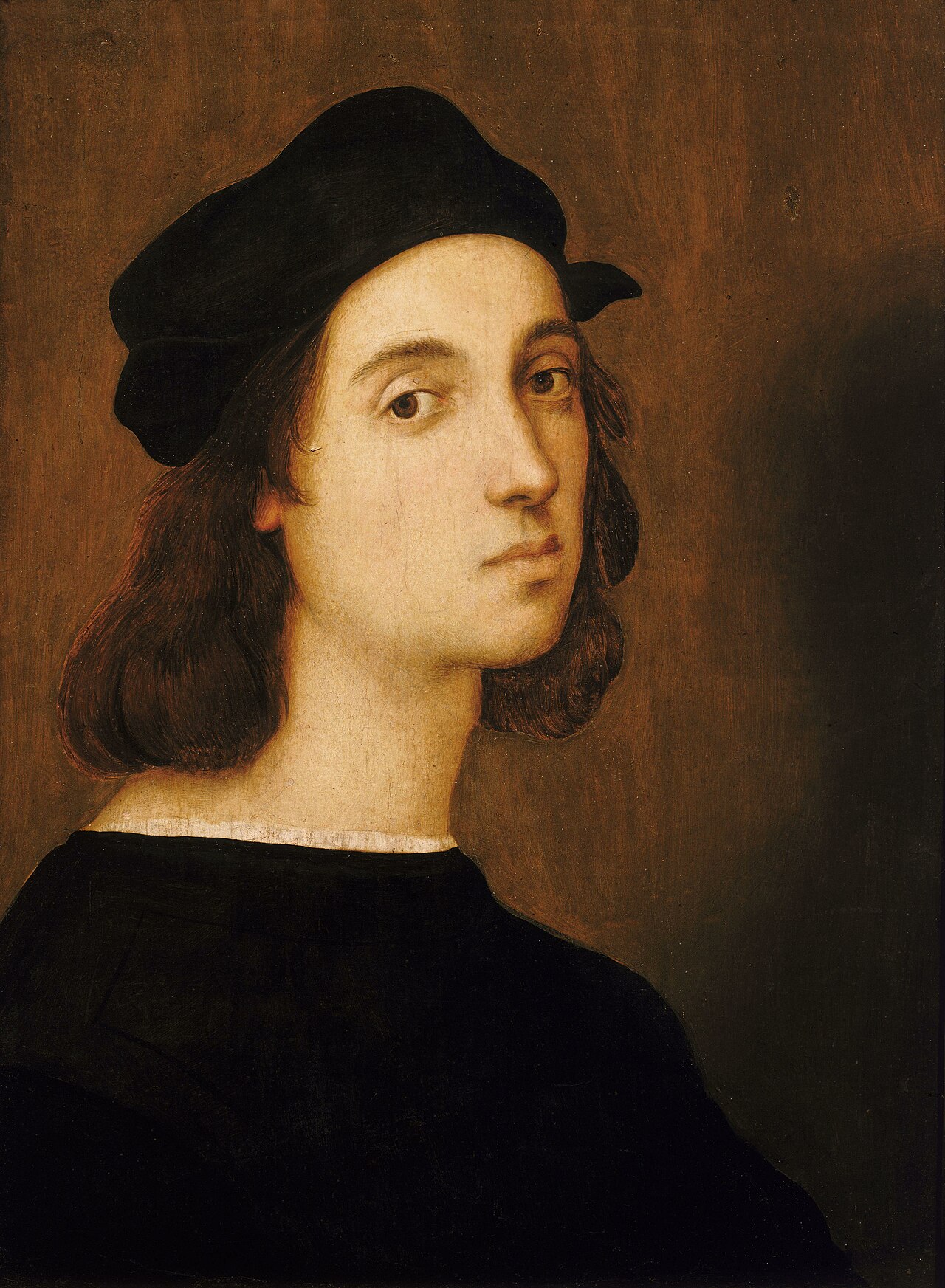
Raphael
The Genesis of a Master
Raffaello Sanzio da Urbino, universally known as Raphael, was born into a vibrant artistic milieu in Urbino, a significant cultural center. His father, Giovanni Santi, served as court painter, instilling in Raphael an early exposure to the arts and courtly life. Following his father's death at age eleven, Raphael's precocious talent likely led him to manage the family workshop, demonstrating an early aptitude for leadership and artistic production.
His formative training is believed to have occurred under Pietro Perugino, from whom he absorbed the Umbrian school's gentle grace and clarity. By 1500, he was recognized as a master. His peripatetic early career involved working in Florence, where he absorbed the innovations of Leonardo da Vinci and Michelangelo, particularly their mastery of form and dynamism.
This period of assimilation was crucial, preparing him for his pivotal move to Rome in 1508. Invited by Pope Julius II, Raphael entered the most prestigious artistic arena of his time, tasked with decorating the papal apartments in the Apostolic Palace, a commission that would become the cornerstone of his Roman career and elevate him to unparalleled fame.
The Synthesis of Ideal Beauty and Compositional Mastery
Raphael's genius lay in his extraordinary ability to synthesize diverse artistic influences into a cohesive and universally admired style. His work is celebrated for its unparalleled clarity of form, effortless grace, and masterful composition, embodying the High Renaissance ideal of human grandeur and intellectual harmony. Unlike the intense psychological drama of Michelangelo or the scientific inquiry of Leonardo, Raphael offered a vision of serene perfection and balanced beauty.
His figures possess an idealized nobility, imbued with a sense of calm dignity and profound humanity. This aesthetic, deeply rooted in Neoplatonic philosophy, sought to represent a higher, more perfect reality through art. His compositions are meticulously structured, guiding the viewer's eye with a natural flow and logical progression, creating a sense of order and stability that resonated deeply with the Renaissance humanist worldview.
This synthesis of intellectual depth and aesthetic appeal made his art profoundly influential and enduring.
A Prolific Output and the Architectural Dimension
Raphael's career, though tragically cut short at age 37, was remarkably prolific, characterized by an unusually large and efficient workshop. This organizational prowess allowed him to undertake monumental projects, including the extensive decoration of the Stanze di Raffaello (Raphael Rooms) in the Vatican. The 'School of Athens,' arguably his most iconic fresco, exemplifies his command of perspective, monumental figural composition, and intellectual narrative, depicting a gathering of the greatest philosophers of antiquity in an imagined classical setting.
Beyond painting, Raphael also developed a significant career as an architect. He succeeded Bramante as chief architect of St. Peter's Basilica and designed numerous palaces and churches, demonstrating a sophisticated understanding of classical architectural principles.
His architectural work, like his painting, emphasized harmony, proportion, and clarity, further solidifying his reputation as a versatile master of the visual arts. The sheer volume and quality of his output, often achieved through the collaboration of his workshop under his precise direction, underscore his organizational genius.
Enduring Influence and Critical Reappraisal
Raphael's impact on the trajectory of Western art was immense and immediate. During his lifetime and the subsequent decades, his work served as the primary model for academic painting, revered for its balance, grace, and idealized forms. His influence permeated artistic training and practice across Europe.
While the dramatic intensity of Michelangelo's Sistine Chapel ceiling eventually captured the public imagination more forcefully, Raphael's serene classicism remained a vital counterpoint. By the 18th century, figures like Johann Joachim Winckelmann championed Raphael's harmonious qualities, positioning him as a foundational influence on the Neoclassical movement, which prized order, clarity, and idealized beauty. However, art history is rarely linear; the 19th-century Pre-Raphaelite Brotherhood, in their quest for a more direct and emotionally charged art, explicitly rejected Raphael's perceived artificiality and academic polish, seeking inspiration from earlier, less 'corrupted' styles.
This critical oscillation highlights Raphael's pivotal, albeit sometimes contested, position as a synthesizer and definer of artistic ideals across centuries.
Go deeper
Frequently Asked Questions
Who was Raphael?+
What did Raphael paint?+
Where did Raphael work?+
How did Raphael become famous?+
Did Raphael do anything besides painting?+
Based on content from Wikipedia · Licensed under CC BY-SA 4.0