

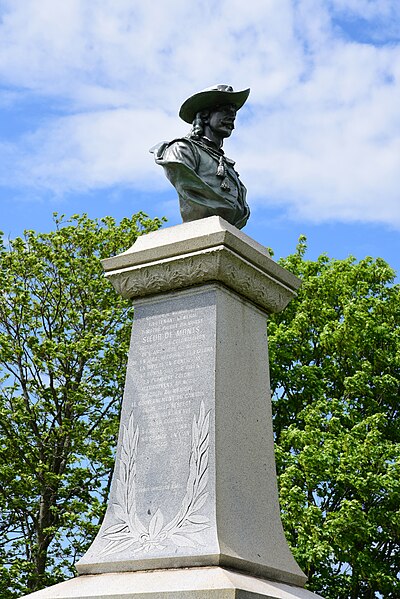
Pierre Dugua, Sieur de Mons
Images

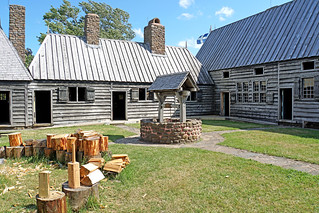
NS-02249 - Entrance Side




From Provincial Nobility to Colonial Visionary
Pierre Dugua, Sieur de Mons, emerged from the ranks of French provincial nobility, born around 1558 in the Château de Mons, located in Royan, Saintonge. His early life was shaped by the socio-political landscape of late 16th-century France, including the religious conflicts of the time, as he was a committed Calvinist. This background likely instilled in him a sense of purpose and resilience.
Dugua was not merely a man of land; his entrepreneurial spirit and ambition propelled him towards maritime ventures and exploration. His involvement in the fur trade, a lucrative enterprise in North America, provided the financial backing and strategic impetus for his grander colonial aspirations. His initial voyages, such as the one in 1599 with Pierre de Chauvin de Tonnetuit, were exploratory forays that laid the groundwork for his more ambitious undertakings.
He was a man who saw opportunity in the vast, uncharted territories of the New World and possessed the drive to pursue it.
Establishing the Cornerstone of New France
The most enduring legacy of Pierre Dugua is his pivotal role in founding the first permanent French settlement in Canada. This was not a fleeting outpost but a deliberate effort to establish a lasting French presence. The challenges were immense: navigating treacherous waters, enduring harsh climates, establishing relations with Indigenous peoples, and securing consistent support from the French crown.
Dugua's vision extended beyond mere trade; he aimed to create a self-sustaining community that would solidify French sovereignty and cultural influence. The establishment of this settlement was a critical turning point, transforming sporadic French exploration into a tangible colonial endeavor. It served as a crucial base for further exploration, trade, and the eventual expansion of French territories in North America, setting a precedent for future colonial efforts.
The Authority of Lieutenant General
From 1603 to 1610, Pierre Dugua wielded significant power as the Lieutenant General of New France. This appointment by King Henry IV placed him at the apex of French colonial administration in North America. His responsibilities were vast, encompassing governance, exploration, trade regulation, and defense of French interests.
He was tasked with overseeing the development of the colony, encouraging settlement, and managing relations with both Indigenous populations and rival European powers. This period was crucial for consolidating French claims and establishing a viable colonial structure. Dugua's leadership during these years was instrumental in navigating the complex political and economic realities of early colonization, making critical decisions that shaped the trajectory of New France.
Enduring Impact and Historical Significance
The historical significance of Pierre Dugua, Sieur de Mons, cannot be overstated. His foundational work in establishing permanent French settlements directly contributed to the dual linguistic and cultural heritage of modern Canada. He was instrumental in initiating the sustained French colonial project, which would eventually lead to the establishment of Quebec City and Montreal, among other key centers.
His efforts were part of a broader European drive for expansion and empire, but his specific contributions laid the groundwork for a distinct French-Canadian identity. Understanding Dugua's role provides crucial insight into the complex origins of North American nations and the enduring impact of early colonial endeavors on contemporary societies. His story is a vital chapter in the narrative of global exploration and the formation of new worlds.
The Mechanics of Early Colonization
The process of establishing a settlement like the one founded by Pierre Dugua involved a complex interplay of factors. It required significant financial investment, often from royal patronage or private merchants like Dugua himself, to fund voyages, acquire supplies, and support the initial settlers. Maritime expertise was essential for navigating the Atlantic, with skilled captains and crews essential for survival. Diplomacy and trade were crucial for interacting with Indigenous peoples, who possessed invaluable knowledge of the land and its resources.
Establishing a permanent settlement meant more than just building shelters; it involved creating systems for governance, agriculture, and defense. Dugua's role as Lieutenant General meant he was responsible for orchestrating these diverse elements, managing resources, and ensuring the long-term viability of the colony against considerable odds. This was a multifaceted endeavor, far removed from simple exploration.
See also
Frequently Asked Questions
Who was Pierre Dugua, Sieur de Mons?+
When and where was he born?+
What did he do in North America?+
How did he help start French settlements in Canada?+
What was his job as Lieutenant General of New France?+
Based on content from Wikipedia · Licensed under CC BY-SA 4.0