

Overseas France
Images

Canada Mourns



Geographical Dispersion and Strategic Importance
Overseas France represents a unique geopolitical reality, comprising 13 distinct territories scattered across the globe, primarily remnants of the former French colonial empire. These territories are strategically located in the Atlantic, Pacific, and Indian Oceans, as well as the South American mainland (French Guiana) and peri-Antarctic islands. This vast geographical spread, excluding the Antarctic claim of Adélie Land, covers a significant land area of 120,396 km², constituting 18.0% of the French Republic's total landmass.
More critically, Overseas France commands an immense Exclusive Economic Zone (EEZ) of 9,825,538 km², which is an astonishing 96.7% of France's total EEZ. This vast maritime domain grants France unparalleled access to marine resources, shipping lanes, and scientific research opportunities, underscoring its global maritime influence and strategic importance in international waters.
Evolution of Administrative Statuses
The administrative landscape of Overseas France is complex, reflecting a gradual evolution from colonial rule to varying degrees of integration and autonomy within the French Republic. These territories are broadly categorized into four classes: overseas departments/regions (DOM/ROM), overseas collectivities (COM), the sui generis territory of New Caledonia, and uninhabited territories. The DOM/ROMs, such as Guadeloupe, Martinique, and Réunion, possess the same administrative status as metropolitan regions, fully integrated into the French legal and political system.
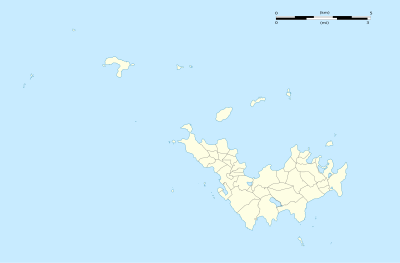
Overseas collectivities, like Saint Pierre and Miquelon or Saint Barthélemy, enjoy semi-autonomy, with greater control over local governance. New Caledonia holds a unique, autonomous status, with its own political institutions and a path towards potential independence. Despite these differences, all permanently inhabited territories are represented in the French National Assembly and Senate, ensuring their participation in national policymaking.
Socio-Cultural Fabric
The population of Overseas France, numbering approximately 2.8 million as of January 2024, is comprised of French citizens who are also citizens of the European Union. This dual citizenship grants them full political rights, including the ability to vote in French and European elections. The cultural landscape is a rich mosaic, shaped by centuries of interaction between indigenous populations, European settlers, and people of African and Asian descent.
French is the official language, but a vibrant array of creole languages and other local tongues are spoken, reflecting the unique historical and cultural trajectories of each territory. Six of these regions are designated as Outermost Regions (ORs) of the EU, benefiting from specific structural funds and policies, while others are classified as overseas countries and territories (OCTs) with special cooperation agreements with the EU. This integration fosters economic development while navigating distinct cultural identities.
Economic Dynamics
The economies of Overseas France are diverse, often characterized by a strong reliance on tourism, agriculture, and public sector employment. Tropical agriculture, including sugar cane, vanilla, rum, and exotic fruits, plays a significant role in many territories. Tourism is a vital industry, drawing visitors to the unique natural beauty and cultural heritage of these regions.
However, these economies also face challenges, including geographical isolation, high transportation costs, dependence on imports, and structural unemployment. As integral parts of the French Republic and the EU, these territories benefit from structural funds, subsidies, and preferential trade agreements, which aim to mitigate these challenges and promote sustainable development. The vast EEZs also present opportunities for sustainable fisheries management and marine resource development.
Education and Human Capital Development
Education in Overseas France is structured similarly to metropolitan France, with a commitment to providing quality schooling from primary to higher education levels. The French national curriculum is followed, ensuring a standardized educational framework. However, specific adaptations are made to cater to local contexts and languages.
Universities and higher education institutions are present in key territories, offering specialized programs relevant to local economies and research interests, such as marine biology, tropical agriculture, and tourism management. Efforts are continuously made to improve access to education, reduce dropout rates, and enhance vocational training to equip the population with the skills needed for both local and international job markets. The presence of these educational institutions is crucial for fostering human capital development and ensuring the long-term prosperity and self-sufficiency of these unique French territories.
See also
Frequently Asked Questions
What is Overseas France?+
Where are the overseas territories located?+
How many people live in Overseas France?+
What kinds of jobs do people do there?+
Are the people in Overseas France part of the European Union?+
Based on content from Wikipedia · Licensed under CC BY-SA 4.0