

Ontario
Images
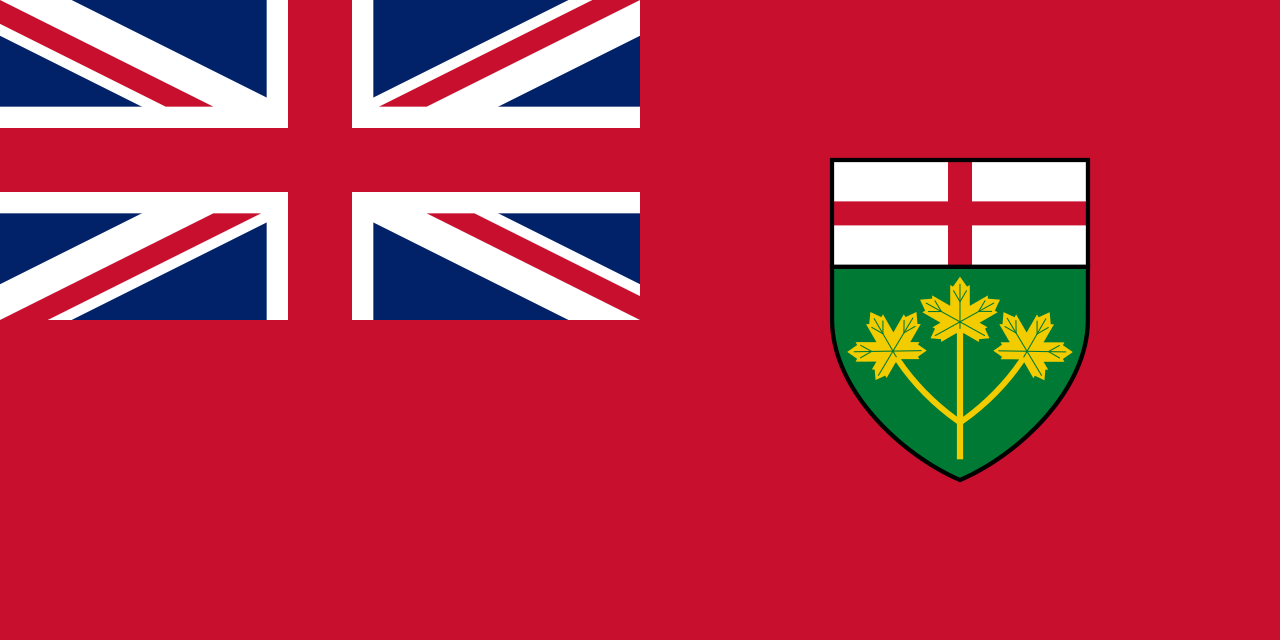
Ontario
Geopolitical Significance
Ontario occupies a pivotal position in Central Canada, serving as a crucial link between the eastern and western parts of the country. Its southern location, extending to the 41st parallel north, grants it a more temperate climate than many other Canadian provinces, a key factor in its high population density. The province's southern border is uniquely defined by the Great Lakes/Saint Lawrence River drainage system, a vast network of interconnected waterways that forms the longest international border in the world shared between Canada and the United States.
This aquatic frontier, stretching over 2,700 km, is punctuated by only about 1 km of actual land border, historically significant as portages. To the west, Ontario shares a border with Manitoba, while Quebec lies to its east and northeast. The northern boundary is marked by the immense Hudson Bay and James Bay, vast bodies of water that influence the region's climate and historical fur trade routes.
This diverse geography creates distinct ecological and economic zones within the province.
Demographic Dominance and Urban Cores
Ontario stands as Canada's most populous province, housing 38.5% of the nation's total population. This demographic concentration is largely driven by its major urban centers, particularly Toronto, which is not only Ontario's provincial capital but also Canada's largest city and a global metropolis. Toronto is a vibrant multicultural hub, renowned for its financial sector, arts scene, and diverse population.
Equally significant is Ottawa, the nation's capital, located in the eastern part of the province. Ottawa serves as the seat of the federal government and is a center for national institutions and diplomacy. The presence of these two major cities, along with numerous other significant urban areas in Southern Ontario, shapes the province's political, economic, and cultural landscape, making it the engine of Canada's growth and development.
Economic Duality
Ontario's economy exhibits a pronounced duality, largely dictated by its geography. Southern Ontario, with its dense population and favorable climate, is the province's industrial powerhouse. Manufacturing, particularly in the automotive and aerospace sectors, has historically been a cornerstone of its economy, supported by robust infrastructure and access to markets. Agriculture also plays a significant role in the fertile lands of the south.
In stark contrast, Northern Ontario is characterized by its vast wilderness, cold climate, and sparse population. Its economy is heavily reliant on the extraction of natural resources. Mining, for precious metals, industrial minerals, and base metals, is a major industry, alongside forestry, which utilizes the extensive boreal forests. These resource-based industries are vital to the northern economy, though they face challenges related to market fluctuations and environmental sustainability.
Governing Ontario
As a province of Canada, Ontario operates under a parliamentary democracy system, mirroring the federal structure of the country. The legislative branch is the Legislative Assembly of Ontario, a unicameral body composed of elected Members of Provincial Parliament (MPPs). The head of government is the Premier, who is typically the leader of the political party holding the most seats in the legislature.
The Lieutenant Governor serves as the representative of the Crown in right of Ontario. The provincial government is responsible for a wide range of policy areas, including healthcare, education, transportation, and natural resource management, all of which are critical to the functioning and well-being of its large and diverse population. Key policy decisions are debated and enacted within the provincial parliament, influencing the daily lives of Ontarians.
Education and Cultural Mosaic
Ontario's education system is comprehensive and highly regarded, encompassing publicly funded elementary and secondary schools, as well as a robust post-secondary sector. The province boasts numerous universities and colleges, including world-renowned institutions like the University of Toronto, Queen's University, and the University of Waterloo, attracting students from across Canada and internationally. This commitment to education fuels innovation and a skilled workforce.
Culturally, Ontario is a mosaic, reflecting its status as a primary destination for immigrants to Canada. This diversity is evident in its vibrant arts scene, culinary landscape, and numerous cultural festivals celebrated throughout the year. The province's official languages are English and French, though a multitude of other languages are spoken daily, contributing to its rich multicultural fabric.
This blend of educational excellence and cultural diversity makes Ontario a dynamic and globally connected region.
Go deeper
Based on content from Wikipedia · Licensed under CC BY-SA 4.0