

The Olmecs: Mysterious Stone Giants!
Images
Olmecs
The Genesis of Mesoamerican Complexity
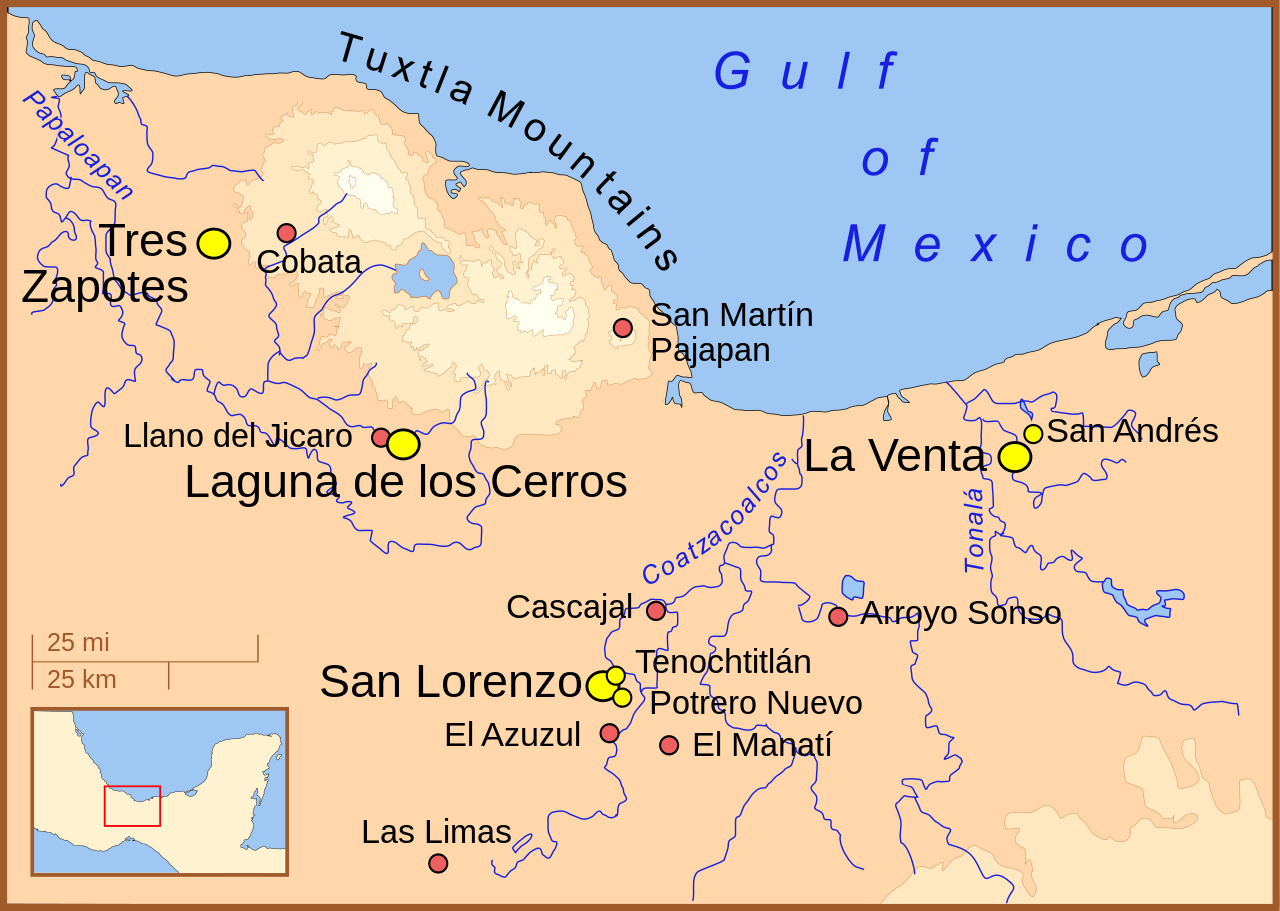
The Olmec civilization emerged in the tropical alluvial lowlands of south-central Mexico, primarily in the modern states of Veracruz and Tabasco, around 1500 BCE. This period marks the beginning of complex societal development in Mesoamerica, earning the Olmecs the designation of 'mother culture.' Their society was stratified, with evidence of elite control over resources and labor, particularly for monumental construction projects.
Major Olmec centers like San Lorenzo, La Venta, and Tres Zapotes were not merely ceremonial sites but also administrative and economic hubs. These centers featured impressive earthen pyramids, plazas, and drainage systems, demonstrating advanced engineering capabilities. The Olmec economy was based on intensive agriculture, cultivating staple crops such as maize, beans, and squash, supplemented by fishing and hunting.
Trade networks were extensive, facilitating the exchange of prestige goods like jade, obsidian, and serpentine, which were crucial for elite status and ritual practices. The Olmec worldview, deeply intertwined with nature and cosmology, laid the foundation for subsequent Mesoamerican religious and political systems.
Monumental Artistry
The most iconic Olmec creations are the colossal stone heads, monumental sculptures carved from massive basalt boulders, often transported from distant volcanic sources. These heads, some exceeding 3 meters in height and weighing over 20 tons, are characterized by distinct facial features: broad noses, thick lips, and often elaborate headdresses. While their precise function remains debated, scholarly consensus leans towards them representing portraits of rulers or important ancestors, serving to legitimize power and commemorate significant individuals.
The Olmecs' artistic repertoire extended beyond these heads to include intricate jade carvings, ceramic figurines, and stelae, often depicting anthropomorphic figures, particularly jaguar-human hybrids, which were central to their iconography. The technical skill required to quarry, transport, and carve these stones using rudimentary tools highlights their sophisticated understanding of materials and labor organization. These artworks provide invaluable insights into Olmec social structure, religious beliefs, and aesthetic values.
Intellectual and Cultural Innovations
The Olmecs were pioneers in several intellectual and cultural domains that profoundly influenced Mesoamerican history. They developed one of the earliest known writing systems in the Americas, employing hieroglyphic symbols that were precursors to later scripts. Their sophisticated calendrical systems, including the 260-day ritual calendar and the 365-day solar calendar, were foundational for tracking time and organizing ceremonial activities in subsequent cultures.
The Olmecs are also credited with developing the Mesoamerican ballgame, a ritualistic sport with deep religious and political significance, played on specially constructed courts. Their religious cosmology, featuring deities associated with natural forces and the jaguar motif, permeated their art and rituals and was adopted by many successor civilizations. These innovations demonstrate a high level of abstract thought, scientific observation, and cultural synthesis that set a precedent for the region.
The Enduring Enigma
The Olmec civilization experienced a gradual decline, with major centers like La Venta being abandoned or transformed around 400 BCE. The reasons for this decline are complex and likely multifaceted, possibly including environmental changes, resource depletion, internal social unrest, or the rise of competing centers. Despite their eventual disappearance as a distinct cultural entity, the Olmec legacy is undeniable.
Their innovations in writing, calendrics, art, and religious ideology were absorbed and adapted by subsequent Mesoamerican civilizations, including the Maya, Zapotec, and eventually the Aztec. The monumental architecture and artistic styles of the Olmecs provided a template for elite expression and cultural identity throughout the region. Studying the Olmecs is crucial for understanding the deep historical trajectory of Mesoamerica, revealing the foundational elements upon which later, more widely known civilizations were built.
Their enigmatic presence continues to fascinate archaeologists and historians, offering a vital window into the dawn of complex societies in the Americas.
Go deeper
Based on content from Wikipedia · Licensed under CC BY-SA 4.0