

Okra
Images
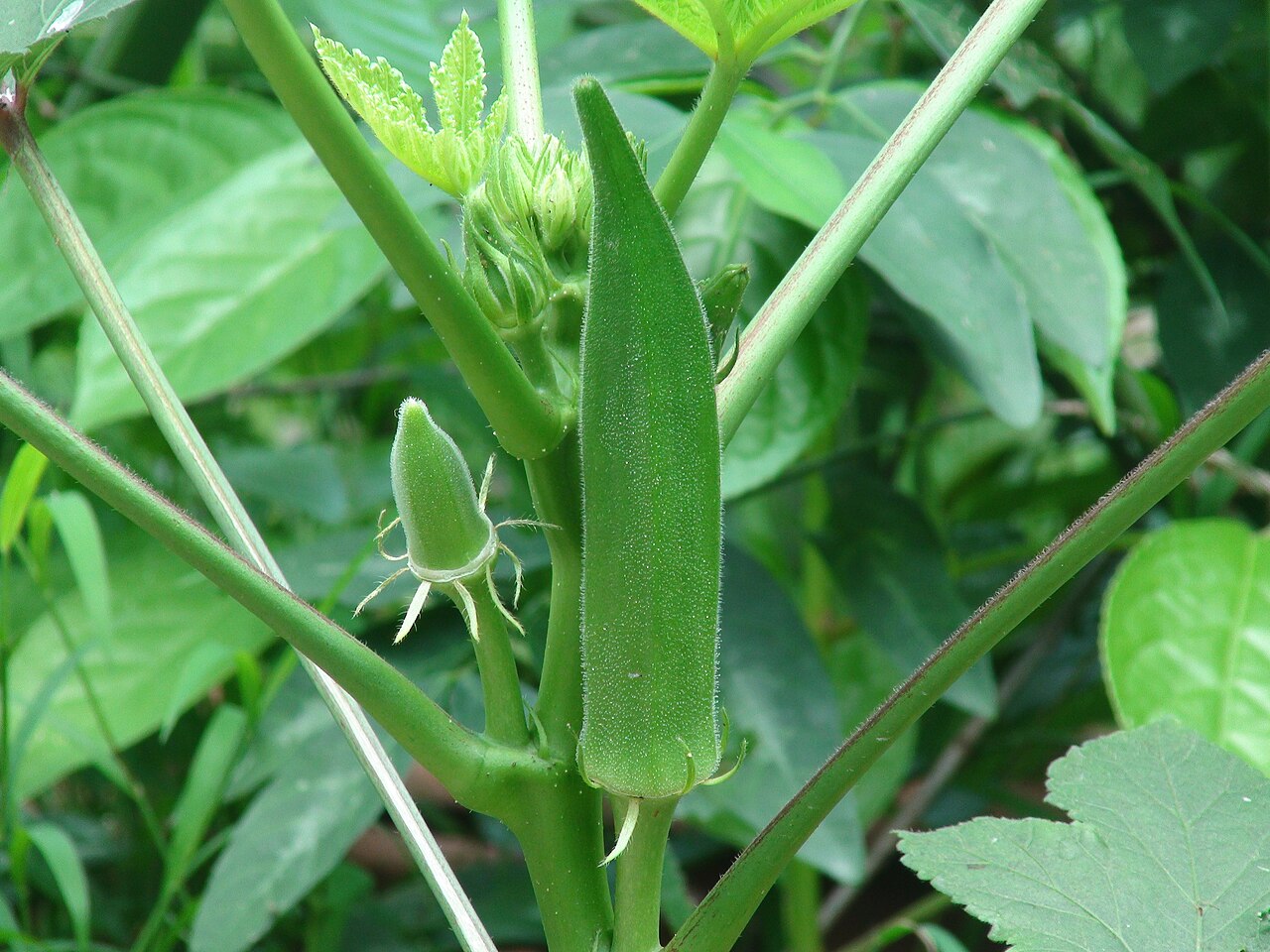
Okra
Botanical Classification and Early Cultivation
Okra, scientifically classified as Abelmoschus esculentus, belongs to the Malvaceae family, which also includes cotton and hibiscus. Its precise origin is debated, but strong evidence points to its domestication in northeastern Africa, likely in regions of Ethiopia or Sudan, where wild relatives are found. Archaeological and historical records suggest cultivation dates back at least to the 12th century CE, with mentions in Egyptian and Spanish texts.
Initially, okra may have been valued not only for its edible pods but also for its fibrous stems, which could be used for making rope or textiles, similar to other mallow family members. The plant's adaptability to warm climates and its relatively short growing season made it an attractive crop for early agricultural societies in arid and semi-arid regions. Its dispersal from Africa is a key chapter in the history of global agriculture, demonstrating early human ingenuity in crop selection and propagation.
Dispersal, Adaptation, and Cultural Integration
The global spread of okra is a fascinating narrative intertwined with human migration, trade, and cultural exchange. From its African homeland, okra seeds traveled eastward to the Indian subcontinent, where it became a staple, and westward across the Mediterranean to the Middle East and Southern Europe. A significant chapter in its dispersal involved its introduction to the Americas.
It is believed to have arrived in Brazil via Portuguese traders and in North America, particularly the Southern United States, through the transatlantic slave trade, where enslaved Africans brought their culinary traditions, including okra. This historical context underscores okra's deep connection to diasporic African cultures. Over centuries, okra has been integrated into countless regional cuisines, adapting to local ingredients and cooking techniques, from the rich, thickening agent in Creole gumbo to the spicy, dry stir-fries (bhindi masala) of India, showcasing its remarkable cultural plasticity.
Nutritional Profile and Health Implications
Okra is a nutritional powerhouse, offering a compelling array of vitamins, minerals, and bioactive compounds. It is particularly rich in Vitamin C, a potent antioxidant crucial for immune function and collagen synthesis, and Vitamin K, vital for bone metabolism and blood coagulation. The presence of B vitamins, notably folate, supports cellular growth and DNA formation.
Okra also contains significant amounts of dietary fiber, both soluble and insoluble. The soluble fiber, primarily in the form of mucilage, is instrumental in its thickening properties and plays a role in cardiovascular health by helping to lower cholesterol levels and regulate blood glucose. Furthermore, okra is a source of antioxidants like flavonoids and polyphenols, which combat oxidative stress and may contribute to reducing the risk of chronic diseases such as type 2 diabetes and certain cancers.
Its low caloric density and high fiber content also make it an excellent food for weight management.
Culinary Versatility and Preparation Techniques
The culinary application of okra is as diverse as its geographical distribution, largely influenced by its unique mucilaginous property. This characteristic, while sometimes polarizing, is key to its utility. In many Western cuisines, particularly in the Southern United States, okra is often fried, which helps to caramelize its sugars and reduce the perception of sliminess, resulting in a crispy texture.
It is a fundamental ingredient in gumbo, where its mucilage acts as a natural thickener, contributing to the dish's characteristic body. In Indian and Pakistani cuisines, okra (bhindi) is typically prepared as a dry curry or stir-fry, often sautéed with spices like cumin, coriander, and turmeric, which can help manage its texture. Roasting, grilling, and pickling are other methods that alter okra's texture and flavor profile. Understanding how different cooking methods affect the mucilage is crucial for appreciating okra's versatility and for chefs aiming to harness its unique culinary attributes.
Economic and Agricultural Significance
Okra is an economically important crop in many tropical and subtropical regions, providing a source of income and food security for smallholder farmers. Its cultivation requires warm temperatures and ample sunlight, making it well-suited to diverse agricultural landscapes. While not a global commodity on the scale of grains or major fruits, okra holds significant regional importance, particularly in Africa, South Asia, and parts of the Americas. Research continues to focus on improving okra varieties for higher yields, disease resistance, and enhanced nutritional content.
Efforts are also being made to develop processing techniques that preserve its nutritional value and extend its shelf life, thereby increasing its marketability and accessibility. As global food systems evolve, crops like okra, with their rich history and nutritional benefits, are gaining renewed attention for their potential to contribute to sustainable and diverse diets.
Go deeper
Based on content from Wikipedia · Licensed under CC BY-SA 4.0